
 E-Paper



Gurugram’s private colonies concerned about security arrangements after transfer to MCG
Unlike other city condominiums, where the onus for maintaining non-essential services lies on the residents’ welfare associations (RWAs), as per the Haryana Ownership Act, 1983, there is no statute to determine if a similar arrangement could be put in place in the context of licensed colonies.


While the process of transfer of eight private colonies from developers to Municipal Corporation of Gurugram (MCG) is under way, residents of their neighbourhoods still can’t shake off lingering concerns over the lack of clarity on the state of non-essential services such as security, check on illegal occupancy, fencing of boundaries and upkeep of community centres, once the process is complete.
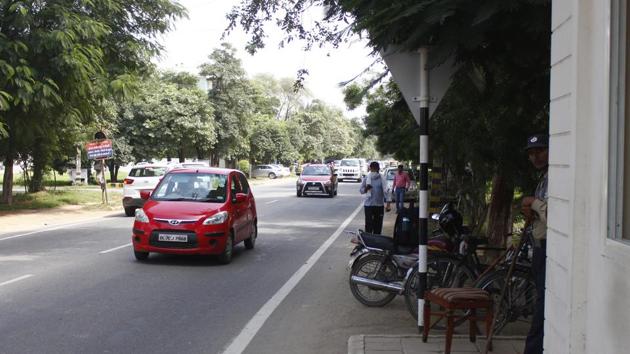
Residents said they are fretting on how their lives might be affected if these services are discontinued post the transfer process. While these services are presently taken care of by the developers concerned, no decision has yet been taken on whether they will be continued once the MCG takes over these colonies.
Unlike other city condominiums, where the onus for maintaining non-essential services lies on the residents’ welfare associations (RWAs), as per the Haryana Ownership Act, 1983, there is no statute to determine if a similar arrangement could be put in place in the context of licensed colonies.
Of the all the non-mandatory services, residents said they are mostly concerned about the security arrangements, which, they fear, may suffer for want of clarity once the MCG settles into its new role.
“While the MCG has said that it will take care of mandatory services such as maintenance of roads, sewer lines, parks and water supply, there is still no word of clarity on whether the non-essential services will be continued once the transfer process is complete. I fear there might not be a single security guard to keep watch on our colony once it is transferred to the MCG. I feel this is an issue which needs to be addressed at the earliest,” Abhijeet Ganguly, a resident of DLF Phase 1, said.
Voicing a similar sentiment, Nitesh Ranjan, a resident of DLF Phase 3, said, “The area where I stay is close to the Aravallis, and it often becomes difficult to ensure proper fencing of boundaries due to the rough terrain. This makes the localities vulnerable to incidents of crime. There has been a spike in cases of theft in the recent past. The authorities should ensure that security at our colonies are maintained and improved, if need be. I believe the responsibility for maintaining non-essential services should be vested on the local RWAs, as they are aware of the problems and will be best placed to find permanent solutions.”
Representatives of the RWAs of these eight colonies — DLF Phases 1-2-3, Suncity, Palam Vihar, Sushant Lok Phase 1, South City 1 and 2 — are aware of the ambiguity over the fate of non-essential services post the transfer process and met district town planner (DTP) RS Batth on the Monday to discuss the issue.
They submitted a memorandum to RS Batth, seeking a new ‘plotted areas Act’ that could empower RWAs to collect additional maintenance charges from residents and provide them with non-mandatory services in exchange.
“The demands of the RWAs’ for a new Act is being taken into consideration. A final decision on forwarding the memorandum to officials in the DTP at Chandigarh will be taken once all aspects have been taken into account,” Batth said.
At present, the powers of the RWAs in plotted colonies are largely limited to coordinating between the developer or the civic authorities for getting work, such as the construction of roads and removing illegal establishments, done.
“Once the colonies are transferred to the MCG, it will be very difficult to meet day-to-day expenses of all the colonies for non-mandatory services without any contribution from the property owners and residents of the plotted areas. It would, therefore, be prudent to give statutory powers to the respective RWAs, under the proposed plotted areas Act as it enable them to take the onus of providing such services to residents,” RS Rathee, president, Gurugram Citizens’ Council, said.


Stay updated with all the Breaking News and Latest News from Mumbai. Click here for comprehensive coverage of top Cities including Bengaluru, Delhi, Hyderabad, and more across India along with Stay informed on the latest happenings in World News.


