
 E-Paper



Only 1,700 of 20K postal fines issued in Gurugram in June-December 2018 paid
Despite only 8.5% of offenders, who were sent postal challans, having paid the penalty, the Gurugram Police is pressing ahead with its plan to issue postal challans to violators by erecting cameras atop cabs to capture footage of offenders.


Fewer than 10 of 100 traffic offenders in the city have paid penalty through postal challans sent to their addresses, according to the Gurugram Police data for June to December of 2018.
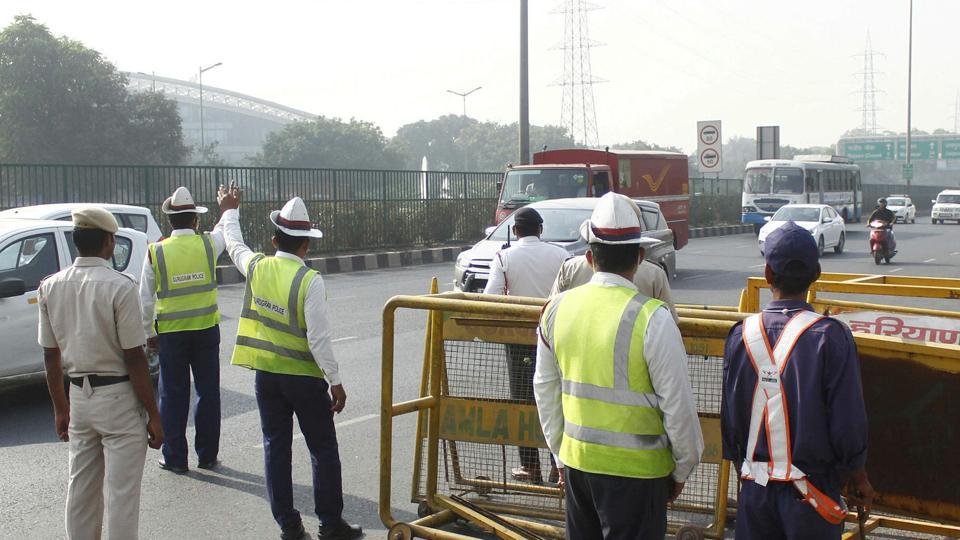
Of the 20,000 postal challans issued from June to December 2018, only 1,700 have been paid so far. Postal challans are issued on the basis of photographic evidence of a traffic violation, officials said.
Despite only 8.5% of offenders, who were sent postal challans, having paid the penalty, the Gurugram Police is pressing ahead with its plan to issue postal challans to violators by erecting cameras atop cabs to capture footage of offenders.
The city police are in the process of installing CCTV cameras on 300 vehicles, including 90 police motorbikes. “The cameras’ feed will be directly sent to the control room and they will send postal fine slips directly to the violators. The fine slip will include a grab of the picture and the vehicle registration number,” KK Rao, commissioner of police, had said earlier in January.
Himanshu Garg, the deputy commissioner of police (DCP), traffic, said, “We are going to make sure that court notices are issued on the unpaid postal challans.”
Although the police currently have the option of sending court notices, Garg said the practice is not being implemented strictly. “When the court issues summons to these offenders, they will naturally pay the fine. If they still do not do so, then the court can issue an arrest warrant also,” he said.
Why offenders are not paying
According to the traffic police, offenders do not pay postal challans as no strict action is taken if the penalty is not paid. Also, the payment of the challan is not linked to official works related to a vehicle such as renewing the vehicle insurance annually or getting a pollution-under-control certificate once in three to six months.
“If a vehicle with a pending challan is taken to the regional transport office (RTO) for any purpose, the owner will not be able to avail of any facilities without paying the challan first,” Garg said.
However, traffic police officials said that such cases are rare, with respect to private vehicles, as there is no mandatory need for the owners to visit the RTO regularly.
“People should come forward and pay postal challans. Every postal challan has details of how it can be paid online, by sitting at home,” Garg said.
How are postal challans issued
Photos of the traffic offences such as wrong-side driving, parking in undesignated areas and riding without a helmet are taken by zonal officers of traffic police, who then send it to a WhatsApp number of the traffic police. The police also take grabs from videos of traffic violations obtained from CCTV cameras in the city, but face many glitches.
“Most of the times, the number plates of the vehicles are not clear in the footage. There is one automatic number plate recognition camera near the court and we generally take footage from that one only,” a traffic police official, who is involved in the process of sending postal challans, said.
Once the traffic police officers find a violation and a clear photo of the number plate, an e-challan (electronic challan) is generated and sent via post to the vehicle owner’s address in the records.

Stay updated with all the Breaking News and Latest News from Mumbai. Click here for comprehensive coverage of top Cities including Bengaluru, Delhi, Hyderabad, and more across India along with Stay informed on the latest happenings in World News.


