E-Paper



At United Nations, people were fetching shawls. How this is linked to the body’s funding crunch
Member states owe the UN more than $6.5 billion in unpaid dues. The shortfall has forced cuts to peacekeeping and strict cash-saving measures.

 Prefer HTon Google


Correspondents at a press conference on global education at the United Nations headquarters in New York on Thursday complained that the briefing room felt like an icebox, the Associated Press reported. Autumn had just begun and temperatures in the city were significantly lower, in a week when the General Assembly had heard a run of fiery speeches. An AP correspondent went to fetch a shawl, others closed their jackets, and everyone left with cold hands. UN deputy spokesperson Farhan Haq, who moderated an event in the room, laughed and said of the temperature: “It’s whatever the weather is like outside – and more.”
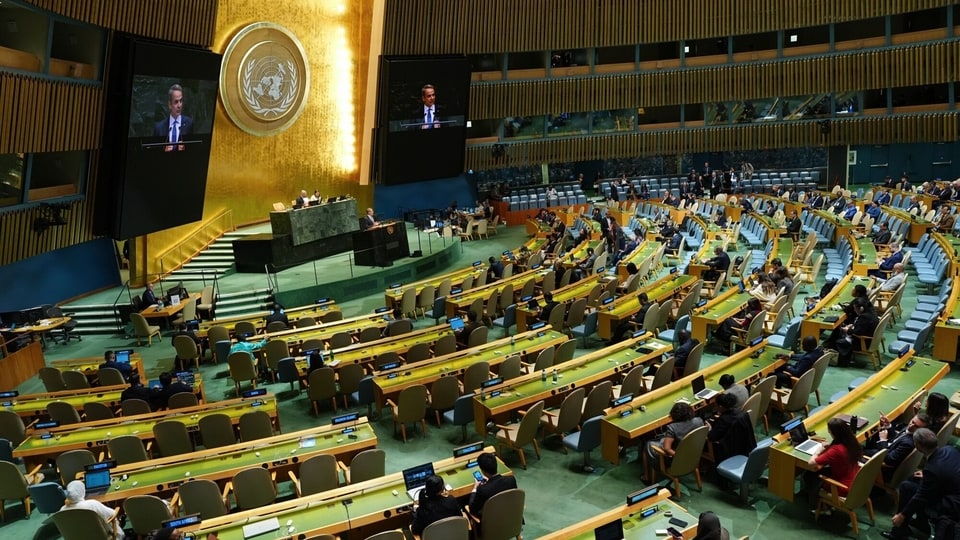
Over the summer, Secretary-General António Guterres had kept the sprawling complex warmer than some staff would have liked as a cost-saving measure, according to AP. The squeeze is being felt in more mundane ways too: Bloomberg reported in December that paper towels had become one of the latest casualties of the UN's funding woes, as the organisation looked for ways to cut costs and conserve cash. Those small economies are minor compared with the reductions to peacekeeping, humanitarian programmes and food-security monitoring that a shortage of money has forced across the UN system.
The UN is short of money on two fronts. Member states are paying their mandatory dues late, or not at all, which leaves the organisation short of cash for its regular budget and peacekeeping. Separately, major donors, including the US, are cutting the voluntary aid that funds agencies such as the Food and Agriculture Organization (FAO).
Why is the UN short of cash?
Every member state is assessed a mandatory contribution to pay for the UN's regular budget and its peacekeeping operations. Those payments have been coming in late and incomplete, so the UN's problem is largely one of cash flow, and it has had to conserve cash and limit spending.
UN officials said collections in 2025 were the lowest in seven years, leaving record regular-budget arrears of about $1.57 billion. By the end of April 2026, unpaid regular-budget assessments stood at about $2.8 billion. UN financial reporting shows outstanding amounts across the regular budget, peacekeeping and two international tribunals exceeded $6.5 billion. The UN began 2026 with no liquidity reserves.
The UN's approved regular budget for 2026 is $3.45 billion, covering its core work on peace and security, sustainable development and human rights. The regular budget is separate from the peacekeeping budget, which runs on a July-to-June cycle.
Where does the US fit in?
The United States has historically been the UN's largest contributor. President Donald Trump's administration has sharply cut US foreign assistance and withdrawn the country from several international organisations.
Trump used his address to the General Assembly on Tuesday, September 22, to highlight the cuts. A White House account of the speech said he had “saved over $1 billion by cutting down the UN bureaucracy", and described the savings as part of an effort to reduce spending and reform the organisation. According to the White House, he also argued for a more limited role for international institutions and stressed US sovereignty.
Do we know how much the US used to contribute to UN’s annual budget?
The US figures in both kinds of UN funding. Assessed contributions are the dues member states are obliged to pay under the UN's financing system. Voluntary funding and foreign aid go to UN agencies and other international organisations at a donor's discretion. A cut in voluntary aid to the FAO is therefore a different matter from a member state failing to pay its assessed share of the regular budget.
Other governments have also reduced foreign assistance, so the UN's funding problem cannot be put down to US cuts alone. Late payment of mandatory dues has created a separate liquidity problem for the regular budget and peacekeeping, whoever the donors to the agencies happen to be.
Also read: ‘No human right to illegal immigration’: Trump says UN nations have right to remain sovereign
What does the shortage affect?
UN officials have warned that the liquidity crisis is straining the organisation's ability to deliver programmes. General Assembly discussions on finances have linked the cash shortage specifically to constraints on hiring, peacekeeping and humanitarian assistance.
Peacekeeping has been particularly exposed. Annalena Baerbock, who was then president of the General Assembly, said in June that peacekeeping operations had already been "dramatically reduced" because of the liquidity crisis.
The wider humanitarian system is losing donor money too. CNBC reported on Sept 24 that UN agencies, humanitarian response organisations and research institutions were struggling as major donors, including but not limited to the US, reduced foreign assistance.
The FAO works on food security, agriculture and early warning of threats to food supplies.
Phil Hogan, a former European Union agriculture and trade commissioner campaigning to lead the agency, was quoted in the CNBC report saying other member states would have to step in as Washington pulls back. Hogan said the FAO would have to operate on a tighter budget, and argued that its resources should be concentrated on areas facing severe food shortages.
Chris Barrett, an agricultural economist at Cornell University, told CNBC the shortages mean "less monitoring and surveillance for early warning of looming problems". He said they also weaken the world's ability to cushion the impact of sudden increases in food prices.
Also read: Over France, into Manhattan: How Netanyahu travelled on an ICC warrant without arrest
How is the UN responding?
The UN introduced strict cash-conservation measures at the start of 2026 to reduce and slow spending. It has said they will stay in place until it has greater certainty that it can meet its obligations. Guterres has warned about the financial consequences of persistent arrears. UN budget proposals have sought lasting reductions in the cost of running the Secretariat, alongside wider administrative reforms.
The General Assembly has also changed a rule that deepened the shortfall. Until June, the UN had to return unspent money to member states as credits against their future assessments. That applied even when the money had gone unspent only because member states had paid late or not paid at all.
In June, the Assembly approved a new methodology for a four-year trial period, under which unspent funds are returned only when they are backed by actual cash. The change took effect on July 1.
Guterres called the reform "critical for our immediate operational continuity", particularly for peacekeeping. He said it would prevent the UN from being forced to return funds that were "all too often, never even received in the first place". Baerbock said the change would help protect more than $900 million for peacekeeping operations from being returned to member states.
The UN is trying to control spending, change its financial rules and decide which functions it can keep running as funding becomes less predictable. Meanwhile, member states continue to assign mandates ranging from peacekeeping and humanitarian assistance to food security and global development.
Baerbock had earlier described the underlying problem as an "existential liquidity crisis". After the vote, she said the reform would help protect the organisation's financial stability. She also warned that it did not solve the fundamental problem of member states failing to pay their contributions on time and in full.