E-Paper



Odisha man clung to a tree, rescued after 5 days in floodwater: How do people survive the impossible?
Sunanda Behera's ordeal was extraordinary. It offers a window into how the human brain and body reorganise themselves when staying alive becomes the only task.

 Prefer HTon Google


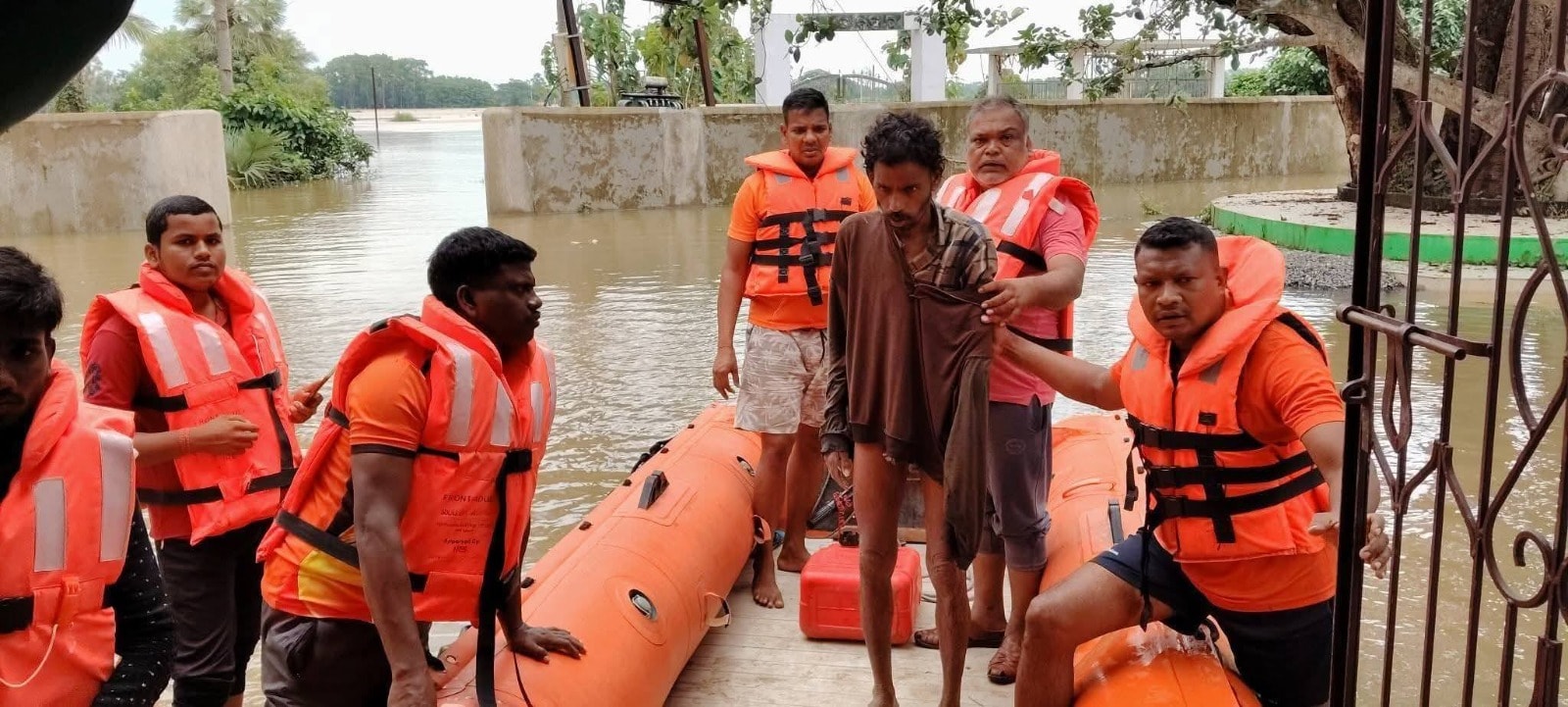
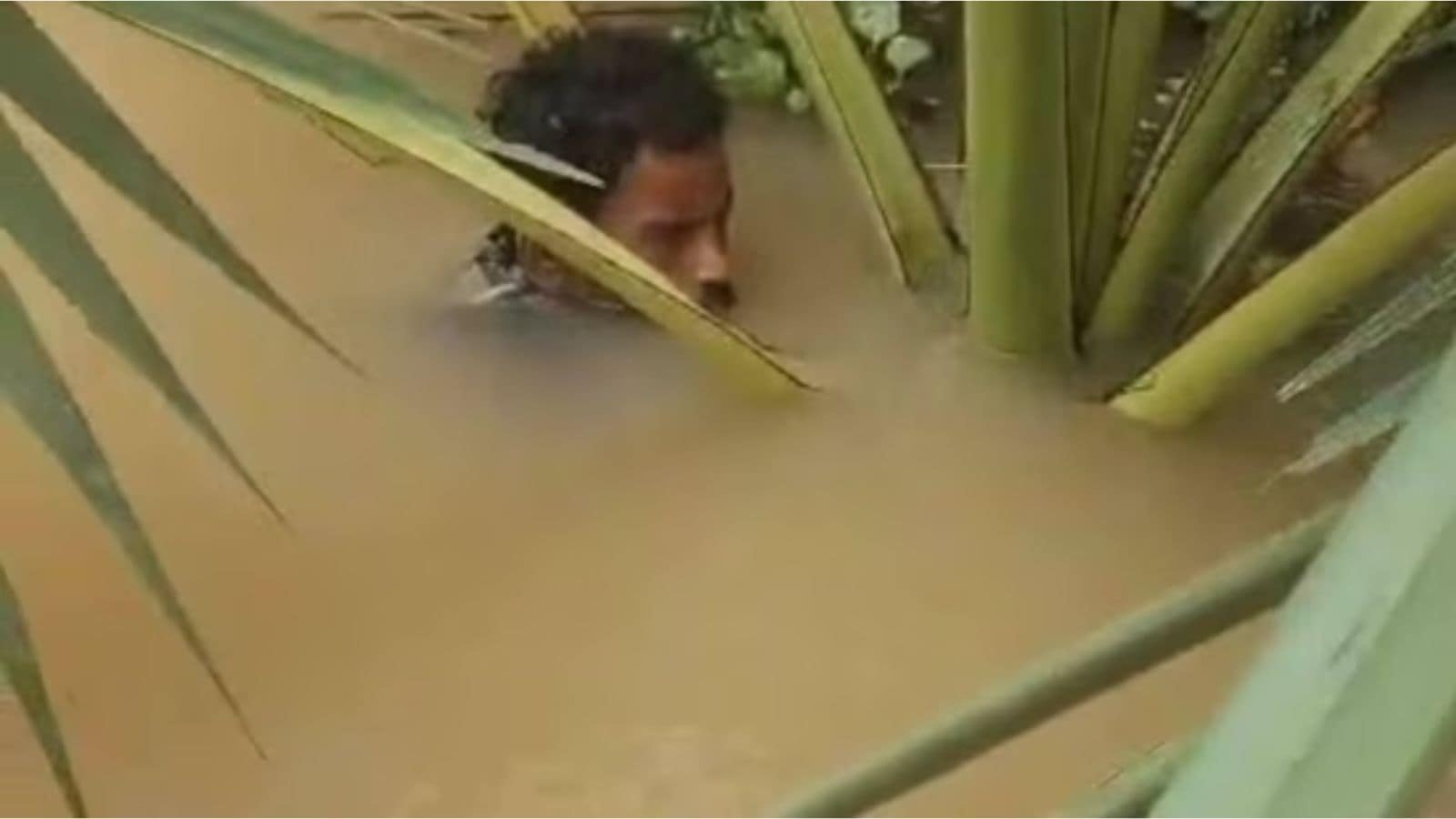
For five days, a submerged palm tree was all that Sunanda Behera could cling to. The 35-year-old from Balipatana village in Odisha's Bhadrak district was swept away by strong flood currents and went missing last week. Villagers passing in a boat through the inundated Bajapati field eventually spotted him clinging to the tree and alerted the Odisha Disaster Rapid Action Force (ODRAF).

An ODRAF official said Behera was "severely weakened" when rescuers reached him, his hands and legs trembling. He was subsequently rushed to hospital for treatment.
His ordeal raises a question that follows such stories: how does the human body keep going in extreme circumstances?
The biology is complicated. Survival is a coordinated response involving the brain, nervous system, hormones, metabolism, memory, attention and behaviour. And when a crisis stretches from hours into days, the body has to keep changing its strategy.
In 2003, American climber Aron Ralston became trapped in a Utah canyon when an 800-pound boulder pinned his right arm. After days of failing to free himself, he eventually amputated the limb with a small multitool knife, an ordeal captured in Danny Boyle's film 127 Hours.
Juliane Koepcke was 17 when a plane crash in the Peruvian Amazon in 1971 dropped her, still strapped to a section of the aircraft, from an altitude of roughly 3,000 metres. An October 2022 ABC News report described how she then spent 11 days making her way through the rainforest, guided by knowledge picked up from her zoologist parents.
And in 1994, Italian ultramarathon runner Mauro Prosperi was blown off course by a sandstorm during the Marathon des Sables and got lost in the Sahara for nine-and-a-half days. He found shelter in a deserted shrine and ate whatever he could find, including bats, snakes and lizards.
The science behind all of these stories begins with something very basic: stress.
An evolutionary instinct
Neuroscientists say the body's response to life-threatening danger goes back to evolutionary history. As Charles Darwin argued in On the Origin of Species, human survival mechanisms developed through millions of years of natural selection. Individuals with rapid threat-response wiring were more likely to survive, reproduce and pass down those traits.
Building on that foundation, researcher Joseph E. LeDoux argued in a 2021 study published by the Royal Society that the machinery of survival is far older than us, predating mammals, vertebrates and perhaps animals themselves.
What we have inherited, LeDoux suggests, is not a conscious "fear circuit" but an ancient "defensive survival circuit". Conscious fear needs high-level thinking. Survival circuits run automatically, scanning for danger, shifting the body into high gear and triggering fight, flight or freeze responses.
When survival kicks in
When the brain detects a threat, it rapidly recruits the systems that prepare the body to act.
A 2009 study in Nature Reviews Neuroscience by Yvonne M Ulrich-Lai and James P Herman explained that the stress response relies on a partnership between the body's automatic nerve controls and its hormone systems. Three brain regions do the heavy lifting: the amygdala (fear), the hippocampus (memory) and the prefrontal cortex (logic).
The fastest part of this system is the sympathetic nervous system, effectively the nervous system's accelerator. It floods the body with adrenaline, primes muscles, dilates the pupils and sends the heart rate soaring. This is what prepares a person to fight, run or freeze.
A secondary hormonal wave follows through the hypothalamic-pituitary-adrenal (HPA) axis, the body's primary stress control centre. In a June 2019 review in Nature Reviews Endocrinology, Georgina Russell and Stafford Lightman explained that acute stress releases cortisol to support survival during short-term threats. Prolonged exposure to those hormones, however, can shift from life-saving to damaging.
Digestion, reproduction and other longer-term functions are quietly demoted. Cardiovascular and muscular systems get the priority. The body, in effect, is buying more time.
Also read: Scientists identify maximum mix of heat-humidity a human body can survive
Does brain switch to 'zombie-like' state?
Not quite.
The popular image of 'survival mode' can suggest that the rational brain shuts down and primitive instincts take over. In a 2018 paper in Current Opinion in Behavioral Sciences, Lisa Feldman Barrett and Barbara Finlay pushed back on that idea, arguing that survival behaviours are not controlled by rigid, pre-programmed neural circuits.
A person facing immediate danger may react rapidly, but survival also demands learning, memory, judgement and planning. The brain has to decide whether to run, stay still, find shelter, conserve energy or attempt something drastic.
Ralston's experience illustrates the point. He described reaching what he called the "stop-think-observe-plan phase of rational problem-solving" after brute force failed to free him, and mentally worked through his options before concluding that amputation was the only route out. He later described a psychological detachment from the trapped limb, recalling that he began to think of his arm as an "it" rather than a part of his being.
That is a long way from becoming a zombie. Under extreme conditions, it appears, the brain does not necessarily switch off, it narrows its priorities.
When survival stretches into days
The body's strategy also has to change when an emergency stretches from minutes into days. Adrenaline cannot sustain a person indefinitely.
When food runs out, the fuel source has to change. A 2024 review led by Seyed Amirhossein Tabatabaei Dakhili in Experimental Physiology, and a similar 2024 review led by Candida Rebello in the International Journal of Obesity, explained how the liver steps in once sugar reserves are exhausted. It converts stored fat into ketones, a backup fuel that crosses into the brain and keeps it running.
That backup can come at a heavy cost.
A 2023 review led by Mark Ezpeleta in Nutrition Reviews found that during water-only fasts of five to 20 days, roughly two-thirds of the weight a person loses comes from muscle rather than fat.
In Behera's case, being submerged in water is likely to have added another layer of complexity. Water conducts heat about 25 times faster than air. Even warm floodwater forces the body to burn energy that maintains core temperature. In a 2017 review in Experimental Physiology, Michael Tipton and colleagues at the University of Portsmouth's Extreme Environments Laboratory showed that prolonged immersion drives a fluid shift into the chest, raising cardiac output and pushing the body to urinate more even as it dehydrates.
For someone holding on to a tree, grip and postural-muscle failure — not starvation — may be the bigger threat.
In such a crisis, the body behaves like a battery on low-power mode. Survival means cutting every non-essential expense: holding still, conserving calories and avoiding further harm. The hard part is forcing a depleted brain to keep making good decisions.
Also read: Two fishermen survive five days at sea clinging to a fridge after boat disappears
Overriding ‘normal’ rules
There are also behaviours that appear to violate almost every ordinary human training.
Prosperi's story is one example. The Guardian reported that, dehydrated and isolated, he drank his own urine and ate raw animals and plants. He told the paper in July 2023 that he survived because, for him, “the impossible did not exist”.
None of this is medical advice; drinking urine is not a reliable treatment for dehydration. But his experience shows how extreme scarcity can reset the perceived value of things that would ordinarily be rejected.
The question grows more uncomfortable when the taboo against eating another human collides with the biological drive for calories.
A July 2026 study in PNAS by Michal Misiak and Petr Tureček found that cannibalism was theoretically most likely to emerge under conditions of extreme resource scarcity, particularly when the cost of obtaining food is low and infection risks are constrained.
As consumption continues, however, the infection risks associated with within-species transmission rise, making sustained cannibalism progressively less viable.
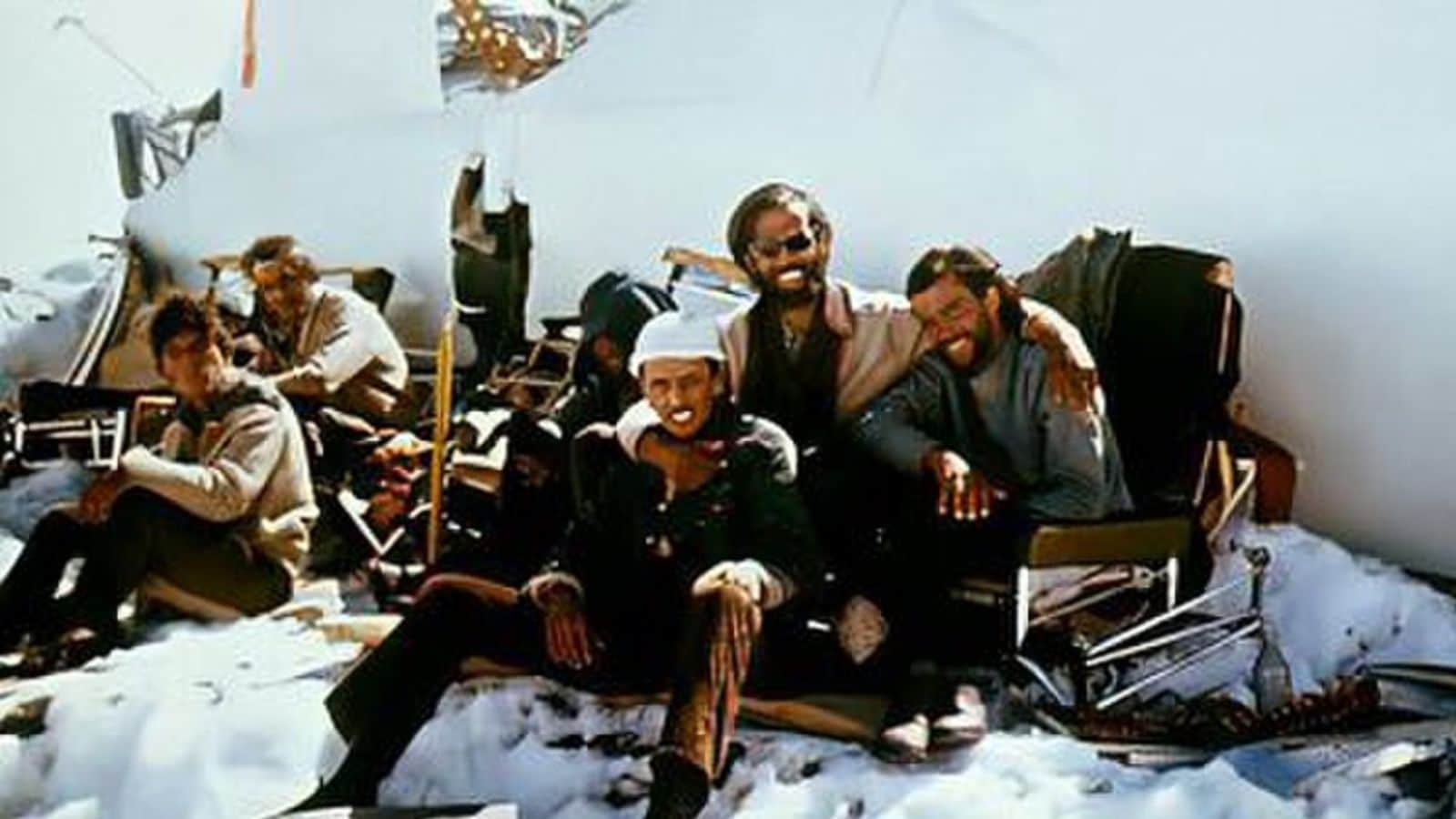
Among the most documented cases dates to October 1972, when Uruguayan Air Force Flight 571 crashed in the Andes carrying 45 people, including a rugby team. Sixteen of them survived 72 days in the mountains, in part by eating the bodies of dead passengers preserved in the snow — a decision the survivors later described as a collective one, taken so that some might live.
Nature, it seems, has not built a hidden "survival mode" button inside the human brain. Under extreme threat, hardwired survival instincts can override social training and disgust. But even then, biology has its own limits.
What it tells us about the brain
A key lesson from documented cases may be that survival is not simply about having a stronger body. It also involves what the brain notices, remembers and decides to do next.
Koepcke's knowledge of the rainforest might have mattered. Ralston's ability to reassess his options likely played a role. And Prosperi's willingness to observe his surroundings and use whatever resources he could find made a difference.

The reverse could also happen. Fifteen years of research by John Leach at the University of Portsmouth suggests people can die in physically survivable situations by giving up.
In a 2018 paper in Medical Hypotheses, Leach described "give-up-itis" as a slide, through stages of withdrawal after which the body starts shutting down once a person believes there is no way out. Recovery, he said, usually began when a person recovered some sense of choice.
Also read: Scientifically Speaking: The animal that can survive five years without eating
Surviving the event may not always be the end of the ordeal.
A 2021 study in BMC Pediatrics, which screened adolescents in Kerala's Alappuzha eight months after the devastating 2018 floods, documented lingering post-traumatic stress, the psychological aftermath that physiology is not always able to explain.
Research indicates the human body does not possess a reserve that guarantees survival. And there may not be a universal "survival instinct" that can explain every extraordinary escape. Instead, survival could be a constantly shifting negotiation between fear and judgement, energy and exertion, instinct and experience, the environment a person is caught in, and the choices made within it.