
 E-Paper



Vacancy at Bombay House: How Tata will find Chandrasekaran's replacement, and what awaits the successor
A five-member panel picks the shortlist. The Tata Sons board decides. Whoever wins inherits Air India losses and an RBI listing push.

 Prefer HTon Google


Bombay House has a succession problem.
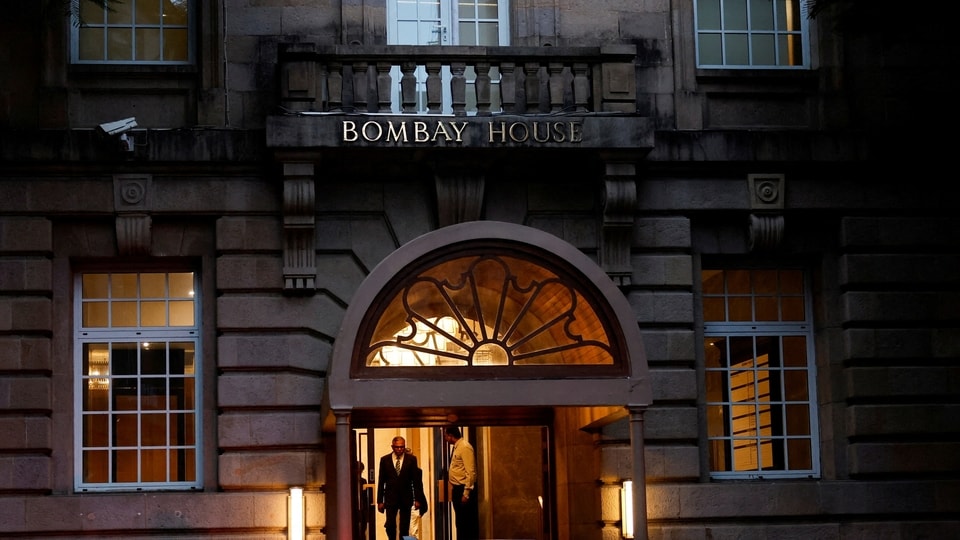
Natarajan Chandrasekaran's decision on Wednesday to walk away from a third term as chairman of Tata Sons — announced days before the holding company’s annual general meeting (AGM) on Tuesday — has cracked open a question the group has skirted for months: who runs the salt-to-software conglomerate after February 2027, and on whose terms?
The process lies in Article 118 of Tata Sons' Articles of Association. It requires the constitution of a five-member selection committee whenever the Tata Trusts hold at least 40% of the paid-up ordinary capital. They currently hold 65.9%, split across 13 charities, of which two — the Sir Dorabji Tata Trust (SDTT) and the Sir Ratan Tata Trust (SRTT) — hold the bulk.
On Thursday, SDTT passed a resolution to initiate the setting up of that committee "as soon as possible", Tata Trusts said in a statement.
Also read: After N Chandrasekaran's exit, Tata trust begins search for next Tata Sons chairperson
The panel
Three of the five members of the panel are jointly nominated by SDTT and SRTT; one comes from the Tata Sons board, and the fifth is an independent external member chosen by the board.
The two Trusts also select the committee's chairperson from among their three nominees, and a majority of Trust-nominated members must be present for the panel to conduct business.
But the committee only recommends. The final appointment rests with the Tata Sons board under Article 121.
This distinction could eventually be the one that matters because the board is where the ruptures have played out. The Tata Sons board comprises Chandrasekaran, Noel Tata, TVS Motor Company chairman emeritus Venu Srinivasan, group chief financial officer Saurabh Agrawal, and independent directors Harish Manwani and Anita Marangoly George.
Also read: ‘Respect his decision’: Tata Trusts on Chandrasekaran’s call to step down
Why not Noel Tata?
Noel Tata – the Tata Trusts chairman whose differences with Chandrasekaran allegedly prompted him to walk away from a third term – may not be able to take the mantle.
Tata Sons, in 2022, amended its Articles to separate the two chairmanships. Under the revised rules, Business Standard reported, the chair of either SDTT or SRTT cannot simultaneously head Tata Sons.
Noel Tata individually chairs both the Trusts. He also turns 70 in November, when the group’s mandatory retirement age for non-executive directors kicks in — a deadline that puts the onus of starting the succession planning on the Tata Sons board.
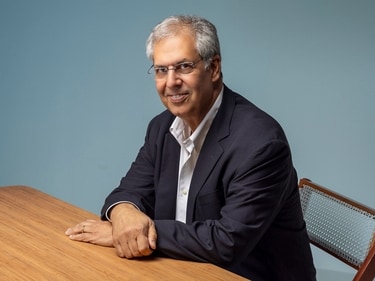
Tata Steel chief executive TV Narendran is among the top candidates being considered to lead the conglomerate.
Also read: How Tata Sons will pick N Chandrasekaran's successor and who will choose him
Succession planning under scrutiny
Live Mint reported that Chandrasekaran's exit has "put the spotlight on the group's lack of succession planning". The report said Noel Tata first raised the question with Manwani, who chairs Tata Sons' three-member nomination and remuneration committee (NRC), in January 2025.
Manwani "responded positively" and said the committee would look into it, according to two executives cited by the newspaper. In February 2026, Noel Tata asked again. There was no clear answer.
The NRC comprises Manwani, Chandrasekaran and Tata Trusts nominee Venu Srinivasan.
Kavil Ramachandran, an ISB professor of entrepreneurship (practice), told LiveMint the NRC "might not have felt the need" for a formal succession exercise when continuation of the incumbent was assumed. In hindsight, he said, it looked "bad for everybody". In July 2025, the two principal Trusts had approved a third term for Chandrasekaran and relaxed the retirement-age criterion to let him continue beyond his 65th birthday.
Also read: Noel Tata, TV Narendran: Who could take Chandrasekaran's mantle at Tata Sons?
Vacancies before
A Tata Sons chairman has been ousted before. Cyrus Mistry, appointed deputy chairman in November 2011 and chairman in December 2012, was removed in an October 2016 boardroom battle — one that wiped roughly $9 billion off the combined market value of Tata's listed companies at the time, PTI reported. The Mistry episode triggered years of litigation, which the Supreme Court ultimately resolved in Tata's favour in March 2021. The court also examined Article 118 in doing so.
In between the Mistry episode and the latest crisis, other governance flashpoints piled up. In September 2025, Tata Sons director Vijay Singh was removed after four of seven trustees opposed his continued nomination. Trustee Mehli Mistry's renewal on the SDTT and SRTT boards subsequently failed to receive unanimous approval.
Venu Srinivasan, both a Tata Sons director and a trustee, publicly advocated listing Tata Sons — a stand that was opposed by some in Tata Trusts.
Vijay Singh, still a trustee, told Reuters: "If I am an investor, I would be worried." Minari Shah, an independent strategic communications adviser and former Tata Motors executive, told the news agency it was "more a reputational issue".
Also read: N Chandrasekaran's decision to step down creates immediate succession challenge for Tata Sons
An AGM complication
The succession process could also hit a procedural snag. The Maharashtra charity commissioner has prohibited SRTT from taking decisions or holding board meetings, creating uncertainty about the Trust's ability to nominate directors for Tata Sons’ AGM on August 18.
Under section 87 of Tata Sons' Articles, SDTT and SRTT jointly nominate the directors representing majority shareholders at shareholder meetings. If the Trusts cannot make that nomination in time, questions could arise over whether Tuesday’s meeting will have the required quorum.
What awaits the next chair
Besides succession, the group's pressing concerns will be to decide on listing Tata Sons, the need to provide an exit for the Shapoorji Pallonji Group, which owns 18.38% stake, and ballooning losses in newer businesses.
The listing-decision may be existential. Reuters reported that Tata Sons is classified as a core investment company under Reserve Bank of India rules. Revised regulations issued last month require companies with assets exceeding ₹1 trillion ($10.45 billion), or with direct or indirect access to public funds, to list.
Tata Sons' standalone assets stood at ₹1.75 trillion as of March 2025. The company has trimmed borrowings to try to escape the regime, but has not secured an exemption.
Noel Tata and other trustees are reported to have unanimously opposed listing last year while SP Group publicly endorsed it two times.
Also read: Tata Sons Chairman N Chandrasekaran steps down, says will complete term; firm's stocks tumble
The financial hole in the newer businesses is another worry. Air India, Tata Digital, battery unit Agratas and semiconductor arm Tata Electronics together reported a loss of ₹29,924 crore in FY26, according to Tata Sons' annual report. Of this, Air India lost ₹22,238 crore, more than double the previous year, weighed down by the June 2025 Boeing 787 crash in Ahmedabad that killed at least 271 people and by longer routings triggered by West Asia conflict.
The bigger question, Bloomberg reported, is whether Chandrasekaran's $120 billion investment programme — the group's five-year wager on semiconductors, batteries, aviation and digital commerce — survives him.
People familiar with the matter told Bloomberg that the Tata Sons board had already begun pushing for recalibration before Chandrasekaran's exit. Tata Digital was asked for a sharper road map before a further $1 billion of funding, prompting a restructuring, layoffs and new leadership. Agratas has also scaled back plans to race to commercial cell production, and Air India's ambitions have been trimmed.
Chandrasekaran had adopted a phrase from Australian philosopher Roman Krznaric to describe his approach at the helm — "cathedral thinking", the medieval-builder patience of laying foundations for structures one will not live to finish.
His successor, observers say, may not have the same space.
Kranthi Bathini, an equity strategist at Mumbai's WealthMills Securities, told Bloomberg that replacing a "technocrat of Chandrasekaran's calibre" would be a "formidable challenge". Deven Choksey of DRChoksey FinServ said the next leader will "face a tougher environment".
Under Chandrasekaran, group revenues nearly doubled between 2017 and 2026 and profit roughly tripled, according to PTI. Combined market capitalisation of listed Tata companies rose to $277 billion by end-March 2026 from $76 billion when he took over. And aggregate group revenues crossed $180 billion in the year to March 2025.
On the day of his exit announcement, group stocks lost roughly $4.5 billion in combined market value but they recovered partially on Thursday.
Whoever the selection committee recommends, and whoever the Tata Sons board eventually appoints, will also inherit that ledger, along with two questions the Trusts have declined to answer in public: how far the current chairman's investment bets should be pushed, and whether the group can be steadied without another public rupture.


