
 E-Paper



All eyes on the Strait of Hormuz as the conflict deepens
This article is authored by Jajati K Pattnaik and Chandan Panda.

 Prefer HTon Google


The US-Israel joint attack on Iran and the Iranian counter-attack have pushed West Asia into another cycle of conflict. The theatre of conflict changes, but the conflict does not cease in West Asia. Fragility increases. Uncertainty looms large on the West Asian horizon. What is more important is the export of energy. The supply chain has been seriously affected. The Strait of Hormuz bears the brunt. Iran exercises its geopolitical weight around the Strait. The supply chain chokepoint is under Iranian control. Iran weaponises it. The Strait of Hormuz reportedly sees more action and reaction, as it controls oil exports. The Islamic Revolutionary Guard Corps (IRGC) has reportedly closed the Strait for the movement of vessels, especially from the US, Israel, Europe and other western allies. The commercial vessel movement has been stopped due to the fear of a possible attack from the IRGC. The ramifications of this closure have affected the energy market and increased energy prices. The energy shock will hit the Global South. The global recession will soon hit the common people. Symptoms are visible. The energy price may spike to between $145 and 185 per barrel of crude if closure persists. Volatility of the market will continue.
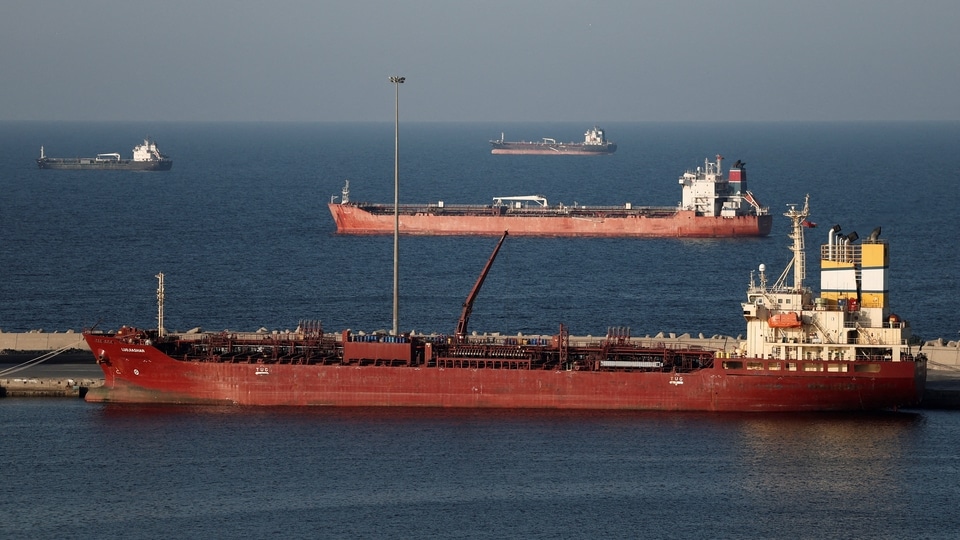
The Strait of Hormuz is a narrow sea channel that connects the Persian Gulf with the Gulf of Oman and the Arabian Sea. Its length is nearly 100 miles, and its width is 21 miles. The littoral States of the Strait of Hormuz are Iran, Oman and the UAE. It is a critical transit route for oil and gas exports from the Persian Gulf. It is an oil chokepoint that determines the global economy. The global economy depends on energy. The military escalations along the Strait of Hormuz have made conditions critical. The shipping chokepoint has once again assumed importance. It has been catapulted from the critical and shipping passage way to the centre of troubled geopolitics. The Strait of Hormuz is Iran's Trojan horse. It gives passage clearance to the shipment of 20 million barrels per day. It amounts to approximately one-fifth of global petroleum consumption. Around 20% of the world's Liquefied Natural Gas (LNG) from Qatar passes through the Strait. The bypass pipelines of Saudi Arabia and the UAE cannot handle the load in the event of a blockade in the Strait of Hormuz. The lack of robust alternatives adds to the fear of a possible escalation of conflict, which may lead to a supply chain and energy crisis. Iran understands the geopolitics of the Strait. It is a fertile area for psychological pressure tactics. Choking the supply chain is the IRGC’s main objective and a means of exercising revenge against its adversaries.
Asian energy vulnerabilities may increase because 80% of oil transits through the Strait of Hormuz. Transport of energy to China, India, Japan, and South Korea, the major powers and energy-dependent countries in Asia, takes place through the Strait. A surge in oil prices has been forecast if the conflict persists beyond a certain point. The indications of a surge are already in place. Prolonged conflict may lead to an energy crisis and a global recession.
The Gulf nations that depend on the Strait to export oil and gas to the global market are Saudi Arabia, Iraq, the UAE, Kuwait, Qatar, Iran and Bahrain. Saudi Arabia exports 5.3 million barrels per day through this marine route, though it has its East-West Pipeline to the Red Sea. But it cannot rely completely on this pipeline. It uses the Strait for effective supply and easy outreach. Iraq's southern exports depend on the Strait, though it has pipelines through Turkey for northern fields. The UAE's Habshan-Fujairah pipeline has its capacity limit. It depends on the Strait for the export of 1.8 million barrels per day. Kuwait has no alternative. Its dependencies are entirely on the Strait. Qatar also rely mostly on the waterways. Iran needs the Strait most to supply its 1.5–1.6 million barrels per day of oil to China. The sanction-stressed Iran finds China to be the only source for exporting its energy. Therefore, Iran's dependence on the Strait is irreplaceable. Bahrain, too, has no alternatives. Maritime route is its only export passage. Fifty per cent of China’s oil imports pass through this route. India's 60 per cent LNG and 30 to 50% crude imports pass through this way. A rise in crude will hurt. It will hurt more if the conflict persists for a long time. South Korea relies on the Strait for 80% of its energy needs. Their vulnerabilities increase as the conflict escalates. Major firms such as Maersk, MSC and Hapag-Lloyd have suspended the transit. They reroute through the Cape of Good Hope, which increases transit time and cost. Maritime insurance premium begins to rise. The cost of super tankers has also increased exponentially. This complicates the conditions on the ground.
The Strait is Iran's weapon of asymmetric warfare. Iran cannot win through conventional warfare. It cannot compete technologically sophisticated and powerful US-Israel military. It will play the psychological game of prolonging the war. The US is impatient to end the war. Iran understands the US’s impatience. It will prolong the war through asymmetric means. Iran will use this chokepoint to exert psychological pressure. This soft weapon is called psychological attrition. Iran’s IRGC reportedly announced no movement of a ship along the strait. The critical energy corridor poses a security threat and the potential for a sudden eruption of kinetic action. Permanent closure of the Strait will also hurt Iran and its economy. Its oil supply to China will be affected. The blockade will impose restrictions and hardship. But Iran's ragtag economy will collapse if the Strait of Hormuz is choked. It will be counterintuitive for Iran. It has no options left. Its only go-to option is to adopt asymmetric means. Economic coercion through the blockade of the Strait will hurt Iran and the world. It reportedly allows the Chinese and Russian ships to cross the waterway along the Strait. This selective passage complicates the matter. The UN Convention on the Law of the Sea (UNCLOS) States that no littoral state can unilaterally choke an international transit route. The US’s stance is free navigation to ensure an uninterrupted energy supply. The selective admittance of Chinese and Russian ships, along with restrictions on other ships, will amplify tensions. The US targets the Iranian assets along the Strait to prevent the IRGC from completely disabling the transit route.
Apart from economic coercion through the closure of the Strait, Iran has reportedly attacked Israel (Beit Shemesh, Haifa and Tel Aviv), UAE (Jebel Ali Port, Burj AI Arab hotel and Palm Jumeirah), Saudi Arabia (US Embassy in Riyadh and Saudi Aramco refinery), Bahrain (US Naval base in Manama and Port of Bahrain), Kuwait (Kuwait International airport and the US Embassy), Qatar (LNG operational facilities), Iraq (Erbil International Airport and the US Consulate), Oman (Duqm and Salalah), Azerbaijan, Cyprus (British airbase) and Jordan using drones and missiles following the US-Israel joint attack. This has led to operationalisation of costly interceptors, shooting down the Iranian drones, offensive strikes on Iranian facilities, airspace closure, formal condemnation and mediation meltdown. These countries may invoke Article 51 of the UN Charter to exercise a military response as a countermeasure. Despite the countermeasures, Iran opts for the shadow war and grey conduct. Confrontation will be counterproductive. Chaos is its measured strategy. It will inflict regional instability and economic and political costs on Iran’s adversaries. The cost asymmetry involves the use of low-cost Shahed-136 drones and compels Israel and the US to deploy Arrow interceptors and Patriot systems. The cost of the latter ranges from $2 million to $ 4 million per shot, whereas the price of the former ranges from $20,000 to $ 50,000. Iran targets digital infrastructure in Bahrain and the UAE to disable digital services, causing disruption as a soft economic target. It attacks the Qatari LNG facilities and Saudi Aramco refineries to inflict energy paralysis. Iran’s launch platforms are shielded by the underground tunnel complexes. It sustains Iran’s retaliatory capacities. Iran has decentralised the command to the rank and file to keep the asymmetric war going. Its ideological indoctrination for more than four decades has created a fighting force that is unstoppable and masterful in asymmetric warfare. The purpose is to get the adversary trapped in the labyrinth of an inconclusive war.
The Iran-US-Israel war impacts India, especially its trade and energy. Its large diaspora is in West Asia, and their safety is India’s primary concern. The Strait of Hormuz is pivotal for India, as it transits 50% of India's crude oil imports and 60% of its LNG imports. A surge in fuel prices will impact the Indians, the Indian industry and other critical areas. India is an energy-dependent country. Energy and inflation are interdependent. Inflation risks will hit the poor. The freight costs affect the fertiliser industry. It will impact agriculture. Indian rupee falls as recession stares us in the face. The supply chain disruption has stranded shipments of Basmati rice and electronic exports to GCC countries. Shipping costs skyrocket. Fertiliser imports, especially potash and nitrogen, from the GCC are stuck due to supply chain issues. The Operation Sindhu is underway to evacuate the Indian diaspora and citizens from the conflict-prone areas. Airspace closure leads to international flight cancellations. Rerouting to avoid Iranian airspace adds more cost. A rise in aviation fuel prices increases the airfare. The aviation industry faces challenges. However, uncertainty looms large. It is difficult to predict the formal end of the war, given Iran’s capacity to continue the war in an asymmetric way.
This article is authored by Jajati K Pattnaik, professor, Centre for West Asian Studies, School of International Studies, Jawaharlal Nehru University, New Delhi and Chandan Panda, professor, Central University of Karnataka, Karnataka.


