
 E-Paper



The Mecca Pact is a test of India’s West Asia strategy
This article is authored by Girish M, research intern, Politics for Impact, Karnataka and Janvi Singhi, independent researcher, Hyderabad.

 Prefer HTon Google


The security landscape of the West Asia region is undergoing changes as tensions rise between the US and Iran. Regional states are trying to gain control of their own security arrangements. On August 7, 2026, Saudi Arabia, Türkiye, and Pakistan signed the Mecca Joint Defence Agreement, and agreed to set up a permanent secretariat. US President Donald Trump commented that it is a "big, bold and important step" and China referred to the agreement as a "money, gun and nuclear option" that symbolises the shift towards greater autonomy in the region in the light of the uncertainty that the US commitments are bringing.
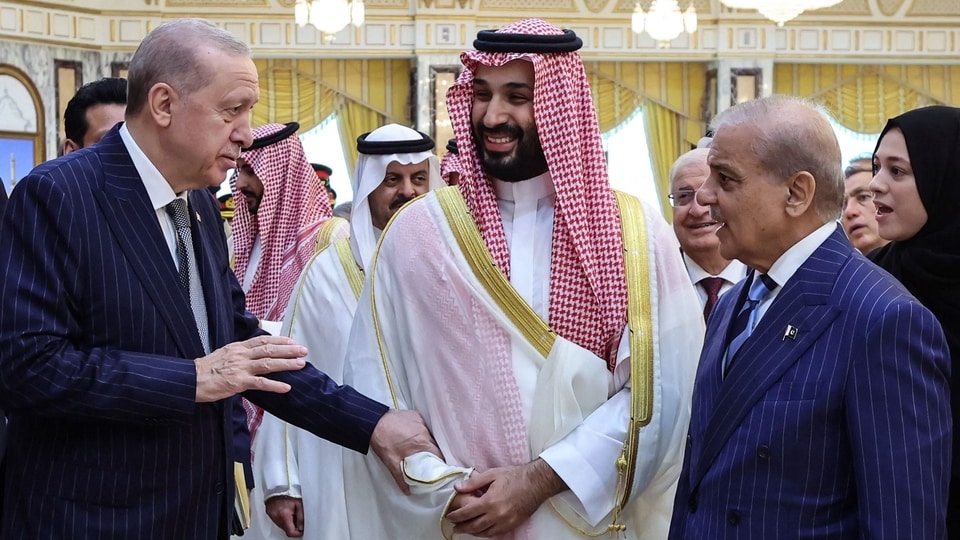
In the chessboard of geopolitics in West Asia, the key question for India is not simply whether Pakistan has gained greater space for strategic manoeuvre, but rather whether the region is moving towards a unique model for security production, and where India fits in. Effective exportation of the Mecca Accord would send a message that India cannot simply rely on the development of bilateral economic relations with the Gulf States, and, to achieve its goals, New Delhi would need to step up its role as a regional public goods provider.
The Mecca Agreement has much in common with NATO’s Article 5 as far as its collective-defence clause is concerned, but it is more revealing in terms of its implications on the regional structure. The countries in West Asia are experiencing instability in the region as well as ambivalence regarding the American guarantee of security and the need to take more responsibility for their own defence. The significance of the agreement lies in the fact that it is a part of the broader process of putting in place the concept of collective defence.
For India, the importance of Pakistan cannot be overlooked when it comes to security concerns. Pakistan and Turkey have been collaborating in various defence arenas, including navy, aviation, drones and training purposes. Turkey also voiced its support for Pakistan during the troubles that arose in the aftermath of the Pahalgam incident and Operation Sindoor. Additionally, Bangladesh's interest in the cooperation and its plans to create the JF-17 aircraft in collaboration with Pakistan and China make it imperative for New Delhi to take notice.
Viewing the Mecca agreement only as an anti-India event ignores the broader changes taking place. India has also faced difficult strategic decisions in West Asia. It has dealt with the US, Iran, Israel and the Gulf region, bringing it both benefits and restrictions. Problems surrounding the Strait of Hormuz, limitations on Chabahar and India's policy of neutrality in the US-Israeli standoff with Iran indicate the disadvantages of relying on strategy. The lesson New Delhi should learn is not to choose sides but to maintain enough connections and tools of influence to have a broader choice in its strategy.
India has significant capacity in this endeavour. Approximately 2.7 million Indians live in Saudi Arabia, playing an important role in the labor market, while India is one of Saudi Arabia's leading trade allies. The India-Saudi Strategic Partnership Council gives a formal institutional framework for political, security, economic, and social cooperation. Saudi Arabia's Vision 2030 also allows Indian investment in the country in terms of technology and human resources. All these facts create a platform for India to bolster its strategy in the region.
The challenge for policy is to turn leverage into sustainable strategic influence. First, India must shift from being mostly a buyer and seller of defence equipment to becoming a long-term security partner. Instruments like the Indian Ocean Naval Symposium and Indian Ocean Rim Association can be better used for providing maritime domain awareness, intelligence sharing, naval exercises, training, and crisis management. India’s geographical location in the Indian Ocean gives it a comparative edge that is difficult for either Pakistan or Türkiye to match. Access to bases like Duqm can further enhance India’s maritime role in the Arabian Sea.
Second, instead of perceiving connectivity as merely an economic initiative, India must utilise it as an instrument of statecraft. The India-Middle East-Europe Economic Corridor and the International North-South Transport Corridor offer solutions to disconnected regional corridors. Furthermore, India must focus on projects with financially lucrative prospects that can be built in a short time frame and withstand geopolitical changes to make cooperation possible among countries in the region. The aim is to create situations where regional players have interests enabling them to pursue the policy of good relations with India.
Third, Atmanirbhar Bharat should be more closely tied with the security needs of the West Asia region. The growth of India’s defence exports, as well as global interest in systems such as BrahMos, opens opportunities, but relying only on arms sales cannot ensure strategic impact. Therefore, New Delhi must engage in training, maintenance and assistance, and establish defence-industrial partnerships when possible. India’s prowess in space and navigation can offer prospects for cooperation with the UAE and other nations. The strategic importance of this approach is that it focuses on establishing dependence on Indian capabilities instead of acting on a case-by-case basis.
Fourth, the strength of its crisis-management must be enhanced by India. The country’s experience in engaging with rival nations means that New Delhi can play a role in providing diplomatic and humanitarian resources during crises when energy, trade, and civilian life can be disturbed by crises. Being a crisis manager does not imply that India will need to act as a mediator in every conflict. However, it would have to have mechanisms for evacuation, humanitarian assistance and maritime coordination, and diplomatic communication, before a crisis goes out of control.
Fifth, it is important for India to refrain from creating a counter-bloc that can be interpreted literally. India and Pakistan’s competition can put the Gulf states in a position, where they will have to make decisions they do not want to make. India’s real advantage is that it can keep relations with various geopolitical entities. As a result, partnerships with Saudi Arabia, UAE, Israel and Greece do not exclude cooperation with Iran and other countries of the region.
This methodology provides the relevant viewpoint for analysing the ‘Islamic NATO’ issue. Nevertheless, the definition has not been established yet. Notably, the organisation does not comprise the considerable powers such as Egypt, the UAE and Oman, while the participants have distinct interests in the region. Meanwhile, Turkey remains in NATO, Saudi Arabia has strong connections with Washington and Pakistan develops ties with the US, China and Iran. Moreover, there is no NATO-style command structure, interoperability or military actions within the alliance.
Nonetheless, the rejection of the phenomenon may also be seen as preemptive. Should the nations use military drills, intelligence-sharing, weapons technology and institutional interaction, the alliance can invade into more complex regional security construction. Thus, the question is not if the ‘Islamic NATO’ exists or not, but whether the Mecca deal might serve as the basis of regional security development.
India ought to consider this option but not be alarmed at the same time. India needs to come up with a separate West Asia security cooperation system that incorporates maritime security, defense technologies, connectivity, crisis management, and strategic communication. Moreover, there is a need to increase coordination among the ministry of external affairs, ministry of defence, armed forces, and economic institutions in order to make sure that diplomacy, trade and security work in conjunction with each other.
The signing of the Mecca Agreement is thus an extremely important strategic development, although it is not yet wise to talk about the Agreement being aimed against India. The growing role of Pakistan poses a threat, but it is not something that cannot be overcome. In consideration of India’s economic connections, its diaspora, connectivity and growing military capability, it is safe to say that India has many of the necessary tools at its disposal.
(The views expressed are personal)
This article is authored by Girish M, research intern, Politics for Impact, Karnataka and Janvi Singhi, independent researcher, Hyderabad.


