
 E-Paper



US-Russia diesel deal and the Ukraine war
This article is authored by Pravesh Kumar Gupta, associate fellow, Vivekananda International Foundation, New Delhi.

 Prefer HTon Google


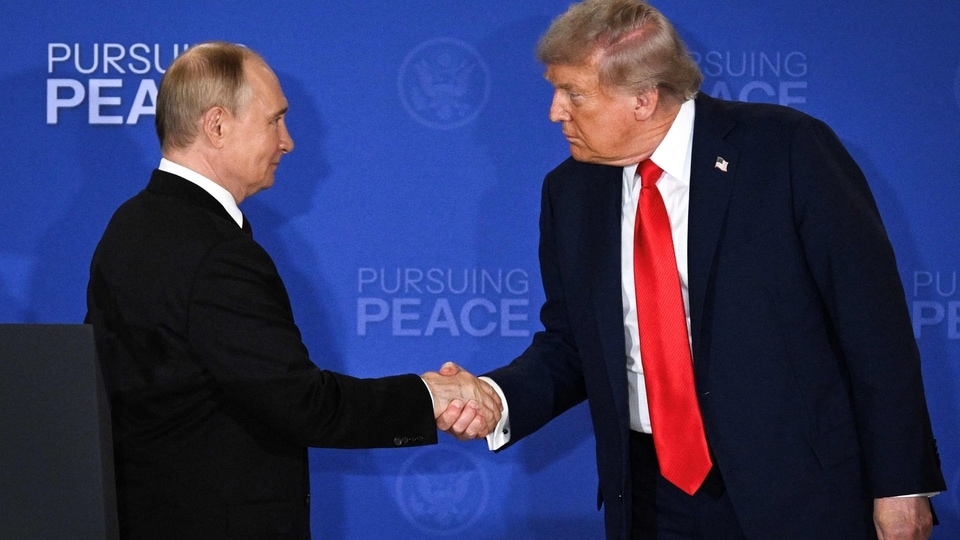
An agreement was announced by US President Donald Trump on October 9, 2026, following a telephone conversation with Russian President Vladimir Putin. Under this agreement, Russia would release diesel fuel onto global markets while the US will temporarily ease related sanctions. This deal sits at the intersection of domestic economic pressures, energy market constraints, and the unresolved war in Ukraine. Trump stated that Russia would immediately supply more than 300,000 metric tonnes of diesel, followed by 500,000 tonnes in November, one million tonnes shortly thereafter, and potentially an additional three million tonnes contingent on the operational status of Russian refineries. Concurrently, the US Treasury Department issued a temporary general licence authorising the sale, delivery, offloading, and importation of Russian-origin diesel until April 7, 2027. The move occurred against a backdrop of elevated US diesel prices, which had climbed above six dollars per gallon in early October, and just weeks before the American midterm elections.
Diesel demand in the US for transportation alone averages roughly three million barrels per day. The initial volumes cited equate to less than a single day’s US transport consumption, while the full package described remains modest relative to either American or global needs on the order of about ten days of US demand or slightly more than one day of worldwide consumption. Russian refining capacity has been reduced by sustained Ukrainian strikes on energy infrastructure, and Moscow had earlier imposed domestic export restrictions to protect internal supplies. Industry assessments indicate that fulfilling even the early tranches would likely require some recovery of damaged facilities and an easing of those export limits. Logistical complications, including the availability of suitable tankers amid broader sanctions, further constrain the practical scale and speed of any increase. Wholesale price responses observed immediately after the announcement were limited, with analysts projecting only marginal relief of one to two dollars per barrel in certain markets rather than a decisive downward shift. Global diesel prices are determined by broader supply-demand balances, including disruptions elsewhere such as those associated with tensions in West Asia, so the incremental Russian volumes are unlikely by themselves to reverse recent increases.
The sanctions framework that the temporary licence partially suspends was constructed after Russia-Ukraine started in 2022 with the explicit aim of restricting revenues available for the war effort. Energy exports have remained a critical source of funding for Moscow despite successive rounds of Western measures. Allowing additional diesel sales, even on a time-limited basis, therefore provides Russia with incremental hard-currency inflows and a measure of political validation. Estimates of the immediate revenue from the announced quantities run into the hundreds of millions of dollars rather than multiple billions, yet the precedent matters: It demonstrates that sanctions can be adjusted when domestic price pressures intensify. The timing amplified the diplomatic impact. Ukrainian and European representatives were engaged in discussions with American envoys in Florida when the deal became public. Ukrainian President Volodymyr Zelenskyy characterised the decision as a gift to Putin and a weak signal from partners, arguing that it would help finance continued aggression rather than accelerate its termination. European allies expressed parallel concerns about the erosion of coordinated pressure.
From the American perspective, the administration emphasised the priority of lowering costs for farmers, truckers, and consumers ahead of an electoral contest in which fuel prices featured prominently. High diesel costs feed into broader inflationary pressures and transportation expenses across the economy. Trump’s approach treats energy supply as a transactional lever that can be adjusted independently of the military stalemate. Supporters of the policy argue that prolonged conflict without a realistic path to decisive Ukrainian victory imposes accumulating costs on western publics, and that limited economic engagement might create space for narrower energy-related ceasefires or broader negotiations. Critics counter that relaxing pressure without reciprocal Russian concessions on the battlefield or on attacks against Ukrainian infrastructure weakens deterrence and signals to Moscow that western resolve is finite. Reports surrounding the Miami talks suggested American requests that Ukraine curtail strikes on Russian refineries, illustrating how the diesel arrangement quickly became entangled with operational questions on the ground.
Russian officials presented the readiness to supply diesel as a contribution to global market stability and economic welfare. Putin’s government had already been managing domestic fuel shortages caused in part by the same Ukrainian attacks that reduced exportable surplus. Any increase in shipments, therefore, depends on technical recovery of refining capacity and political calculations about domestic priorities versus export earnings. The deal does not resolve the underlying asymmetry: Ukraine continues to face an existential military threat while Russia retains the ability to trade energy for political and financial gains when western domestic conditions permit.
Uncertainty surrounds implementation. Whether the stated volumes materialize, whether tankers and buyers materialise under residual sanctions risks, and whether any price relief proves durable remain open questions. The temporary nature of the licence leaves open the possibility of re-imposition, yet the political signal of willingness to adjust has already been sent. The episode underscores a structural tension in prolonged conflicts between the strategic objective of degrading an aggressor’s war-making capacity and the immediate electoral and economic incentives facing democratic governments. Energy markets transmit global shocks rapidly into domestic politics; when those shocks coincide with Ukrainian efforts to raise the cost of the war for Russia, the resulting pressures can produce policy adjustments that partially offset those efforts. The diesel arrangement neither ends the war nor fundamentally alters its military balance; it does, however, illustrate how energy interdependence and domestic cost-of-living concerns continue to shape the external environment in which that war is fought.
(The views expressed are personal)
This article is authored by Pravesh Kumar Gupta, associate fellow, Vivekananda International Foundation, New Delhi.


