
 E-Paper



Why is outdoor time is crucial for a child's holistic development
Play gives children opportunities to make decisions, express themselves, learn from setbacks and build empathy.

 Prefer HTon Google


For those who grew up in India during the 1980s and 1990s, childhood often unfolded in neighbourhood lanes, open fields and community playgrounds. Afternoons were spent playing gilli-danda, pitthu, kho-kho, kanche or pakdam-pakdai, with friendships forged over improvised rules, occasional disagreements and shared laughter. There were no certificates for winning a game of cricket in the street, nor examinations to measure what we learned from these experiences. Yet, those seemingly ordinary moments taught us lessons about friendship, resilience, cooperation and belonging that stayed with us long after childhood.
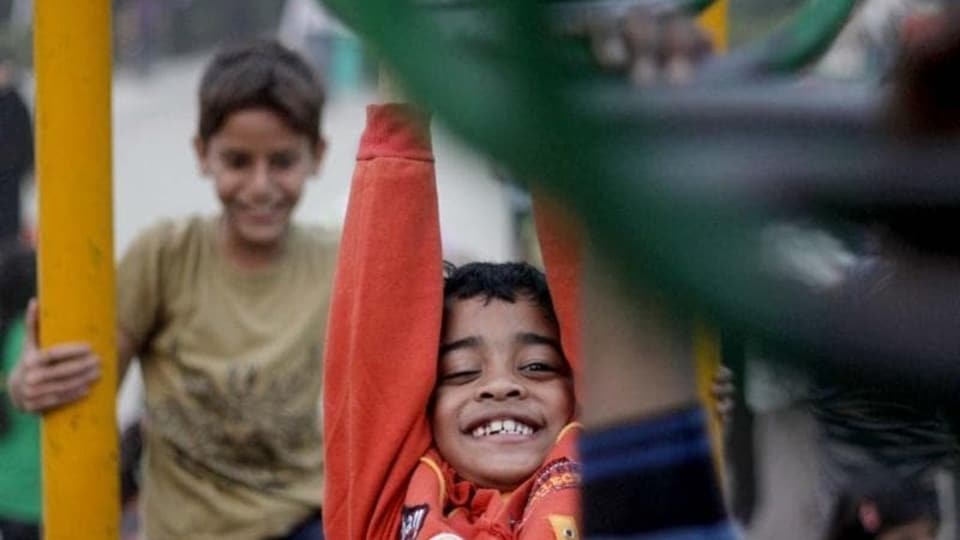
Today, children's lives are increasingly structured around academic expectations, extracurricular commitments and digital screens. While education and technology have expanded opportunities, we must ask whether children are getting enough time and freedom to discover themselves beyond classrooms.
This Children's Day, the conversation around holistic development must go beyond balancing academics with recreation. It must recognise three fundamental dimensions of childhood: Voice, dignity and equitable opportunity.
Every child deserves to be heard, not merely instructed. Yet, much of childhood is shaped by decisions made by adults, from academic pursuits to daily schedules, often leaving limited room for children to express their preferences, opinions and aspirations.
Outdoor play and real-world interactions create natural opportunities for children to exercise their voices. When children decide the rules of a game, negotiate disagreements or organise themselves into teams, they practise decision-making, communication and leadership.
These experiences also teach children that their opinions matter and that listening to others is equally important.
Having worked closely with children from diverse socioeconomic backgrounds, I have observed that some of the most meaningful expressions of confidence emerge outside formal learning environments. A child who remains reserved in a classroom may demonstrate remarkable initiative on a playground or during a group activity.
Giving children a voice means creating environments where they feel comfortable asking questions, making choices and expressing themselves without fear of judgement.
A child's dignity is closely connected to their sense of self-worth, acceptance and belonging. Academic achievement, while important, should never become the sole measure of a child's capabilities or value.
Not every child will excel in examinations. Some may discover their strengths through sports, creative pursuits, teamwork or practical problem-solving. Outdoor activities allow children to experience success in different forms and recognise abilities that conventional assessments may overlook.
Equally important, play teaches children to navigate setbacks without attaching failure to their identity. Losing a match, making mistakes or learning a new skill encourages perseverance and emotional resilience.
When children interact with peers from different backgrounds, they also learn empathy, respect and inclusion. These experiences help nurture individuals who appreciate differences rather than view them as barriers.
Protecting childhood dignity, therefore, means allowing every child to grow without constantly being compared, judged or defined by academic performance.
The freedom to play, explore and interact should not be a privilege determined by geography, income or family circumstances.
Across India, many children face significant barriers to recreational opportunities. Limited public spaces, unsafe neighbourhoods, financial constraints and unequal access to extracurricular activities can restrict experiences essential to healthy development.
For vulnerable children, these limitations may be compounded by instability, inadequate support systems or responsibilities beyond their age.
If we genuinely believe in equitable childhood development, access to safe playgrounds, sports, cultural activities and community engagement must be considered essential rather than optional.
Schools, families, communities and policymakers share responsibility for creating inclusive environments where children can learn through experience, build relationships and develop confidence.
As we celebrate Children's Day, we must remember that education is not simply about preparing children for examinations or future employment. It is about nurturing individuals who can think independently, engage compassionately with others and participate meaningfully in society.
A child's voice must be heard, their dignity respected and their opportunities protected, irrespective of their circumstances.
Ultimately, a meaningful childhood is not defined only by what children learn inside classrooms, but also by the freedom they have to explore the world beyond them. Ensuring that freedom may be one of the most valuable investments we can make in the next generation.
(The views expressed are personal)
This article is authored by Sumanta Kar, CEO, SOS Children's Villages, India.


