E-Paper



Heirloom Ramzan dishes: Chefs Ishtiyaque Qureshi, Sadaf Hussain, Osama Jalali and Taiyaba Ali share their family recipes
From Nabish to Daal Chaat, chefs open their family recipe books to share Ramzan dishes that define sehri and iftar with the holy month likely to begin on Feb 18

 Prefer HTon Google


Ramzan is around the corner, and the month-long period of fasting is about to begin. When we think of this pious period, it’s the Ramzan special delicacies that are consumed during Sehri and Iftar (before starting and after breaking the fast) that come to mind.
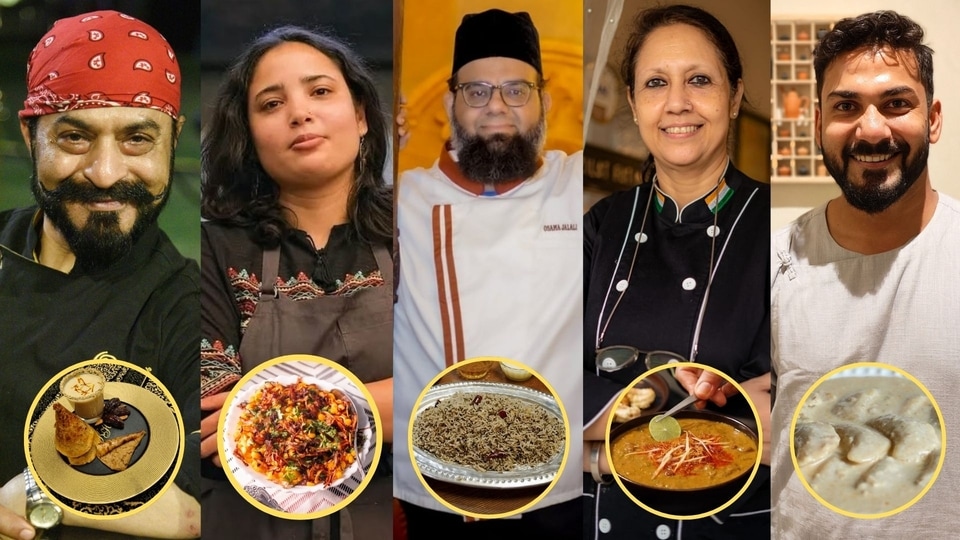
Each family has its own traditions and ways to prepare meals for these occasions. We spoke to chefs in different parts of the country to learn about their heirloom dishes that they are preserving and taking forward. We give our readers a peek into their kitchens and traditions.
Nabish and Birahi

Chef-restaurateur Ishtiyaque Qureshi, son of legendary chef (late) Padma Shri Imtiaz Qureshi, gives an insight into their heirloom delights. Interestingly, both Nabish and Birahi are works of art by the women in the family, not the renowned chefs, and have been passed down through the generations.

“Nabish is made out of dates, soaked almonds, and white sesame seeds. They are ground in water and served. Some can add sugar if needed. It is mentioned in religious and historical textbooks. It is refreshing and keeps you full throughout the day,” he says.
The chef adds, “Another heirloom dish is Birahi. Its keema and chana daal are sautéed with onion and sabut masala and then finely ground on a sil-batta. Then it is stuffed in thin flour and gheer balls and the roti is prepared on a wooden chulah. Ghee is not applied to it. It’s such a fulfilling roti that you don’t need anything else with it, and it can be prepared beforehand.”
Maash Daal Khichdi

Chef Osama Jalali, culinary director at Delhi-based Majlis, has inherited a dish from his mother’s side.

“I remember as a kid my walda making kali urad ki kaal ki khichdi, which was served with a lot of condiments – raw black sesame seed oil, desi ghee, radish, achaar, pudina chutney. The speciality about it is that it is made on dum (slow cooking process) and every grain of khichdi spreads like in yakhni pulao or biryani.” It’s also known as Rampuri Khichdi. “It’s usually served in sehri, and it has nutrition, carbohydrates, and fat. It’s easily digestible and a complete meal in itself. In Rampur, it’s a celebration and is preferred over biryani in my city. I got til-ka-tel from Rampur for Ramzan.” It is served with hot tea.
Aate ki Kheer

Delhi-based author and chef Sadaf Hussain is now attempting to perfect his heirloom dish that his mother used to make.

“Last year, I tried, and this year I will try to improve it. It’s aate ki kheer, which is probably inspired by the Bengali dish Pulli Peetha or Rosopeetha. We make rice grain-sized small portions out of rice flour paste. It’s a reverse process and then prepared in milk like kheer. It is prepared for sehri as the dish is satiating and keeps you filled throughout the fasting period due to its slow-burning process. It looks simple but making the small portions is a time-consuming process. I have never had or heard of something like this anywhere else, and trust me, it’s so amazing.”
Daal Chaat

For Bengaluru-based chef Taiyaba Ali, the traditional delicacy she has inherited from her mother is chana daal chaat salad.

“Yellow chana daal is soaked at sehri and by late evening it becomes soft. Then we add a pinch of salt, chaat masala (optional), lemon, mint leaves, and green chillies. This is one dish that has not been changed in our family. As a kid, I remember ammi making it, and the kids were assigned to prepare it. It’s very simple, affordable, fresh, light on the stomach, and full of nutrition, giving carbs, proteins, hydration, and anti-oxidants.”
She makes it throughout the year and, despite being a chef, has never tried to modify it. “I have been out of home for 15 years, but wherever I have lived, be it Delhi, Goa, or now Bengaluru, this is a must for Ramzan,” she adds.
Haleem-Kichda


Great-great-granddaughter of Nawab Wazid Ali Shah and chef-restaurateur Manzila Fatima shares, “Haleem and Kichda are the heirloom delicacies that are being passed on through generations from our royal kitchen. It’s a must in our Ramzan dastarkhwan. People think both are the same, but there is a difference — Haleem is very smooth like a paste, while Kichda is dardara (grainy). The ingredients are more or less the same. Usually made in homes, it’s served at very select outlets. In Kolkata, Haleem is more popular.”