
 E-Paper



11 contacts of Nipah victim symptomatic: Kerala govt
The Kerala minister’s remarks came as the Union health ministry directed the state government to shift all high-risk contacts of Nipah-infected patients to a quarantine facility to prevent further spread.


At least 11 of 251 people on the contact list of the 12-year-old boy, who succumbed to Nipah virus in Kozhikode district on Sunday, have been admitted to hospital with symptoms, state health minister Veena George said on Monday.
At least 54 of the total are believed to be in the high risk category, she added.
The minister’s remarks came as the Union health ministry directed the state government to shift all high-risk contacts of Nipah-infected patients to a quarantine facility to prevent further spread.
Briefing reporters in Kozhikode on the situation, George said the samples of all 11 people -- mainly the deceased’s mother, three relatives and seven healthcare workers -- were sent for testing to the National Institute of Virology (NIV) in Pune and the results of eight of them are likely to be available late at night. The condition of all the 11 people is stable, she said.
“There are 38 persons in isolation at the Kozhikode Medical College hospital of which 11 have shown symptoms. Samples of eight persons have been sent to Pune NIV for testing,” the minister said.
“Hectic efforts are on to trace the source of infection. Experts have recovered half-eaten rambutan fruits from the premises of the boy who died on Sunday. They also found a fruit bat habitat near their house,” the minister said.
Fruit bats are considered to be the main carrier and reservoir of the virus.
“We have traced all contacts of the boy and quarantined them. The next week is crucial for us. We have to keep utmost vigil,” the minister said, adding that the health department will also look into some of the earlier deaths, if any, with the same symptoms.
The minister said that Pune NIV is planning to set up a special laboratory at the medical college hospital here to facilitate quick testing. The health department is also planning to launch a mobile application to check the exact situation of Nipah and contain any false information.
“Different teams are at work to find out the source of infection. If needed, more experts will be deployed. Since the whole state is following strict physical distancing and masking, the chances of high transmission are low. But we can’t lower our guard,” she said.
Relatives of the deceased boy told a team from the National Centre for Disease Control that he had eaten rambutan fruits two days before he developed a fever. The team later found rambutan and guava at his house. An area of 3 km radius from the house of the deceased has been sealed.
The state animal husbandry department has also started examining domestic animals and pets in the area and collected blood samples in this regard.
“The blood and serum samples of the two goats, owned by the child’s family, will be tested by the National Institute of High Security Animal Diseases in Bhopal,” she said, adding that a team from Bhopal NIV will reach Kozhikode on Wednesday.
The minister exuded confidence that the latest outbreak will be localised and contained like the 2018 outbreak which claimed 17 lives in the district. The government has released a Nipah-management plan, listing out protocols related to treatment procedures, precautions and norms for hospitalisation, among other details.
The state government has also decided to suspend the ongoing Covid-19 vaccination drive in Kozhikode city and outskirts in view of the new threat, she said.
Following the fresh detection of the virus in Kozhikode, which is seeing cases for the second time in three years, a high alert has been sounded in the two neighbouring districts -- Kannur and densely-populated Malappuram.
Malappuram had also reported a few cases in the last outbreak.
Meanwhile in a letter to Kerala chief secretary V P Joy, Union health secretary Rajesh Bhushan said the state will have to implement strict surveillance measures to track each suspected case.
Based on the report submitted by the Central team of National Centre for Disease Control (NCDC), which was deputed to Kozhikode, Bhushan said: “Both the hospital-based and community-based surveillance needs to be strengthened. Awareness needs of Acute Enchephalitis Syndrome/Respiratory Distress and risk communicated to the public.”
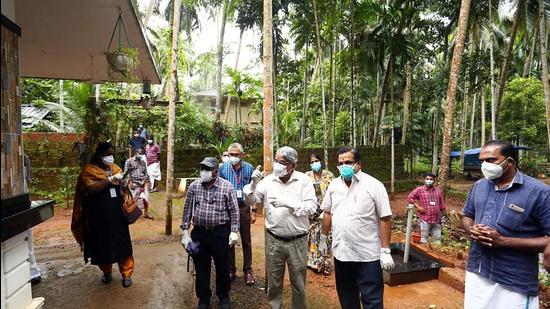
In the letter, Bhushan said that the central team has carried out field investigations along with the district surveillance officer and other officials. “It also visited the epi-centre, house of the 12-year-old male diseased child, and interacted with family members and others.”
Recommending the measures, the union health secretary said: “The district authorities must identify primary and secondary contacts and prepare line listing of high risk and low risk”


