
 E-Paper



In 3-month-old Maharashtra govt, 5 points of discord between alliance partners
Last week, NCP chief Sharad Pawar criticised Chief Minister Uddhav Thackeray for the first time over Elgar Parishad probe.


When the Shiv Sena, Nationalist Congress Party (NCP) and the Congress came together to form the Maharashtra Vikas Aghadi (MVA) late last year, there was speculation about how these ideologically disparate forces would function together.
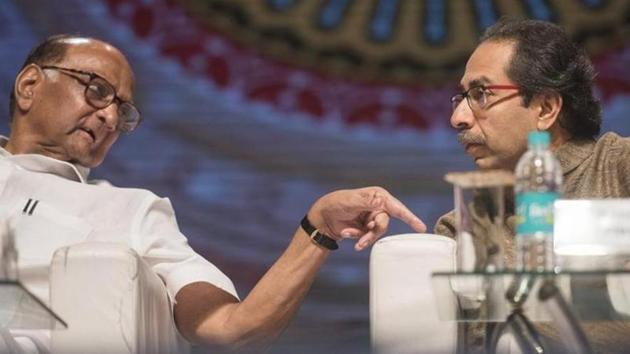
While the alliance is stable, there appear to be differences on a range of issues. Here is a brief glance at the key points of discord within the alliance:
Elgar Parishad case: On Monday, February 17, the NCP announced that its chief Sharad Pawar had advised home minister Anil Deshmukh to institute a special investigation team (SIT) to probe the contentious Elgar Parishad case. This follows Chief Minister and Shiv Sena chief Uddhav Thackeray’s decision of February 13 to comply with the Centre’s January 25 order to hand over the inquiry of the December 31, 2017 incident in Pune to the National Investigation Agency (NIA).
Several Left-affiliated activists were arrested on January 1, 2018 following violence on the banks of the Bhima river in Maharashtra where lakhs of Dalits had congregated to commemorate the 200th anniversary of the battle of Bhima-Koregaon.
Last week, Pawar addressed a press conference in which he criticised Thackeray for the first time, calling the chief minister’s move “more inappropriate” than the Centre’s decision. All India Congress Committee general secretary Mallikarjun Kharge and state Congress president Balasaheb Thorat echoed Pawar’s views and said the Congress and the NCP should have been consulted by the CM before the decision.
Thackeray broke his silence on the issue on Tuesday and said that only the Elgar Parishad case has been handed over to the NIA, while the state government will continue investigate Bhima-Koregaon violence in which one Dalit was killed and 30 injured.
Citizenship (Amendment) Act: While both the NCP and the Congress are strongly against the Citizenship Amendment Act (CAA) and National Register of Citizens (NRC), the Shiv Sena chose not to oppose the former while stating the NRC will not be implemented in the state. On Tuesday, Thackeray said he had no problem with the CAA but he would not implement the NRC as it would create trouble for Muslims and Hindus alike, especially the tribal communities. Congress had objected to the Sena’s move to support the Citizenship Amendment Bill in the Lok Sabha. Sena changed its stand when the bill came for approval in the Rajya Sabha.
Census and the National Population Register: There is no unanimity between three partners even as the state administration has begun the Census and the National Population Register (NPR) process. The NCP on Monday said it will strive to remove objectionable parts of the NPR, and that it has no objection to do it the way it was done earlier. Thackeray, on Tuesday, said he will study the details but indicated that NPR work will not be stopped.
VD Savarkar: Congress and Shiv Sena have been at loggerheads over VD Savarkar. Former Congress president Rahul Gandhi’s statement that he was “not Savarkar to withdraw his statement” two months ago had left the Shiv Sena miffed. Sena had said that Savarkar’s Hindutva ideology will always guide the party. The two parties also have distinct positions on Bharat Ratna for Savarkar.
The NCP-Congress divide: There have also been occasions when the Congress and NCP ministers have not been on the same page. Energy minister and Congress leader Nitin Raut recently announced that the government was considering giving free power to those consumers that use less than 100 units. Finance minister and NCP leader Ajit Pawar, the next day, said that such freebies to the citizens was a bad idea.


