
 E-Paper





Follow the latest breaking news, major developments and agenda-setting stories from India and around the world with the newsdesk at Hindustan Times. Operating round the clock, the desk brings together experienced editors, reporters and correspondents to deliver fast, accurate and contextual reporting across subjects that influence public policy, governance, business, society and international affairs. The HT News Desk covers politics, elections, government policies, the economy, business and markets, science and technology, the environment, law and order, infrastructure, education, climate issues and geopolitics, while closely tracking developments across states, institutions and global capitals. The team also leads coverage of major breaking news events, policy announcements, court proceedings, natural disasters, public emergencies and significant international developments. Reports published by the newsdesk are based on information gathered from reporters on the ground, official statements, government agencies, court records, regulatory filings, recognised institutions and other authoritative sources. Stories undergo editorial scrutiny and verification processes to ensure accuracy, fairness and relevance, and are updated as events evolve and additional information becomes available. Whether covering a key political decision in New Delhi, an economic policy shift affecting millions, a landmark court ruling or a major global event, the HT News Desk aims to provide readers with reliable, fact-based journalism that delivers not only the latest developments but also the context and analysis needed to understand their wider implications.
‘91% of Kashmir valley open for traffic, people freely talking to relatives’: Indian diplomat in US
In a clarificatory conversation aimed at putting the facts straight about abrogation of Article 370 that ended the hilly state’s political autonomy, the Indian Ambassador said that the move was aimed at re-organising the state administratively.


Noting that a section of the media especially in the US has peddled half-truths and incorrect information about the situation in the erstwhile state of Jammu and Kashmir, India’s Ambassador to the US Harsh Vardhan Shringla has said that 91% of the Valley has been opened to normal traffic and people are freely talking to their relatives.
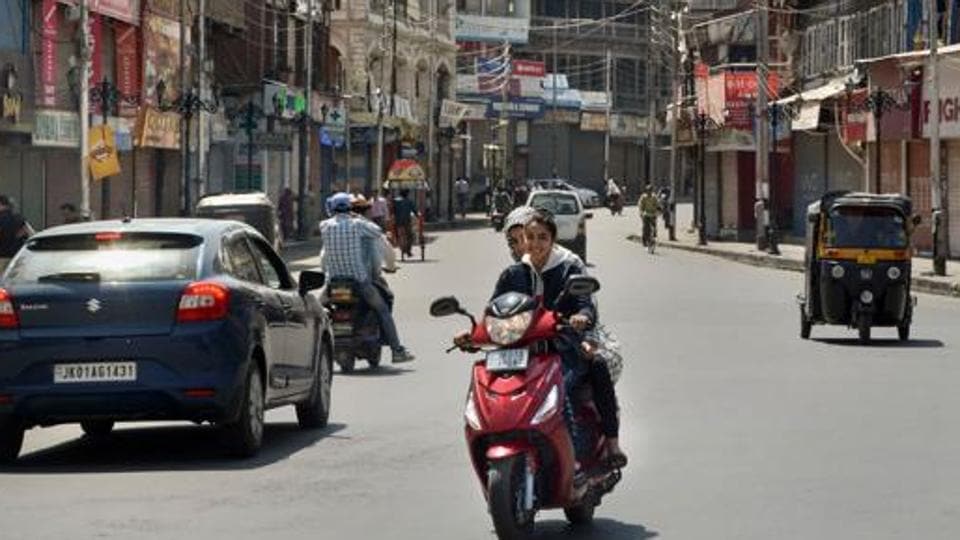
“It is only 9% of the Kashmir Valley that has certain (traffic) restrictions. At the same time, 26,000 landlines have been opened up in Kashmir Valley. People can talk to their relatives, people have communication. There is no communication gap whatsoever between people in the valley and their relatives in other parts of India and other parts of the world,” Shringla said.
In a clarificatory conversation aimed at putting the facts straight about abrogation of Article 370 that ended the hilly state’s political autonomy, the Ambassador said that the move was aimed at re-organising the state administratively. He noted that this was the 12th time that the Indian government had gone for an administrative reorganisation.
Shringla said that the administrative reorganisation of the state had in no way impinged on the boundaries of the state of Jammu and Kashmir or the Line of Control and therefore is an internal matter of India.
“It was necessary given the circumstances,” he said.
With Article 370 going, Shringla said the people of J& K will now have the opportunity to get good governance, social justice and economic development. Women who were earlier discriminated against will get their due role in the society through participation in grassroot-level elections.
“Women were particularly discriminated against as they could not participate in grass-root-level panchayat elections. Women could not inherit property if they married a non-resident of the state while if a resident of J&K who was a man married a non-resident he could inherit property,” he said.
Shringla said that a lot of funds did not percolate down to the grassroots even as the Centre transferred money to the states.
“In the last 15 years alone, the government of India allocated $42 billion for the development of J&K ; but very little of this reached the grassroot level,” he stated.
As a result, it created a moribund economy and lack of development. This discouraged investment and entrepreneurship in the state. It led to a feeling of despondency among the youth and Pakistan took advantage of this through cross-border terrorism and incitement of violence, he said.
(The story has been published from a wire feed without any modifications to the text, only the headline has been changed.)


