
 E-Paper



A masterful advocate who left his imprint on landmark cases
HT documents some of the landmark cases that Nariman was a part of as an advocate whose expanse of legal arguments transcended courtroom outcomes and resonated with the broader public conscience

 Prefer HTon Google


New Delhi In the annals of legal history, there are few figures as iconic as Fali S Nariman. With an exemplary career spanning over seven decades, Nariman distinguished himself not only by the sheer magnitude of his legal acumen but also by his unmatched ability to argue some of the most consequential cases of his time. Equipped with a deep understanding of the law and a resolute commitment to the ideals of fairness, he boldly pursued cases that others thought were either unwinnable or unachievable.
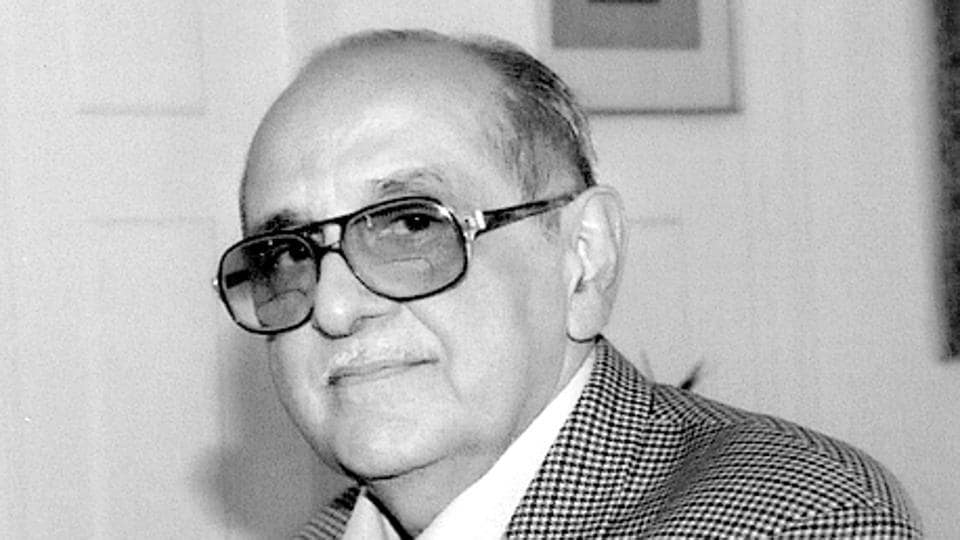
HT documents some of the landmark cases that Nariman was a part of as an advocate whose expanse of legal arguments transcended courtroom outcomes and resonated with the broader public conscience.
IC Golaknath vs State of PunjabThis case was decided in 1967 by an 11-judge bench, which held by a thin margin of 6-5 that none of the fundamental rights could be amended by Parliament under Article 368 of the Constitution, which allows Parliament to amend the Constitution. In that matter, Nariman appeared as a junior counsel for some of the petitioners. The judgment held that Parliament cannot curtail the fundamental rights of citizens, and that all amendments are amenable to judicial review. This case laid the basis for the “basic structure doctrine” formulated in the Kesavananda Bharati case in 1973.
Judicial appointments cases In shaping the collegium system of appointing judges of high courts and Supreme Court, Nariman played a seminal role by arguing in the landmark Supreme Court Advocates on Record Association Vs Union of India (1993) that came to be known as the Second Judges case and the President’s Special Reference No. 1 of 1998 (the Third Judges Cases) which ended the sole primacy of CJI in appointing judges. It expanded the meaning of the word “consultation” occurring in Articles 124 and 217 of the Constitution to mean the opinion of CJI and his two senior colleagues. In the 1998 case, the collegium was enlarged from three to five judges. Years later, when the government brought the National Judicial Appointment Commission Act, 2014 to replace collegium, Nariman opposed the move and contributed to another landmark verdict in 2015 striking down NJAC.
TMA Pai Foundation vs State of Karnataka The 2003 landmark verdict by an 11-judge bench forms a significant decision in the judicial landscape governing the right of minorities to establish and administer educational institutions. Nariman argued the matter in favour of upholding minority rights under the Constitution. The ruling set forth guidelines for government to regulate private educational institutions but held that these regulations cannot destroy the minority character of the institution.
Union Carbide Corporation Vs Union of IndiaIn the backdrop of the horrendous Bhopal gas tragedy of December 1984 which claimed more than 2,660 lives, the Union Carbide Corporation, responsible for the gas leak, approached the Supreme Court challenging vicarious liability for the tragedy in compensating victims. A five-judge bench in 1989 settled the matter after UCC agreed to pay a sum of $470 million, without accepting liability, as full and final settlement of all civil and criminal claims. Nariman was the lead advocate for UCC, for which he even faced criticism from human rights watch organisations.
In Re: Destruction of Public and private property Vs State of AP This was a suo motu case decided by the Supreme Court in 2009 to bring accountability for large scale destruction of public and private properties in the name of agitations, bandhs and hartals. The court formed two committees, one of which was chaired by Nariman, for laying down specific guidelines for investigations and prosecution of offences involving destruction of public property, assessment of damages and determination of compensation. The court adopted the recommendations of the two committees and the judgment still holds the field where the Parliament is yet to enact a law.
Sahara India Real Estate Corporation Vs SEBI In 2012, a five-judge bench of the Supreme Court undertook an exercise to examine whether guidelines could be issued to media to ensure administration of justice in criminal case trial does not get affected. Nariman, who appeared in the matter, fiercely batted in favour of press freedom and questioned the court’s jurisdiction to enforce any such guidelines on press freedom. The court accepted his submission and held that while an accused can seek postponement of reporting for a brief period no guidelines regulating media can be issued. At best, it held that such regulations should be self-regulatory or advisory.
Lily Thomas Vs Union of India In 2013, the Supreme Court gave a landmark decision by striking off Section 8(4) of the Representation of Peoples Act by directing that upon conviction, a member of Parliament or state legislature will attract immediate disqualification. Section 8(4) provided for a three-month window for the convicted legislator to file an appeal during which the disqualification would not take effect. One of the petitioners in the case was advocate Lily Thomas, for whom Fali Nariman appeared.
Nariman rejected former Supreme Court judge’s caseIn a role reversal, Nariman was the person nominated by the Supreme Court to assess the worth of a former top court judge’s contention. The senior lawyer was appointed as amicus curiae in 2016 to assist the court after justice Markandey Katju sought quashing of Parliament’s resolution condemning him for his comments against Mahatma Gandhi and Subhas Chandra Bose. The tables were turned on the retired judge and Nariman rejected justice Katju’s views. Nariman said Parliament has absolute immunity under the Constitution and that no court can question its proceedings. Justice Katju’s petition was finally dismissed by the court in December 2016.
As these cases manifest, the veteran lawyer’s dedication to the pursuit of justice was not merely a profession but a calling -- a testament to his belief in the transformative power of the law to effect positive changes.



