
 E-Paper



High court orders scientific survey of 'shivling' in Gyanvapi mosque
The HC directed the district judge to proceed in accordance with law on the application by Hindu worshippers for conducting a scientific probe of 'shivling'.

 Prefer HTon Google


The Allahabad high court on Friday set aside a Varanasi court order that rejected a demand for carbon dating of a structure found inside the Gyanvapi Masjid complex, and ordered a scientific survey to determine the age of the structure that Hindus say is a shivling, and Muslims insist is part of a fountain.
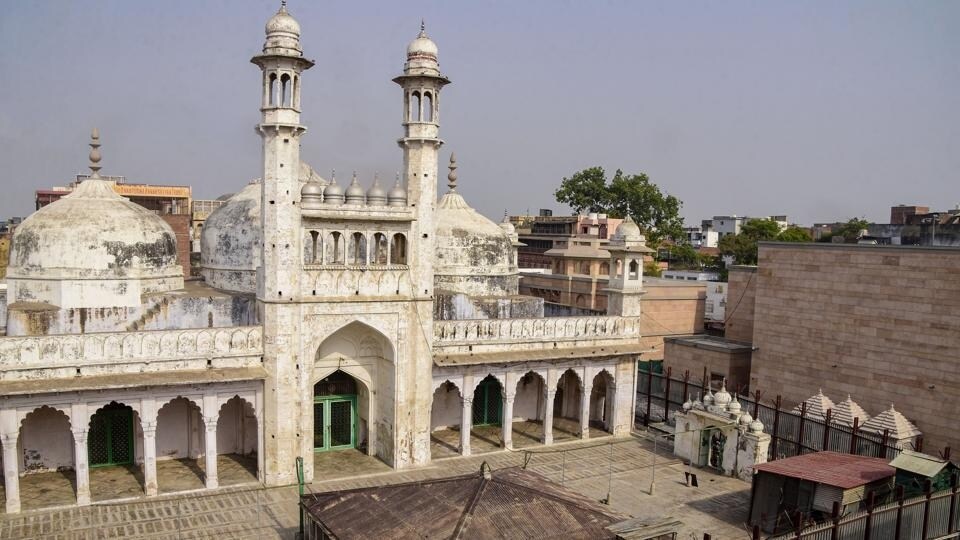
The high court directed the Varanasi district judge to proceed in accordance with law on the application by Hindu worshippers for conducting a scientific probe of the structure.
Justice Arvind Kumar Mishra allowed the revision petition filed by Laxmi Devi and three others challenging the Varanasi court order that rejected the demand for carbon-dating in October 2022. Carbon dating is a method of calculating the age of very old objects by measuring the amount of different forms of carbon in them.
Advocate Vishnu Shankar Jain, appearing for the revisionists, argued, “The district judge passed the order without any basis as it should have called for expert opinion from ASI on whether carbon dating of the Shivling could be done without causing any harm. Therefore, the order should be quashed.”
Appearing for the state government, additional advocate general MC Chaturvedi and chief standing counsel Bipin Bihari Pandey said, “If carbon dating and nature of the structure can be determined without causing any harm to the structure then the state has no objection to the process of carbon dating of the structure so that the real nature of structure could be found.”
Senior advocate SFA Naqvi, who appeared for the Anjuman Intezamia Masjid Committee (AIMC) which manages the Gyanvapi mosque, opposed the revision plea on the ground that the Supreme Court, in an order on May 20, 2022, directed the district judge to only hear the application filed by the masjid committee regarding maintainability of the suit.
The Gyanvapi dispute dates back decades but in August 2021, five women filed a petition in a local court demanding the right of unhindered worship at the Maa Shringar Gauri Sthal, located inside the complex that houses idols of Hindu gods. In April 2022, the local court ordered a controversial survey of the complex, which quickly ran into protests. The survey was finally completed in May, but not before the Hindu side claimed that a shivling was found in the final hours of the exercise. The court clamped security on the entire complex even as the Muslim side argued that the structure found was a ceremonial ablution fountain.
The case finally reached the Supreme Court, which on May 20, 2022 transferred the suit from the Varanasi civil judge to the district judge and protected the site. In September, the district court ruled that the pleas by the Hindu women were maintainable. In September 2022, four of the five women filed a plea seeking carbon dating or scientific investigation of the structure, the complex walls and the Maa Shringar Gauri Sthal. The plea was opposed not only by the mosque committee but also one of the Hindu petitioners, Rakhi Singh, who called the plea a publicity stunt and said that carbon dating of the ‘shivling’ would be an act of sacrilege.
On October 14, the court rejected the plea, citing Supreme Court directives to keep the premises sealed.
The AIMC argued that carbon dating was not possible as stone was not organic matter. The counsel also argued that the structure was not part of the suit property and hence, carrying out carbon dating or scientific investigation to verify its age was “irrelevant”
The Hindu side then approached the high court.


