
 E-Paper



Amit Shah vows no respite for Maoists during monsoon, reiterates 2026 deadline
Union home minister Amit Shah laid the foundation stones for the National Forensic Science University campus and a Central Forensic Science Laboratory in Chhattisgarh

 Prefer HTon Google


RAIPUR: Union home minister Amit Shah on Sunday declared that anti-Naxal operations will continue unabated during the monsoon season, denying insurgents the traditional seasonal pause and asserting that the government is committed to eradicating Left-Wing Extremism by March 31, 2026.
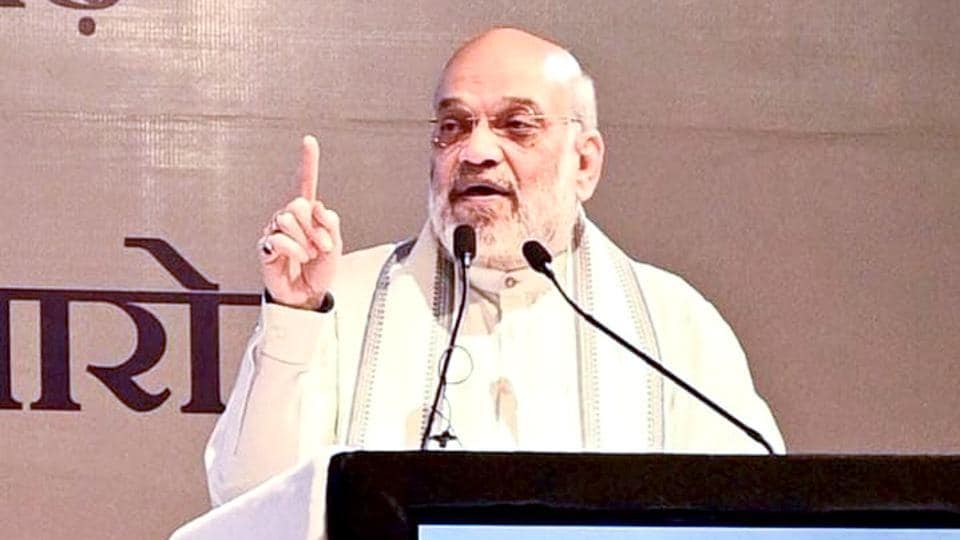
Addressing a gathering after laying the foundation stones for the National Forensic Science University (NFSU) campus and a Central Forensic Science Laboratory (CFSL) in Nava Raipur Atal Nagar, Shah ruled out any talks with Maoists and urged them to surrender and join the national mainstream.
“This time, we will not let Maoists rest during the monsoon. We are moving forward towards our target of eliminating Maoist by March 31, 2026,” Shah said.
Shah said that over 400 Maoists have been killed since January last year in Chhattisgarh, including top leader Nambala Keshav Rao alias Basavaraju, general secretary of the banned CPI (Maoist), who was gunned down in Bastar in May.
Appealing to Maoists, Shah said, “There’s no need for dialogue. Lay down your arms and join the path of development. Those who have surrendered will get all promised support from both the Centre and the state government.”
Highlighting the government’s push for criminal justice reform, Shah emphasised that the implementation of three new laws — Bharatiya Nyay Sanhita, Bharatiya Nagarik Suraksha Sanhita, and Bharatiya Sakshya Adhiniyam — would make India’s legal system faster, more scientific, and evidence-based.
“Every FIR, from any corner of India, will ensure justice within three years — up to the Supreme Court level. The era of justice based on emotions and imagination is over; evidence-based justice is the future,” he said.
He added that forensic teams will now be mandatorily involved in all crimes attracting punishments of more than seven years.
The NFSU campus in Nava Raipur, to be developed at a cost of ₹145 crore, and the CFSL worth ₹123 crore, are expected to be completed within three years. Shah said the forensic education sector is booming globally, and India’s youth should seize the opportunity.
“The global forensic technology market is projected to grow from $20 billion to 55 billion dollars by 2036. India’s share could be around 9 percent. With 32,000 forensic experts graduating each year, we will be self-reliant,” he noted.
Currently, Chhattisgarh has four regional forensic labs in Ambikapur, Bilaspur, Durg, and Jagdalpur. The addition of a central lab in Nava Raipur will eliminate the need to send samples to Delhi.
Shah also inaugurated the i-Hub High Hope initiative and the NFSU transit campus at Sejbahar virtually. He highlighted the importance of fostering local entrepreneurship for true industrial transformation in the state.
“Investment from outside is welcome, but Chhattisgarh will only truly develop when its own youth become industrialists and startup founders,” he said, stressing the need for a culture of industrial adventurism.
Chhattisgarh chief minister Vishnu Deo Sai, deputy chief ministers Arun Sao and Vijay Sharma, Union home secretary Govind Mohan, Intelligence Bureau director Tapan Deka, and state chief secretary Amitabh Jain also attended the event.
-kW0H-U20214218012MgB-250x250%40HT-Web.jpg)


