
 E-Paper



Artificial rain in Delhi today? Cloud seeding plane leaves from Kanpur
The trial will proceed today if weather conditions, including moisture levels and cloud presence, are suitable.

 Prefer HTon Google


A flight has departed from Kanpur to conduct the cloud-seeding trial in Delhi today, aiming to induce artificial rain and reduce air pollution, the capital’s environment minister Manjinder Singh Sirsa said.
Follow Delhi artificial rain live updates here.
An official told Hindustan Times that the trial will go ahead if weather conditions, including moisture levels and cloud presence, are suitable. The flight will carry out the operation over the northwest region near Burari before landing in Meerut.
He added that if conditions are not favourable for seeding, the flight will proceed directly to Meerut airport and remain there until the weather allows the operation to take place.
ALSO READ | How will cloud seeding be conducted in Delhi?
Cloud seeding in Delhi
Cloud seeding is the process of generating artificial rainfall by introducing specific particles, such as iodide crystals or salt-based compounds, into moisture-laden clouds. The trial in Delhi will be conducted to tackle the crisis of air pollution.
Particles introduced into the clouds are dispersed through aircraft, causing smaller cloud droplets to condense into larger raindrops, which can potentially lead to precipitation.
Delhi chief minister Rekha Gupta last week described the process as a necessity for the region and a crucial step towards addressing the national capital’s environmental challenges.
Delhi’s pollution crisis
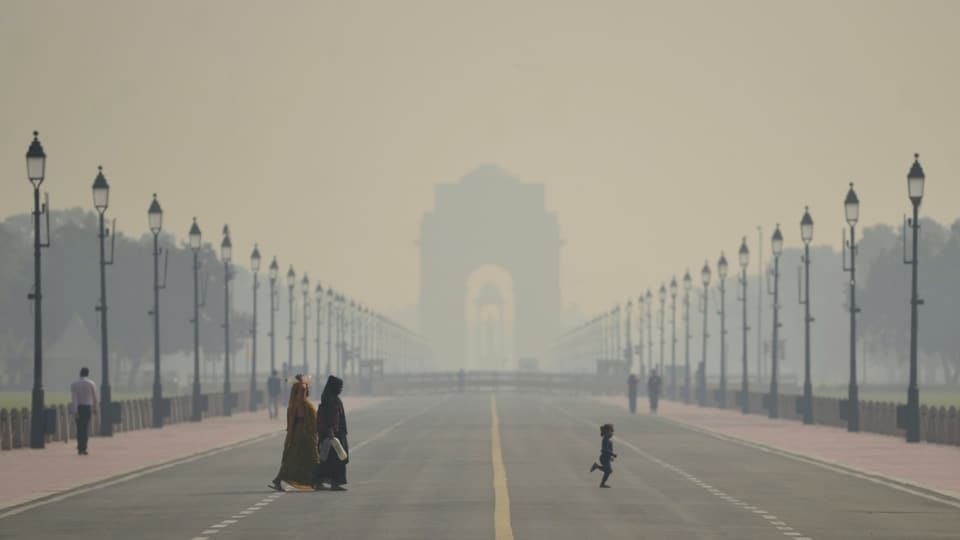
Delhi’s air quality remained in the “very poor” range on Tuesday. An average AQI of 304 was recorded at 10 am, data from the Central Pollution Control Board (CPCB) showed.
It is worth noting that the AQI in Delhi and the National Capital Region (NCR) has been in the ‘poor’ and ‘very poor’ categories across several areas since Diwali.
An AQI of 51 to 100 is classified as “satisfactory”, 101 and 200 as “moderate”, 201 and 300 as “poor”, 301 and 400 as “very poor”, and over 400 as “severe”.
Notably, the Commission for Air Quality Management (CAQM) implemented Stage 2 of the Graded Response Action Plan (GRAP) on October 19 when the AQI crossed 300.


