
 E-Paper



‘Audacity of vision’: What President Murmu said on 'One Nation One Election' in R-Day eve address
Narendra Modi government introduced the bills related to ‘One Nation One Election' plan in the parliament last month amid strong resistance from the opposition.


President Droupadi Murmu hailed the ‘One Nation One Election' plan as a reform ‘to redefine the terms of good governance’, saying that reforms of such magnitude require an audacity of vision.
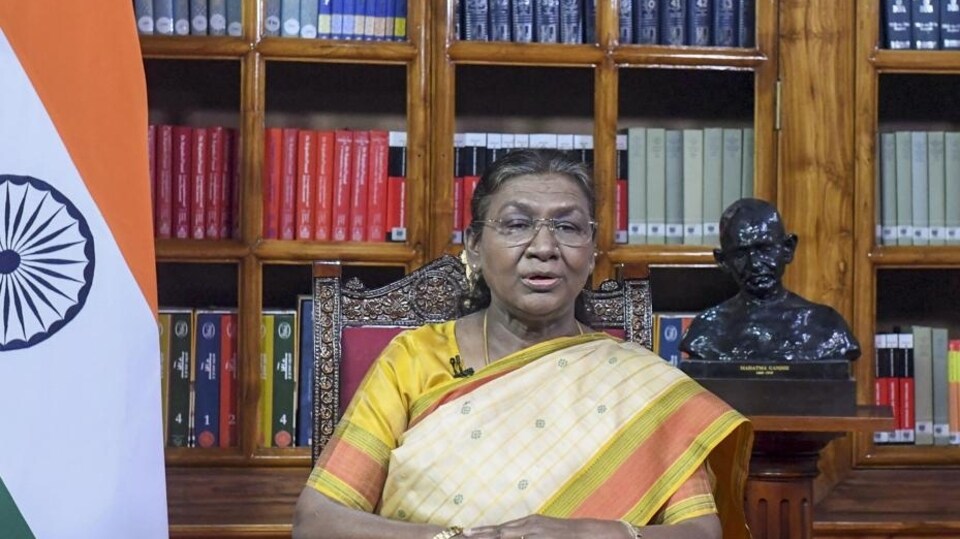
Addressing the nation on the eve of Republic Day, President Droupadi Murmu said on Saturday the proposed plan can ‘prevent policy paralysis’ and reduce financial burden apart from a host of other benefits.
"Reforms of such magnitude require an audacity of vision. Another measure that promises to redefine the terms of good governance is the Bill introduced in Parliament to synchronise election schedules in the country. The 'One Nation One Election' plan can promote consistency in governance, prevent policy paralysis, mitigate resource diversion, and reduce the financial burden, apart from offering many other benefits," she said in her address.
The Narendra Modi government introduced the bills related to ‘One Nation One Election' plan in the parliament last month amid strong resistance from the opposition. The bills are currently being discussed in a joint parliamentary committee before any further action is taken on the matter.
What is the ‘One Nation One Election' plan?
The ‘One Nation One Election' plan aims to synchronise the union parliamentary elections with all the state assembly elections and hold them simultaneously. According to the government, it would end the constant cycle of elections in the country, helping those responsible for governance to focus just on that.
Prime Minister Narendra Modi has emphasised on the need to hold simultaneous polls, saying that the country incurs significant costs and disruptions due to constant elections.
While the opposition has termed the idea as unconstitutional, the head of the panel that proposed the idea, former President Ramnath Kovind, has said that it couldn't be so as the farmers of the constitution had envisioned the same idea. To make his point, he pointed out that the parliamentary and assembly polls were held simultaneously till 1967.
To pass the bills related to the plan, the government will require a two third majority in both the houses of the parliament. Some provisions might also need ratification from half of the states of the Indian Union.


