
 E-Paper



Ayodhya verdict: Supreme Court orders 5-acre land for Muslims to build mosque
A five-judge Constitution bench headed by Chief Justice Ranjan Gogoi ruled that the mosque should be constructed at a prominent site and a trust should be formed within three months for the construction of the temple at the site many Hindus believe is the birthplace of Lord Ram.

 Prefer HTon Google


In one of the most anticipated judgments in India’s history, the Supreme Court on Saturday cleared the decks for the construction of a Ram Temple at the disputed site at Ayodhya, and directed the Centre to allot a 5-acre plot to the Sunni Waqf Board for building a mosque.
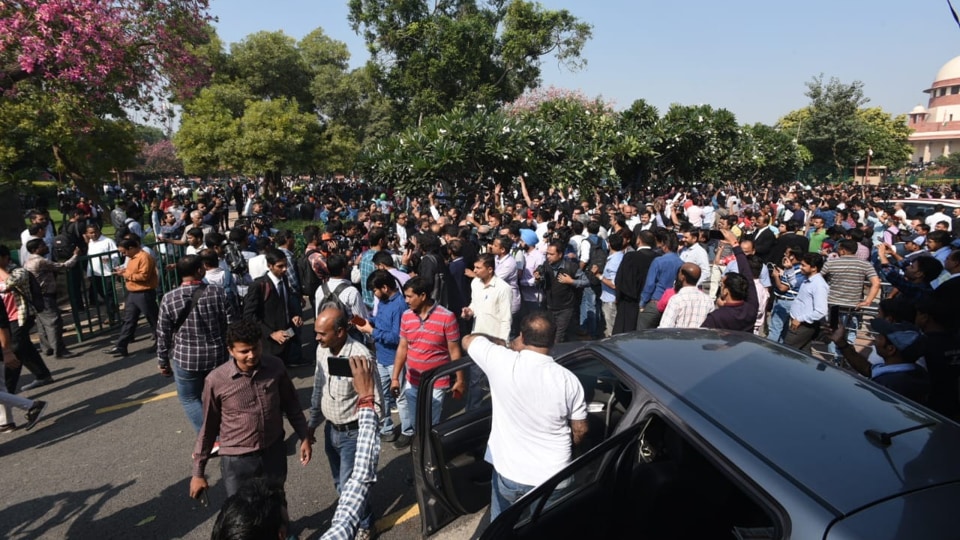
A five-judge Constitution bench headed by Chief Justice Ranjan Gogoi ruled that the mosque should be constructed at a “prominent site” and a trust should be formed within three months for the construction of the temple at the site many Hindus believe is the birthplace of Lord Ram.
The Sunni Wakf Board, one of the main litigants in the Ayodhya Ramjanmabhoomi title suit, said that it was not satisfied with the verdict and may seek a review.
The 16th century Babri mosque had stood at the site before it was destroyed by Hindu kar sevaks on December 6, 1992 in a catalytic event that triggered widespread violence across the country. It said the destruction of the mosque took place in breach of the order of status quo.
Directing allotment or alternate land to Muslims for construction of mosque, the court said, “Muslims were dispossessed of the mosque in 1949 and December 6, 1992. Wrong committed must be remitted.”
The court which had reserved its judgment on October 16, said possession of the disputed 2.77 acre land rights will be handed over to the deity Ram Lalla, who is one of the three litigants in the case. However, the possession will remain with a central government receiver, it said.
The bench, also comprising Justices S A Bobde, D Y Chandrachud, Ashok Bhushan and S Abdul Nazeer, said the UP Sunni Central Waqf Board has failed to establish its case of dedicated place of worship in the Ayodhya dispute while directing allotment of alternative land to Muslims to build a new mosque.
The top court said the extensive nature of Hindus worship at outer courtyard at the disputed site has been there, and the evidence suggests the Muslims offered Friday prayers at mosque which indicates that they had not lost possession of the site.
The court said Babri mosque was not constructed over a vacant land and the underlying structure was not Islamic but the Archaeological Survey of India (ASI) has not established whether a temple was demolished to build a mosque.


