E-Paper



Bihar polls: Social composition of candidates in the fray
If one were to compare the candidature of the NDA and MGB separately, they show a remarkable difference.

 Prefer HTon Google


New Delhi : The Bihar elections are being fought, at least on the face of it, on issues such as development, unemployment, migration etc. This rhetoric notwithstanding, the election is also a quest by both major alliances to ace the caste calculus of politics in the state. It is here that caste composition of candidates plays a big role.
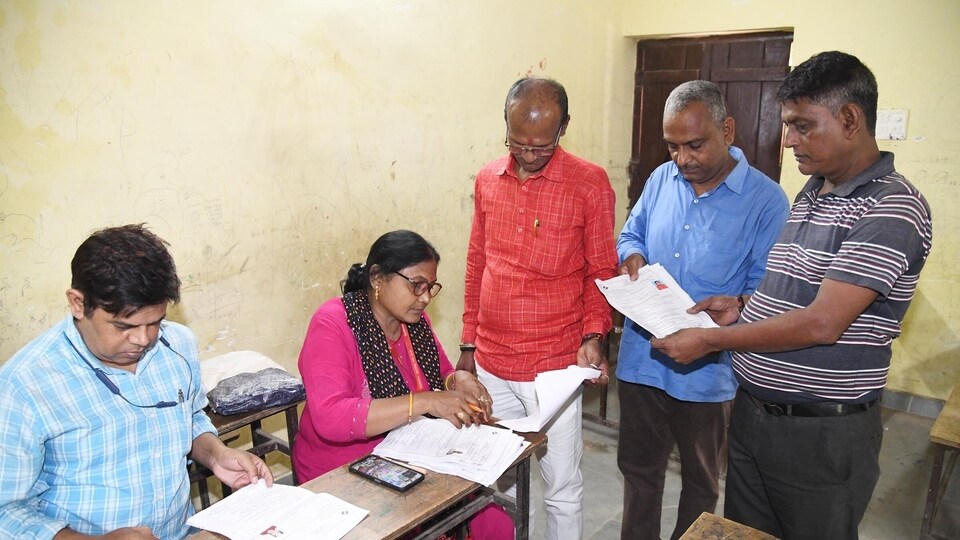
What is the caste composition of candidates fielded by the two major alliances in Bihar? How representative or non-representative is it, vis-à-vis the overall population of the state? How useful are broad social categories such as Other Backward Classes (OBCs) in disaggregating the caste composition of candidates?

The first author of this story prepared a caste database of all candidates fielded by the National Democratic Alliance (NDA) and the Mahagathbandhan (MGB) in the 2025 Bihar elections. This two-part series based on the database of the candidates, which complements the larger caste-database of all MLAs in Bihar since 1962 which was launched in these pages on Monday.
The broad social categorisation of population is usually on the lines of Other Backward Classes (OBCs), Scheduled Caste (SC), Scheduled Tribe (ST) and non-SC-ST-OBC or the proverbial upper castes. From a political standpoint however, it makes more sense to take Muslims as a separate group (they are divided into OBCs, non-SC-ST-OBCs and even STs in some places).
In the case of Bihar, even the larger OBC category has been disaggregated further between Extremely Backward Classes (EBCs) and Backward Classes (BCs). Because the Government of Bihar conducted and published the results of a caste-based survey in 2023, we actually have the recent demographic shares of each of these broad groups and even their sub-caste wise subsets unlike any other state in the country. According to the results, EBCs are the biggest broad social group in Bihar, but they show a large fragmentation at the sub-caste level. (See Chart 1)
Going by EC data, NDA and MGB filed papers for 243, 255 candidates
With the last date of withdrawal of nominations now over in the state, the Election Commission of India (ECI) has published the final list of candidates in the state.
HT has used this data from the ECI to curate a list of all candidates of parties which are a part of both the NDA and the MGB.
The exercise returns names of 242 candidates for the NDA and 252 candidates for the MGB, both of which are different from the total number of assembly constituencies in the state which is 243. The numbers differ for the NDA because the nomination of one NDA candidate (Seema Singh from Marhaura) was rejected during the scrutiny process.
While the MGB also saw three of its nominations being rejected during scrutiny (Ganesh Bharti Sada, Sweta Suman, and Sashi Bhushan Singh from Kuseshwar Sthan, Mohania, and Sugauli), it has more candidates than the number of ACs because there is more than one candidate from parties which are part of the MGB in 12 ACs.
Five such “friendly fights” in the MGB camp are in ACs where the RJD and Congress candidates are pitted against each other, seven in ACs where either the RJD or Congress has a candidate against a smaller ally. (See Chart 2)
MGB share of OBC candidates is higher, but upper caste candidate share in NDA is twice that of MGB
Classifying candidates of both the NDA and the MGB on a broad social group-wise basis shows that BCs have the biggest share in total number of candidates and they are followed by non-SC-ST-OBC or upper caste Hindus. SCs are ranked third in terms of overall share, which is almost at par with the share of SC-reserved ACs in the state.
If one were to compare the candidature of the NDA and MGB separately, they show a remarkable difference. While both the NDA and the MGB have given almost half of their tickets to candidates from larger OBC-cohorts, the MGB has a greater share of BCs compared to the NDA, while the latter has fielded more EBCs than the MGB.
NDA has also given significantly more tickets to the upper castes than the MGB, while Muslim representation within the MGB is significantly higher than the NDA.
This analysis has included candidates whose nominations were cancelled by ECI (but excluded the nominations that were withdrawn by the parties themselves) and also counted candidates of both parties in ACs where the MGB has more than one candidate. When compared to their overall population shares, Hindu upper castes are over-represented in both alliances. (See Chart 3)