
 E-Paper



Bill to extend SC, ST quota in legislatures gets Lok Sabha nod
The Constitution (One Hundred and Twenty-Sixth Amendment) Bill, 2019 was passed with a division, with all 355 members present in the House voting in its favour. The Bill was introduced in the Lok Sabha by law minister Ravi Shankar Prasad on Monday.


The Lok Sabha on Tuesday unanimously passed a constitutional amendment bill to extend political reservation for socially disadvantaged Scheduled Castes (SCs) and Scheduled Tribes (STs) in state assemblies and the Lok Sabha for another 10 years.
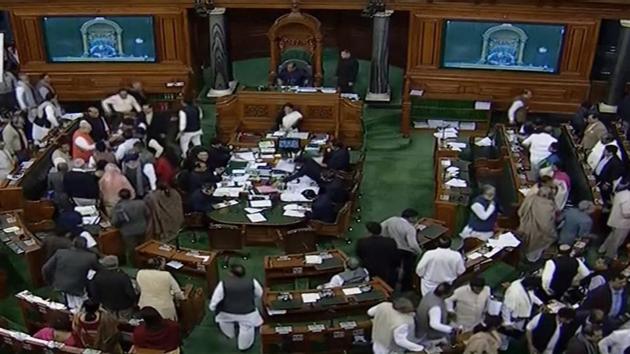
The Constitution (One Hundred and Twenty-Sixth Amendment) Bill, 2019 was passed with a division, with all 355 members present in the House voting in its favour. The Bill was introduced in the Lok Sabha by law minister Ravi Shankar Prasad on Monday.
The Constitution provides for reservation of seats for SCs and STs and representation of the Anglo-Indian community through nomination in the Lok Sabha and state legislative assemblies for a period of 70 years since the enactment of the Constitution. This period is set to expire on January 25, 2020.
Opposition members, including from the Trinamool Congress and the Congress, slammed the government, as the draft legislation did not have a similar provision to extend reservation for Anglo-Indians in elected legislatures. The Constitution provides for reservation of two seats in the Lok Sabha and one seat each in legislative assemblies for Anglo-Indians .
Prasad, however, said the doors were not shut and the matter of granting Anglo-Indians nomination would be considered. The minister said there were only 296 Anglo-Indians, or persons who are descendents of European lineage, in the country. The Opposition questioned the data. “This figure is not correct,” said Saugata Roy of the Trinamool Congress.
Currently, of a total of 543 seats in Lok Sabha, or the lower house, 84 seats are reserved for SCs, while 47 seats are reserved for STs. Of a total of 4120 seats in legislative assembly segments in the country, 614 are reserved for SCs, while 554 seats are reserved for STs.
The Constitution originally provided for political reservation to SC and ST communities and Anglo-Indians for a period of 10 years, which meant it would have expired in 1960. The validity of reservation for SCs and STs has been extended periodically by various governments through similar amendments. It was extended for 20 years in 1959 and 30 years in 1969. In 2009, it was extended by another 10 years.
“Our government believes that although there have been big improvements in the lives of these two communities (SCs and STs), yet there is a need to achieve further progress in improving their lot. For this, we have brought this bill to extend the reservation for another 10 years till January 25, 2030,” law minister Prasad said.
Replying to the debate on the Bill, Prasad said the reservation in legislatures for SCs and STs was required to build “new political leadership” from the two communities.
Prasad also said that the government was against the concept of a “creamy layer” for the SC and ST communities on grounds that they should not be “segregated” on such lines.


