E-Paper



CBSE files FIR over cyberattacks on Class 12 re-evaluation portal
CBSE said the portal was “subjected to repeated and coordinated cyber attacks over the past three days”.

 Prefer HTon Google


The Central Board of Secondary Education (CBSE) on Friday said it has filed a formal complaint with the Intelligence Fusion & Strategic Operations (IFSO) unit of Delhi Police regarding what the board called a series of coordinated and sophisticated cyberattacks targeting its post-result services portal by “elements inimical to national interest”.
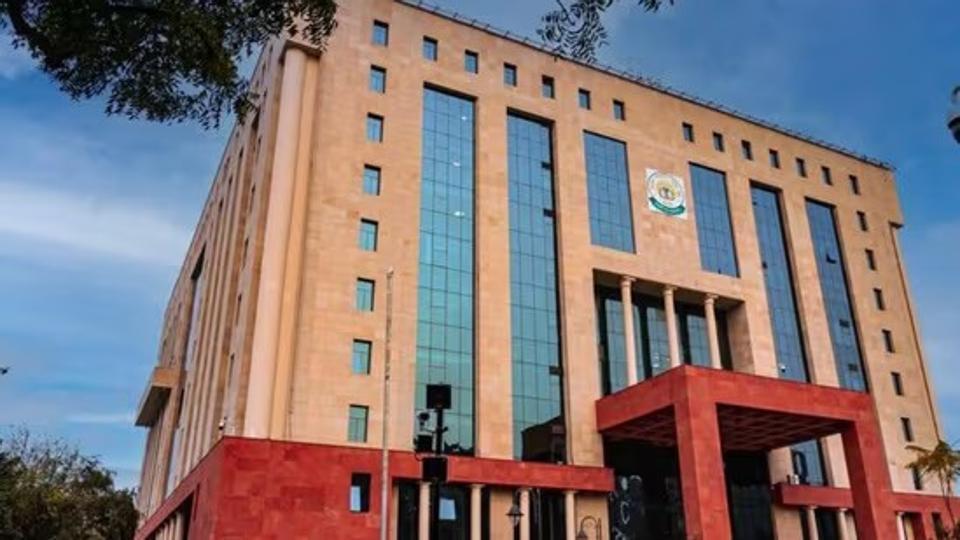
Following the complaint, Delhi Police filed an FIR under sections 66 and 43(f) of the Information Technology Act and launched an investigation into the matter.
In a statement, CBSE said the portal, launched on June 2 for Class 12 students to seek verification of marks and re-evaluation of answer scripts evaluated on the basis of the onscreen marking (OSM) system, was “subjected to repeated and coordinated cyber attacks over the past three days”.
The board said the attacks involved large volumes of malicious traffic originating from multiple IP addresses within and outside the country but underlined that no data breach or unauthorised access has been detected.
“The apparent objective of the attackers appeared to destabilise the platform, deny access to legitimate users and attempt unauthorised extraction of information by the elements inimical to national interest,” CBSE said in a statement.
The board re-launched the re-evaluation portal on Tuesday and spoke about attempts by “malicious actors” to cripple the platform shortly after it went live. In a post on X on Tuesday, CBSE said there was a major denial-of-service (DoS) attack that flooded the network with 1.5 million hits within a two-minute window and over 100,000 unauthorised attempts to access files.
The portal’s rollout—originally scheduled for May 29—has faced roadblocks and postponed the launch to June 1, a deadline which the board missed again, and finally went live around 4:30 am on June 2.
Giving details about cyberattacks on CBSE’s post result portal, a senior IIT Kanpur official, who is a part of the expert team, told HT that it faced two denial of services (DoS) attacks on June 2 and 3 in which large numbers of requests were made on the portal. DoS attack means a website getting a large number of requests from the same IP address.
“For instance, 13 lakh requests were made on the portal within a two minutes window on June 2 and the next day, there were 31 lakh requests within a two minutes. There is no ongoing cyberattack currently,” official said, requesting anonymity.
“We are hosting the website on Amazon Web Services (AWS) which already has a mechanism to block the DoS attack and it ensured that the attackers did not succeed. The expert team of IIT Kanpur and IIT Madras is yet to prepare the report on vulnerabilities in CBSE portal and OSM platform managed by Coempt Edu Teck,” the official said.
After being directed by Union education minister Dharmendra Pradhan on May 24, IIT Madras and IIT Kanpur have deputed a four-member expert team to help the CBSE resolve glitches in its post-result services portal. The team comprises computer systems, process and cyber security experts.
As of June 4 (the latest available), a total of 70,433 successful applications have been received through the CBSE post-result grievance redressal process, including 7,314 applications for Verification of Marks and 63,119 applications for re-evaluation.
The board said that any disruption to the portal’s functioning has the potential to adversely impact a large number of stakeholders, “cause significant public inconvenience, and affect public order and create dissatisfaction among students against the board.”
The board said the attacks on the portal were successfully mitigated through continuous 24×7 monitoring and response mechanisms, with support from cybersecurity teams of IIT Kanpur, IIT Madras, Digital India Corporation, the Indian Cyber Crime Coordination Centre (I4C), CERT-In, and other central government agencies.
The portal will remain open till June 7 (midnight), and no offline applications or requests submitted after the deadline will be accepted. After logging in using details such as roll number, date of birth and Aadhaar number, students seeking re-evaluations are required to specify the question number, page number where the answer appears, marks awarded, marks they believe they deserve and reasons for seeking re-evaluation, including instances where they believe their answer matches the marking scheme but has received fewer marks.
Students, who applied for scanned copies of answer sheets between May 19 and 25 and have received them, can raise question-wise objections and verification requests till June 7. These objections will then be reviewed by subject experts through the OSM system.