E-Paper



Changing climate demands stronger water monitoring, early warnings: CR Patil
“We need better science, stronger monitoring, timely early warnings and better preparedness,” Patil said at the inaugural session of the 9th India International Water Week 2026

 Prefer HTon Google


Climate change is rapidly shifting global water cycles and heightening risks across vulnerable ecosystems like the Himalayas, Union Jal Shakti minister CR Patil said on Tuesday, calling for better science, stronger monitoring, timely early warning systems and improved preparedness.
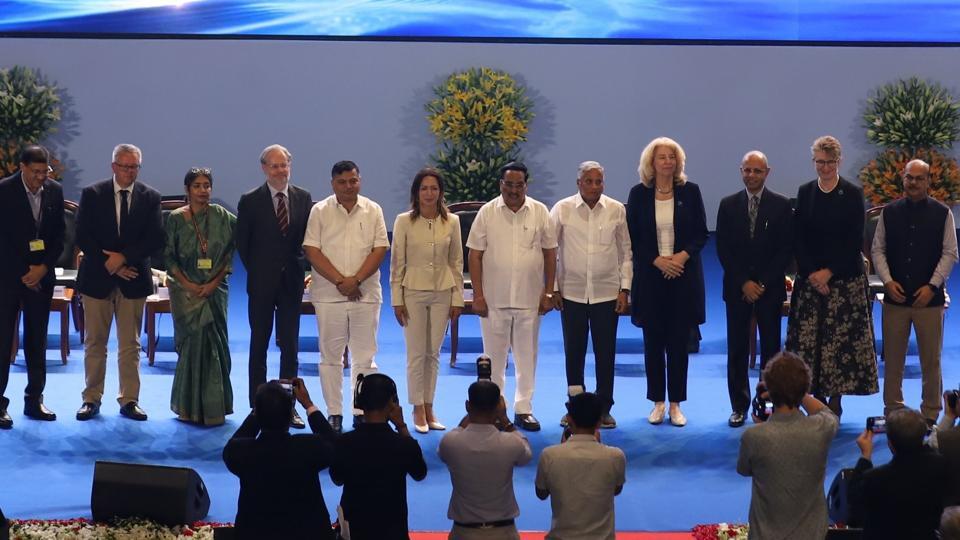
“We need better science, stronger monitoring, timely early warnings and better preparedness,” Patil said in his inaugural speech at the 9th India International Water Week 2026 on the theme, Climate Resilient Water Management. The minister said the most important requirement was for countries and regions to learn from each other’s experiences and work together to deal with emerging water risks.
Patil said climate change was rapidly altering the water cycle, with some areas witnessing excessive rainfall, others receiving too little, and rainfall sometimes failing to occur when it was most needed.
“Water is a shared resource and therefore water security is also a shared responsibility,” he said, stressing that rivers cross regional boundaries and groundwater connects communities and that water management needed an integrated approach.
India’s water security agenda
The minister underscored that India’s water security was a key foundation for the government’s vision of Viksit Bharat@2047 and that the focus could not be limited to water availability, but also to efficient use, protection of water sources, groundwater recharge, and meeting future demand.
Patil cited the Jal Jeevan Mission as an example of the scale of India’s water interventions. In 2019, about 3.24 crore rural households had access to tap water, while the number has now reached nearly 16 crore households, he said.
The next challenge, however, would be not to merely provide tap connections but to ensure that people receive regular, safe and adequate water. This would require protecting water sources, operation and maintenance, and greater participation by villages, he said.
Patil said real-time data, satellite information, improved forecasting and artificial intelligence could strengthen decision-making on floods, groundwater, reservoirs and irrigation.
But technology alone would not be enough, he said. Science would have to be connected with society and technology with local needs, while people’s participation should remain at the centre of water programmes.
“Water challenges cannot be solved by any one ministry, state or country,” Patil said, calling for greater cooperation and exchange of experiences. “India is ready to share its experiences and also learn from the experiences of the world.”