E-Paper



China reacts to UK envoy’s remarks on India-China stand off, says ‘no need for any interference’
British envoy Philip Barton had said on Thursday that China’s actions around the globe, including imposing a national security law in Hong Kong and the border standoff with India, posed a challenge for the world community and Britain will work with partners to call out violations of international law.

 Prefer HTon Google


Chinese ambassador Sun Weidong on Friday criticised his British counterpart Philip Barton’s remarks regarding the India-China border standoff, saying it was a bilateral matter that required no “third party interference”.
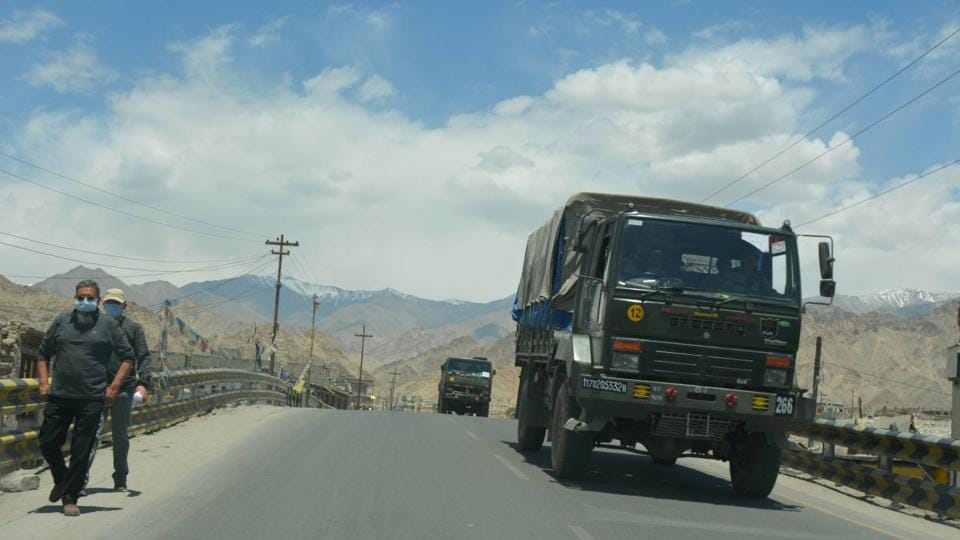
Barton had said on Thursday that China’s actions around the globe, including imposing a national security law in Hong Kong and the border standoff with India, posed a challenge for the world community and Britain will work with partners to call out violations of international law.
Sun took to Twitter early on Friday morning to criticise the comments.
“Noted remarks regarding #China by British High Commissioner to India, rife with mistakes & false allegations. Boundary question falls within bilateral scope [between] #China & #India. We have wisdom & capability to properly handle differences. No need for third party interference,” he tweeted shortly before 1 am.
Sun said in a second tweet: “Real challenges in #SouthChinaSea come from powers outside the region stirring up territorial & maritime disputes & undermining regional peace & stability. On #HongKong affairs, #China’s HK allows no foreign interference.”
Also read| Chinese actions are a challenge for the world community: British envoy
Also Watch | ‘Closing more Chinese consulates in US always possible’: Donald Trump
Barton had made the remarks in his first news briefing after presenting his credentials. However, the British envoy had also made it clear that the India-China border standoff was a bilateral matter that the UK had no desire to be a part of.
“From the UK perspective, obviously we’re not part of that nor do we want to be,” Barton had said while responding to a specific question on the situation along the Line of Actual Control (LAC), where India and China have arrayed tens of thousands of troops since May.
Barton had also been critical of China’s actions in the former British colony of Hong Kong and the South China Sea.
“There are challenges around the world on all sorts of Chinese actions, for us Hong Kong particularly is a focus, clearly for India the LAC is a particular focus,” he said.
“These are concerning things and our hope would be that there can be de-escalation, and tensions do seem to have eased over the last week or two after the tragic loss of lives,” he said, referring to the death of 20 Indian soldiers in a clash with Chinese forces along the LAC on June 15.
The envoy welcomed progress by India and China in managing tensions and the commitment by the two Special Representatives on the border issue to disengage and de-escalate. “I hope we’re not about to see a change in that,” he said.
Britain had its own concerns about a range of Chinese actions and had also decided to remove Chinese technology giant Huawei’s equipment from all its telecommunications networks by 2027 because of security concerns, he said.