E-Paper



CLAT doesn’t necessarily produce students of right ethos: CJI Chandrachud
Apart from the CJI who is the ex-officio visitor of the institute, Supreme Court justice and university chancellor P S Narasimha, Justice B R Gavai (SC) and member of the trust also graced the occasion

 Prefer HTon Google


Chief Justice of India (CJI) Justice D Y Chandrachud called for greater diversity in legal education saying that the current system of selecting candidates for the National Law Schools through the Common Law Admission Test (CLAT) “does not always promote value-based legal education.”
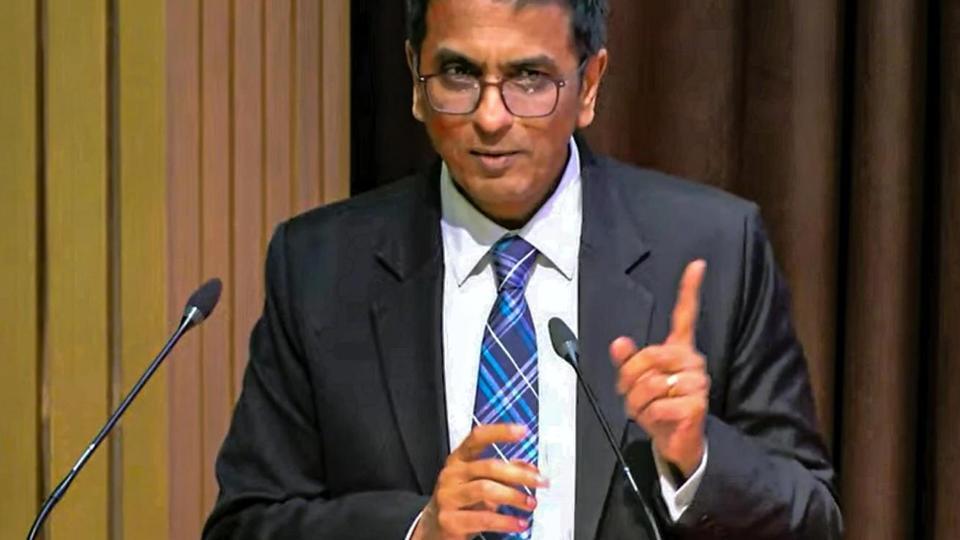
Delivering the address at the inaugural session of the India International University of Legal Education and Research (IIULER), in Goa, Dr Chandrachud said “cracking the CLAT doesn’t necessarily result in students who have the right ethos to pursue a career in the law.”
Also Read:Ahead of board exam, CBSE seeks participation of students in Pariksha Pe Charcha
“We must have a student body which is inclusive. One of the problems which national law universities have faced is perhaps the model which we use to select students for our national law universities does not always promote value-based legal education, because we have a common law entrance examination and we test the ability of students to crack the CLAT,” the Chief Justice said at the gathering.
“Now cracking the CLAT doesn’t necessarily result in students who have the right ethos to pursue a career in the law; of reflecting the culture of the law in our country; as a representative of a just society, a value-based society, an ethical society and therefore I think as we go forward, I would appeal to both the chancellor, the VC and the other members of the faculty to place importance on having value based legal education for students of diverse backgrounds,” the CJI said.
“I do believe that if we have to truly be faithful to being an international centre, we must source people irrespective of their national origin or domicile. By doing so, we do not pay disrespect to the fact that there are people of talent within the country. But I think it is necessary for us to broaden our horizons, to understand where global India is heading in the next few years and the next few decades,” he added.
Also Read: Madras HC prohibits people from using mobile phones inside temple premises
Apart from the CJI who is the ex-officio visitor of the institute, Supreme Court justice and university chancellor P S Narasimha, Justice B R Gavai (SC) and member of the trust also graced the occasion.
Chairman of the Bar Council of India (BCI) and the BCIT-PF, Manan Kumar Mishra also presided over the inaugural function along with Attorney-General for India R. Venkataramani, Law Minister of Goa Nilesh Cabral, Justice Dipankar Dutta, Chief Justice of the Bombay High Court, Justice M S Sonak, Judge In-charge, Goa Bench of the High Court of Bombay, Devidas Pangam, Advocate General, Goa (both members of the executive council of the University), Senior Advocates, renowned academicians and trustees of the governing board were also present.
The institute for which the government of Goa has allocated 50 acres of land at Dharbandora, has started functioning from its initial world-class transit campus with smart classrooms and other state-of-the-art facilities in Sancoale close to the Goa campus of BITS- Pilani.
IIULER- offers multi-disciplinary courses (UG, PG and research-based courses along with multiple customised, creative law learning programmes) with proper integration of law. It will also have a state-of-the-art foreign language lab.