
 E-Paper



Is the communal fault line behind PDP-BJP break-up in Jammu and Kashmir?
An HT analysis shows that BJP’s 2014 assembly performance is strongly related to the presence of Hindu voters.


The BJP has cited the perceived failure of the People’s Democratic Party (PDP) to provide effective governance in Jammu and Kashmir and a “threat to India’s larger national interest” as reasons for walking out of the coalition government. The PDP said it will continue to “strive for dialogue and reconciliation.” Behind such posturing lies a deepening communal fault line and the politics associated with it in the troubled state.
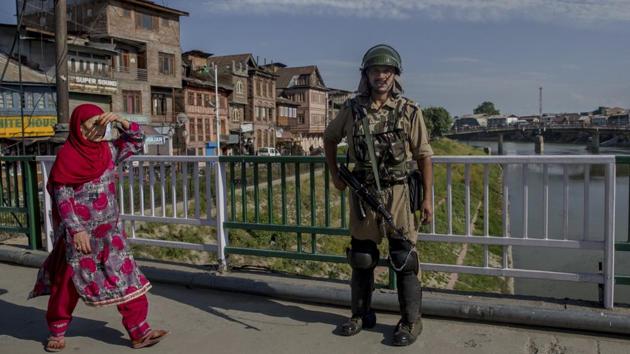
J&K is the only Muslim-majority state in India. This headline number, however, does not tell us about the skewed region-wise religious distribution of population in the state (See box). Both Jammu and Ladakh have been experiencing simmering communal tensions. The boycott of Muslims by Buddhists in the Ladakh region over an inter-faith marriage last year and an ugly conflict over the rape of a minor Muslim girl in Kathua are extreme manifestations of these tensions. It is natural that these will play a role in the state’s politics as well.
In the 2014 assembly elections, the BJP won 25 seats, its highest ever tally, in the J&K assembly. All of these seats came from the Hindu dominated Jammu region.

An HT analysis shows that BJP’s 2014 assembly performance is strongly related to the presence of Hindu voters. This is based on the share of assembly seats won by BJP in each district with the share of Hindus in the district’s population from the 2011 census.
After the 2008 delimitation, all assembly constituencies (ACs) are situated within district boundaries. District-wise distribution of ACs has been taken from Trivedi Centre for Political Data at Ashoka University.
The BJP and PDP agreed to share power after the 2014 state elections produced a hung assembly, but it would have been difficult for both to justify the alliance to their voters. The communal divide in J&K’s polity has definitely played a role in the break-up between the two.


