
 E-Paper



Compensation from Big Tech key media issue: I&B minister Ashwini Vaishnaw
Ashwini Vaishnaw highlights fake news, platform accountability, and fair compensation for media as key challenges for news publishers today.

 Prefer HTon Google


Disinformation and fake news online, and fair compensation for news publishers are two of the four biggest challenges faced by the news media today, information and broadcasting minister Ashwini Vaishnaw said on the occasion of National Press Day on Saturday.
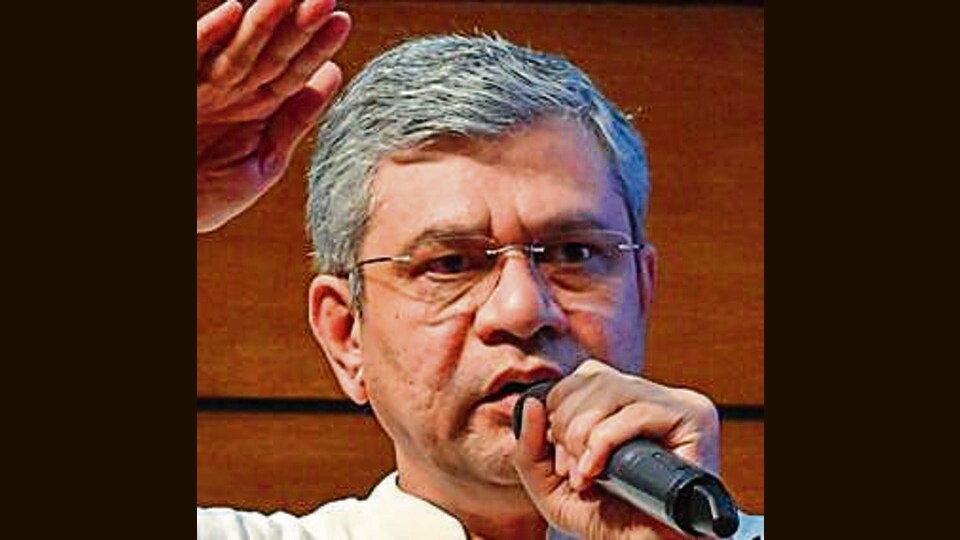
He called for greater accountability and responsibility from online platforms as he asked whether safe harbour, a concept that protects platforms from liability for content posted by users, was still relevant today. The other two challenges he listed are algorithmic biases on platforms and impact of artificial intelligence on intellectual property rights.
Vaishnaw said that the rapid spread of fake news threatens both media and democracy. He said that platforms do not verify information posted online because of which “false and misleading information” floods all platforms.
The minister said that the concept of safe harbour was introduced in the 1990s when the internet was available only to a select few. “Today digital medium is available to one and many. ... So is the construct of safe harbour, that was developed in the 1990s, still relevant today? This is the debate which is happening right now in many parts of the world, in many developed and developing countries,” he said.
Vaishnaw said online platforms, by shying away from responsibility for the content, had let riots occur in developed countries and allowed interference in their democratic processes.
Fair compensation for media required
Vaishnaw said that today, as more news is consumed through digital means, traditional media has been suffering financially.
Vaishnaw said that conventional media needs to be “suitably compensated” for the content it creates by investing into training journalists, having editorial processes, fact checking, and taking responsibility for the content produced.
Indian news publishers --- both conventional and digital --- have repeatedly raised concerns with the Indian government about the imbalance in bargaining power between big technology companies and news publishers, especially because of the former’s monopoly over digital advertising.
An industry body, the Digital News Publishers Association (DNPA), whose members include HT Digital (Hindustan Times’ digital arm), has been advocating for revenue-sharing mechanism with big Tech firms such as Google and Meta, akin to Australia’s News Media Bargaining Code and Canada’s Online News Act, both of which have led to mixed impact on news publishers in their jurisdictions.
Algorithms maximise engagement, need to protect the intellectual property of content creators
Vaishnaw said that algorithms on online platforms are designed to maximise engagement as it affects their revenues.
“Unfortunately, these algorithms also tend to prioritise content that incites strong reaction regardless of the factual accuracy,” he said. Misinformation and algorithmic bias, he said, can have “serious social consequences” in India. “The platforms must come out with solutions that account for the impact their systems have on our society,” he said.
Vaishnaw also said that the rights of the original content creators --- including writers, authors, musicians, filmmakers --- was being ingested by AI models and needed to be safeguarded. “This is not just an economic issue; it is an ethical issue also,” he said.


