E-Paper



Supreme Court stresses balancing privacy rights with press freedom in data protection act
The plea argues that the data protection framework fails to distinguish journalism in public interest from other forms of processing personal data.

 Prefer HTon Google


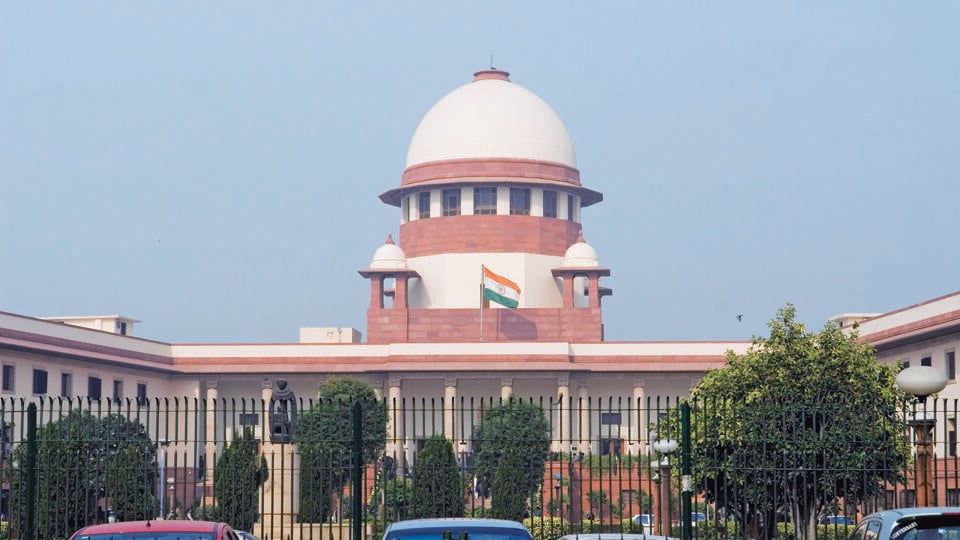
The Supreme Court on Tuesday stressed the need to strike a balance between citizens’ right to privacy and the media’s freedom to investigate and report, as it issued notice on a petition by the Digital News Publishers Association (DNPA) challenging provisions of the Digital Personal Data Protection (DPDP) Act, 2023, and the rules framed under it in 2025.
‘A balance has to be struck’
A bench, comprising Chief Justice of India Surya Kant and justices Joymalya Bagchi and V Mohana, also issued notice on the association’s interim prayer for a stay on the operation of the challenged provisions. The court will hear the matter on November 17.
“You are the best person to suggest to the Union and us how you will ensure there is no misuse,” the bench told senior advocate Madhavi Divan, appearing for the DNPA, as the bench underlined that the privacy rights of ordinary citizens would have to be protected alongside the media’s constitutional freedoms.
“There will be rights of innocent citizens and then there is your right. A balance has to be struck,” CJI Kant said.
Divan told the bench that the petition was the first comprehensive challenge by what she described as “legacy media”, representing conventional news publishers. She argued that the law could fundamentally alter the way journalism is practised by requiring news organisations to obtain consent before collecting or processing personal information for reporting.
“News has to be new…what is the point if I have to ask for permission and consent?” she asked, warning that the framework could effectively introduce pre-censorship and leave newsrooms unable to pursue stories involving public officials and government offices.
“Newsrooms will shut down…regime of pre-censorship…what’s news otherwise?” said Divan, adding that publishers were already subject to regulatory mechanisms, including the Press Council of India.
If a report was inaccurate, she said, the publisher should face the consequences rather than be required to obtain prior permission before publication.
The bench reiterated that the competing rights would have to be reconciled. When Divan asked how journalists could report under the proposed framework, the court suggested the association might also explain how it would ensure that reporting did not infringe the rights of individuals.
Removal of public interest disclosure
The plea is important because it challenges not merely the general framework to protect digital personal data, but also the absence of a specific exemption for journalistic work. The DNPA represents 21 news publishers, including media firms associated with the Adani and Ambani groups, as well as several prominent newspaper and television networks. HT is also part of the DNPA.
At the heart of the challenge is Section 44(3) of the DPDP Act, which amended Section 8(1)(j) of the Right to Information Act, 2005. The association contends that the amendment removes the earlier public-interest disclosure safeguard for personal information and could restrict access to records relevant to public accountability.
Also Read I Claude’s unauthorised access to US voter data raises concerns
The plea argues that the data protection framework fails to distinguish journalism in public interest from other forms of processing personal data.
Without such a distinction, reporters could face demands for consent, withdrawal of consent and erasure of personal information even when the information is relevant to investigations into corruption, corporate wrongdoing or misconduct by public officials, it contends.