
 E-Paper



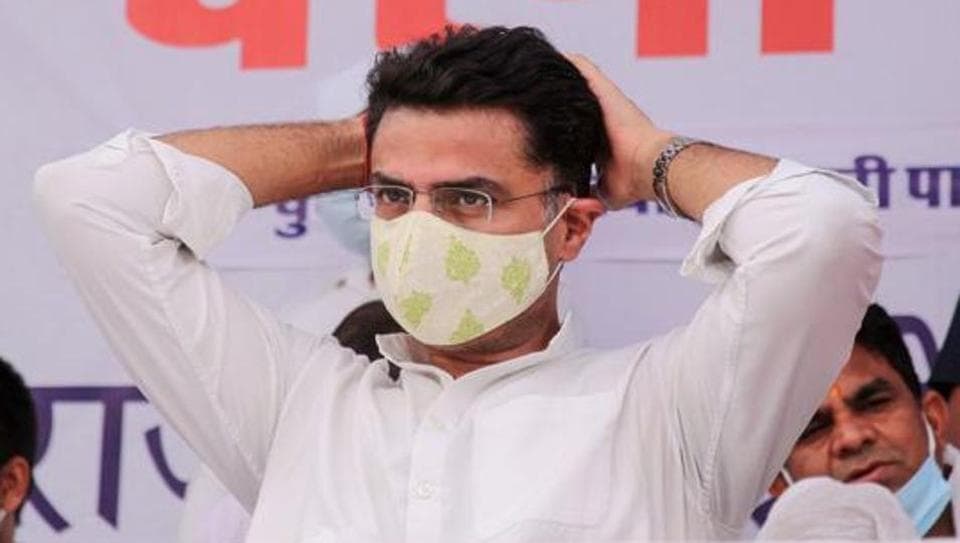
Disqualification of Sachin Pilot, 18 others sought by Congress
Congress leaders involved in the strategy said on condition of anonymity that Pilot’s conduct, statements by his close aides and his absence from two meetings of the Congress legislature party in Rajasthan together make a strong case for his disqualification.

 Prefer HTon Google


The Congress’ chief whip in the Rajasthan assembly Mahesh Joshi wrote to speaker CP Joshi seeking the disqualification of former deputy chief minister Sachin Pilot and 18 members of the legislative assembly under the provisions of the 10th Schedule of the Constitution (popularly known as the anti-defection law).
But it emerges that the party may have taken an expansive view of the anti-defection law.
While Joshi confirmed to news agency PTI that disqualification proceedings have begun with notices being issued to the 19 legislators, efforts continued to convince Pilot, who reiterated on Wednesday that he doesn’t plan to join the Bharatiya Janata Party, to return to the fold -- although HT learns that chief minister Ashok Gehlot is keen to disqualify Pilot.
Congress leaders involved in the strategy said on condition of anonymity that Pilot’s conduct, statements by his close aides and his absence from two meetings of the Congress legislature party in Rajasthan together make a strong case for his disqualification.
Some constitutional experts say Pilot may take the legal route to respond to the disqualification notice and even seek the removal of CP Joshi as the speaker on the ground of partial conduct to gain more time. The disqualification of the 19 will reduce the effective strength of the House to 181, with a majority mark of 91, well below the 104 legislators Gehlot whose support Gehlot confirmed to the state’s governor on Tuesday.
The 10th Schedule says that a lawmaker can be disqualified from the House “if he has voluntarily given up his membership of such political party” or “if he votes or abstains from voting in such House contrary to any direction issued by the political party to which he belongs or by any person or authority authorised by it in this behalf without obtaining prior permission of such political party.”
Two of the Congress leaders cited above argued that the law can be extended to behaviour outside the House. “An elected lawmaker’s conduct, his speeches, his hobnobbing with rivals too can be counted as grounds for disqualification,” said one of them.
“He skipped two meetings of Congress legislature party, his loyalists gave three interviews demanding trust vote are proof of his intention. There are several examples how Supreme Court considered such issues in the Ravi Naik and the BS Yediyurappa cases,” said the second leader.
The BS Yediyurappa case related to the defection of Congress and Janata Dal (Secular) MLAs in Karnataka in July 2019 that resulted in the ouster of a coalition government headed by the two parties last year, paving the way for the BJP’s Yediyurappa to become CM. The court, while adjudicating on a petition challenging the disqualification of the 17 MLAs by the speaker on the grounds that they had “voluntarily given up their membership of the party, through their undisputed conduct”, partly upheld the presiding officer’s decision.
The Ravi Naik case refers to former Goa CM Ravi Naik, and dates to 1994. In its judgement the Supreme Court said that lawmakers need not necessarily resign from their parties to attract disqualification under the 10th schedule, referring to the “conduct of a member” that indicates that “he has voluntarily given up his membership of the political party to which he belongs.”
The emphasis here seems to be on conduct of the member but P Sreedharan, former secretary general of the Lok Sabha, does not believe this will work in this case. “Disqualification on grounds of defection is mentioned clearly in para two of the 10th schedule: If he has voluntarily given up his membership or if he votes against the party or abstains from voting. The issues of not following the direction of the party is connected to the House only. So any whip issued for non-House activities can’t be a sufficient grounds (for disqualification).”
For Rajasthan assembly speaker Joshi, too, these are testing times. In the recent past, Joshi has advocated that the speaker’s powers vis-à-vis the 10th schedule be curtailed and the decision to expel a member be left to political parties.
In two conferences of presiding officers, he spearheaded the campaign to delink speakers from anti-defection issues because he said that speakers come under unnecessary political pressure and the courts have often tarnished the image of speakers in their rulingson defection issues.
Now, Joshi himself has a high-profile defection issue—the first in 2020—on his table to decide on.


