
 E-Paper



Dossier cites Omar Abdullah political influence for PSA detention
Omar Abdullah , 49, and Mehbooba Mufti, 60, were on Thursday booked under the PSA, which allows their detention without trial for a minimum period of three months and maximum of two years.


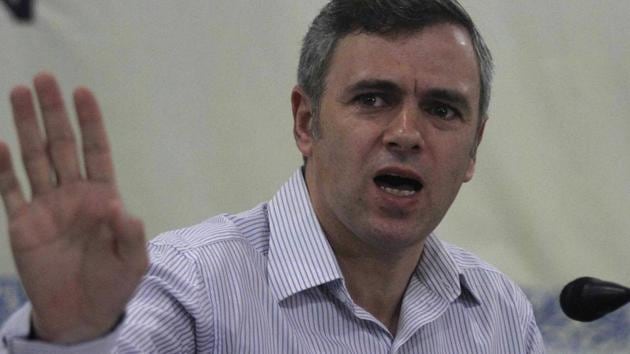
The Jammu and Kashmir administration has cited the ability of former chief minister and National Conference (NC) leader Omar Abdullah to “garner votes even during the peak of militancy and poll boycotts” in support of his detention under the stringent Public Safety Act (PSA) on Thursday, according to people familiar with its contents. The dossier said Abdullah harboured ”radical thoughts”.
And the charges against another former chief minister, Peoples Democratic Party (PDP) leader Mehbooba Mufti, in the dossier prepared on her include inciting violence, promoting separatism, making anti-national statements and extending support to organisations such as the Jamaat-e-Islamia, which was banned by the Centre last year.
Omar Abdullah , 49, and Mehbooba Mufti, 60, were on Thursday booked under the PSA, which allows their detention without trial for a minimum period of three months and maximum of two years, on the basis of the dossiers after spending six months in preventive custody since August 5, when the Centre nullified Jammu and Kashmir’s special status and decided to bifurcate the state into two Union territories — J&K and Ladakh.
Hindustan Times hasn’t been able to access the dossiers, but spoke to people familiar with their content who shared the information on condition of anonymity. Press Trust of India (PTI) reported the contents of the dossiers. Attempts to contact government spokesperson Rohit Kansal and the deputy commissioner of Srinagar, Shahid Choudhary, for their reactions were unsuccessful.
The file on Abdullah, chief minister from 2009 to 2014, said that his activities suggest that the “ideology of the subject is favouring radical thoughts which he has also turned into actions”, the people said.
“The subject is a popular figure among masses and has tremendous potential for diverting energy of common people for any cause,” it said.
It has also cited his capacity to influence people. “The capacity of the subject to influence people for any cause can be gauged from the fact that he was able to convince his electorate to come out and vote in huge numbers even during peak of militancy and poll boycotts,” it said.
It cited Abdullah’s opposition to the Centre’s move on Article 370 and alleged instigation of people on Twitter to undermine the unity and integrity of India. Interestingly in the last few tweets of Abdullah on August 4, he asked the people of Kashmir to maintain calm.
“Despite the fact that subject has been a mainstream politician, he has been planning his activities against the Union of India under the guise of politics. And while enjoying the support of gullible masses, he has been successful in execution of such activities,” people familiar with the contents of the dossier quoted it as saying.
Abdullah, besides having been chief minister of Jammu and Kashmir, is also a former minister of state for external affairs.
The charge against Abdullah also is that after the Centre nullified Article 370 and Article 35A, in order to secure support of common people, he “removed all covers/ curtains and while resorting to his dirty politics has adopted a radical methodology by way of instigating general masses against the policies of central government”.
National Conference spokesman Imran Nabi Dar termed the charges shocking. “It is shocking what they are saying and ironic as well that he has been charged for asking people to come out for vote,” he said.
“What is more shocking is that they have no idea that in the last four tweets of Omar Abdullah before August 5, he had appealed for calm. In every tweet he asked people to maintain peace. In his every public speech he has never said [anything] about violence. And today we have come to this point that the person who was always measured in his talk, never spoke about violence, has been accused of such things,” he said.
Mehbooba Mufti has been charged with making remarks challenging the accession of Jammu and Kashmir to India in case Article 370 was abrogated. Her comments on security forces were also made a part of the dossier. Her alleged support to the Jamaat-e-Islamia was one of the charges.
Mufti’s daughter, Iltija Mufti, said that the dossier cited her political journey, especially of the last 10 years, and allegedly provocative statements that led to “incitement of violence.” Mufti was head of the coalition government of the PDP and the Bharatiya Janata Party (BJP) that collapsed in June 2018 when the latter parted ways.
“[The dossier] accuses her of promoting separatism corroborated by ‘several confidential reports’ filed by agencies. This highlights the BJP’s disregard for rule of law and intentionally defaming political rivals. Why not place such evidence in the public domain? Are we a Khap Panchayat now?,” Iltija Mufti said.
“[It] Accuses her of invoking religion to divide the people in Kashmir which could trigger violence in other parts in India. Ironic since BJP amplifies divisive politics,” she said.


