
 E-Paper



EC orders special drive to add ‘left-out’, first-time voters after SIR completion; BLOs to visit homes
In a letter to the chief electoral officers, the ECI instructed a special drive to enrol left-out and first-time young electors

 Prefer HTon Google


The Election Commission of India (ECI) has directed a special drive to enrol “left-out and first-time/young electors” in states where the Special Intensive Revision (SIR) of the electoral roll has been completed. This comes amid increased scrutiny over voter deletions.
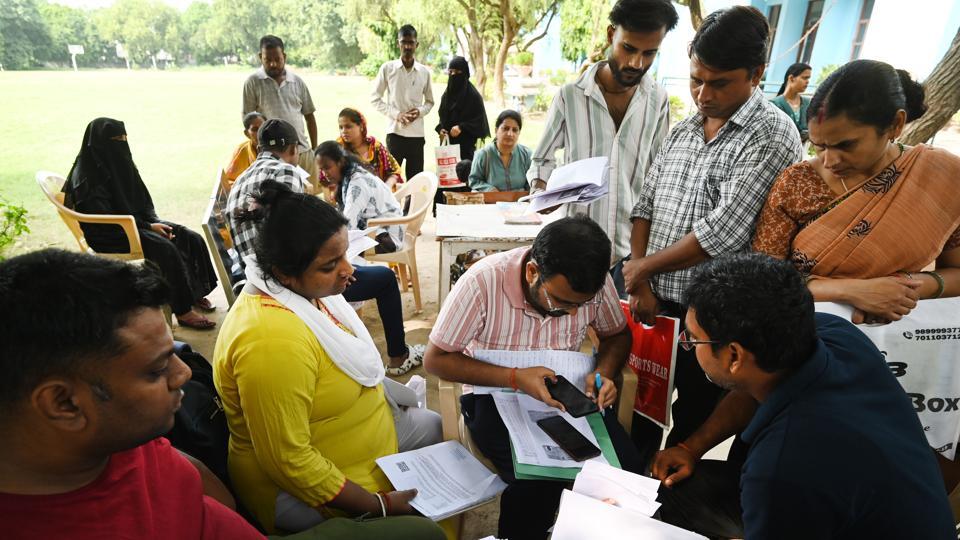
“Voter enrolment is a continuous process and any person not yet enrolled in the electoral roll or whose name has got deleted can apply for enrolment at any point.... The objective of the special drive is to identify and facilitate such electors,” the ECI said in a statement.
Tens of thousands of voters have been left out since 2025, drawing criticism from the Opposition and civil society groups, as part of the SIR.
ALSO READ | ECI removes extra SIR declaration from Form 6 in states where revision is complete
ECI asks BLOs to compare current, pre-SIR rolls
In an October 1 letter to the chief electoral officers (CEOs), the ECI instructed a special drive to enrol left-out and first-time young electors. It added that booth-level officers (BLOs) must compare the current electoral roll with the pre-SIR electoral roll and list electors who were on the earlier roll but are missing from the current one.
In Bihar, where the SIR began in 2025, details of over 78.9 million voters were verified. The final SIR list published in the state on September 30, 2025, had nearly 74.2 million names, a net fall of about 4.7 million, or nearly 6%.
In the second SIR phase, in 12 states and Union Territories (UTs), the number fell from over 509.9 million to 458.1 million, a decline of over 51.8 million or 10.2%. The draft rolls had a steeper drop of about 65 million. Roughly 61 million names were removed in the third SIR phase draft rolls in 17 states and UTs.
ALSO READ | ECI backs down, parties to get details of electors’ discrepancies that left them off rolls
BLOs to conduct door-to-door verification, facilitate Form 6
The ECI has now asked BLOs to visit homes to ascertain their present status and facilitate enrolment through Form 6, wherever the person is found to be eligible. It added that they may cover at least 20-25 electors in a week to complete this exercise within about one month. Each elector’s status and the Form 6 filings must be recorded, the ECI said.
BLOs will share the lists with the booth-level agents of recognised parties. At the end, electoral registration officers (EROs) will share booth-wise lists with party representatives, giving them an opportunity to enable enrolment of any left-out electors.
Forms and field verification reports would go to the ERO, the competent authority to act as deemed fit in these cases under the Representation of the People Act, 1950, and the Registration of Electors Rules, 1960.
ALSO READ | ECI launches ‘no voter to be left behind’ drive in Uttar Pradesh
Special camps planned for marginalised, homeless people
The letter asked for booth-level camps. It added that special camps may also be organised for people in night shelters and labour colonies, and for homeless and marginalised people.
CEOs, district election officers and EROs have been asked to run awareness drives so every eligible citizen is aware of the opportunity to get enrolled. The ECI has directed a review of the progress at the CEO, DEO and ERO levels.
On Thursday, Karnataka CEO V Anbukkumar ordered election officials to initiate legal proceedings against people who knowingly submit false claims or objections regarding changes to electoral rolls. The order came as chief minister DK Shivakumar staged a protest alleging an organised effort to remove voters through Form 7 applications during the SIR.
ECI faces scrutiny over SIR decisions
The ECI faces scrutiny over the SIR. The Indian Express last month reported that Election Commissioners Sukhbir Singh Sandhu and Vivek Joshi recorded objections to decisions taken in the ECI’s name at least 14 times over 10 months. The reported disagreements involved changes to Form 6 for the inclusion of names in the electoral roll, the centralisation of controls in Delhi, voter deletion appeals in West Bengal, and the failure to add eligible voters in Goa.
Deep Dive


