
 E-Paper



Favourable monsoon could give farmers some hope: Scientists
India receives about 70% of its annual rainfall during the monsoon season, which usually begins in June before starting to retreat by September. The monsoon rainfall is crucial to rice, wheat, sugarcane and oilseeds cultivation in the country, where farming accounts for about 15% of the economy and employs over half of its people.

 Prefer HTon Google


Indian farmers may be suffering because of the nationwide lockdown imposed since March 25 to check the spread of the coronavirus disease (Covid-19) outbreak that has disrupted supply chains. But global weather models may have something to lift their spirits, as they are suggesting that the monsoon will be normal this year and may set in a day or two early.
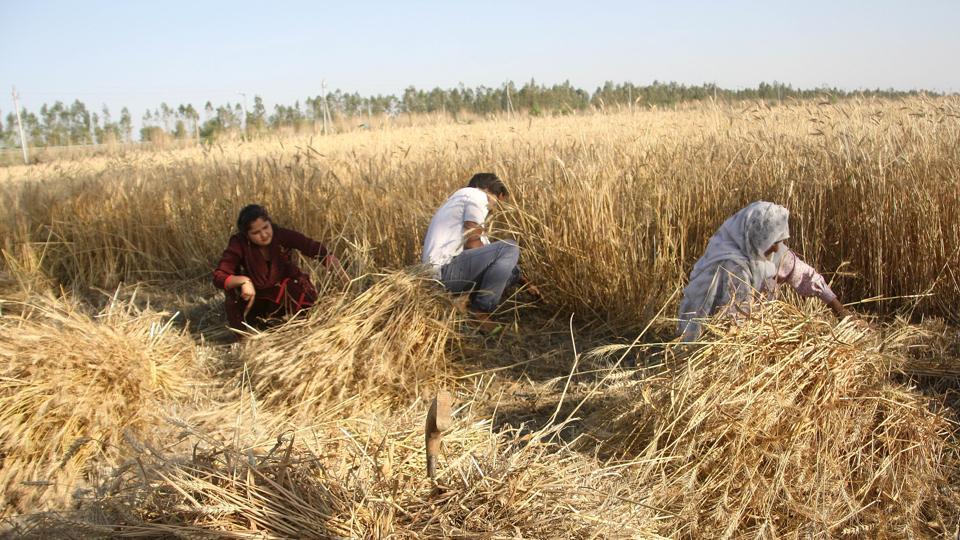
India Meteorological Department (IMD) is expected to issue its monsoon forecast later this week.
India receives about 70% of its annual rainfall during the monsoon season, which usually begins in June before starting to retreat by September. The monsoon rainfall is crucial to rice, wheat, sugarcane and oilseeds cultivation in the country, where farming accounts for about 15% of the economy and employs over half of its people.
Global weather models are numerical weather prediction models run by various agencies. The seasonal forecasting of the southwest monsoon is done with the help of statistical and dynamical models.
IBM’s The Weather Company, a private weather forecasting company, has said that the monsoon is likely to set in slightly earlier than normal on May 31 as against June 1 and the above normal rain at 105% of the long-period average (LPA) is likely. “Uncalibrated climate model forecasts suggest an unusually wet monsoon season this year although our calibrated and bias-corrected model suggests a lesser degree of dryness. We’re expecting a transition from weak El Niño conditions towards La Nina conditions as we progress through the monsoon season, which will favour a large-scale atmospheric pattern that will become increasingly conducive to heavier rainfall later in the season,” the company said in a statement.
La Nina is associated with a strong monsoon and above-average rains in India while El Niño is a climate pattern characterised by high sea surface temperatures in the tropical Pacific Ocean. El Niño years in India are linked to below-normal monsoon rains and higher than normal frequency of heatwaves. Last year, weak El Niño conditions prevailed and led to a delayed onset of the monsoon.
“Our observations suggest more rains in south-western parts of the country and lower rains in northwestern India,” said Himanshu Goyal, India business leader, The Weather Company.
Roxy Mathew Koll, a climate scientist at Pune-based Indian Institute of Tropical Meteorology, said global agencies unanimously indicate normal monsoon rains for June to September, which is good news. “This is largely based on the favourable conditions in the Pacific as there is no coherent sign of an El Niño developing during the early stage of the monsoon. El Niño, if present, can weaken the moisture carrying monsoon winds and reduce the rainfall received.”
The rain in the pre-monsoon period has also been above average, which experts say will help improve and retain soil moisture and help with sowing in some parts of the country. From March 1 to April 12, central India received 165% and north-western parts 52% excess rain even as eastern and the north-eastern parts are 44% deficient, according to IMD.
Ocean temperatures in the equatorial Indian Ocean are forecasted to be warmer than normal, which has the potential to reduce monsoon rains. “Our analysis has shown that such conditions can have an adverse impact on monsoon rains over central-north India. The significance of the Indian Ocean is increasing year by year as it is warming rapidly due to increasing carbon emissions. Forecast models do not generally pick this link between the warm Indian Ocean and the monsoon rains,” Koll said, clarifying that his analysis is not a forecast.
The warm Indian Ocean could also trigger cyclones during the onset of monsoon.
Air pollution levels have reduced in India and across the world due to Covid-19 lockdown restrictions and this is also likely to impact the monsoon. There have been scientific studies that show high air pollution levels have led to a decline in monsoon rains over the past decades.
“I don’t know if the models are factoring in this new scenario with less pollution,” Koll said.
M Rajeevan, secretary, Union Ministry of Earth Sciences, said there is no El Niño influence this year and the government will share full details of the onset and monsoon performance in their forecast later this week.
Mahesh Palawat, vice-president, climate and meteorology at Skymet Weather, a private weather forecasting agency, said there is some warming in the eastern pacific but as the monsoon progresses, there will be a likely movement towards La Nina or low sea surface temperatures across the east-central Equatorial Pacific.
“The Indian Ocean Dipole (IOD) is also negative. High temperatures are already being recorded in central and western India. Rain in the pre-monsoon period has also been good. All these factors indicate that it is likely to be normal or slightly above normal monsoon.”
IOD is characterised by warmer sea surface temperature in the equatorial Indian Ocean; positive IOD conditions are associated with normal monsoon.
Skymet Weather will not issue a monsoon forecast this year because its services have been impacted by the ongoing lockdown restrictions. “Our modelling teams haven’t able to run these models from home. Also, last year, none of the weather agencies got the monsoon forecast right. We also plan to reflect on what’s going wrong with monsoon forecasts,” Palawat said.
After a delayed onset of the south-west monsoon on June 8 last year and very little rain in June due to presence of a weak El Niño, there were fears among meteorologists that it would be a drought year. June ended with a deficit of 33% but July, August and September received 105%, 115% and 152% of their LPA, respectively.
The IMD announced monsoon withdrawal on September 30 last year with cumulative rainfall of 110% of the LPA.


