
 E-Paper



For Ladakh stand-off, how India readied its fleet of Apache attack choppers
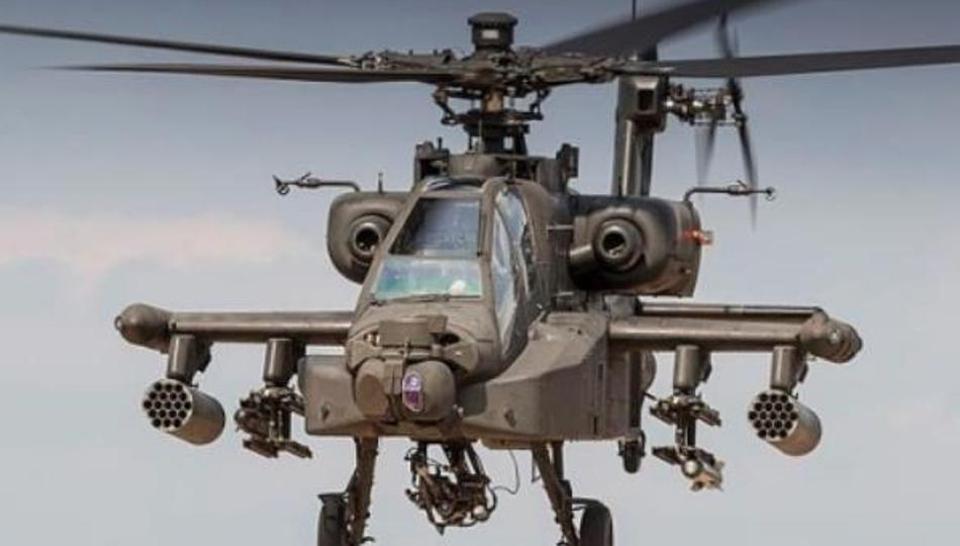
India-China stand-off: The AH-64 Apache choppers, described by some as the Ferrari of attack choppers, was one of India’s primary counter to Chinese threats on the ground and in the air.

 Prefer HTon Google


India fast-tracked delivery of the last batch of the US-built Apache attack choppers after the May 5 stand-off with China in eastern Ladakh to be able to ramp up their presence along the Line of Actual Control (LAC). The last batch of five choppers arrived in India last month after the central government exempted Boeing contractors from the mandatory quarantine rules notified due to the Covid-19 pandemic. The team assembled the five choppers that had been shipped to India and quickly had them flown to the Pathankot air base after being flight-tested for deployment in Ladakh.
“The military wanted to be prepared for the worst-case scenario. And it was,” a top government official told Hindustan Times on Monday.
India had last year inducted 17 of the 22 AH-64 Apache choppers ordered from Boeing that can track 128 targets, prioritise threats and engage 16 targets. The remaining five were to arrive in India by the end of March. But the plan to ship the choppers had to be halted due to the nationwide lockdown enforced in India due to the coronavirus pandemic.
India was taken by surprise in early May when China’s People’s Liberation Army (PLA) soldiers adopted an aggressive posture, setting up a stand-off at four locations in eastern Ladakh. As it became clear that the stand-off was probably directed from Beijing, New Delhi started preparing for all eventualities.
Over the next few days and weeks, the air force started moving its assets such as the Apache choppers and the 15 heavy-lift Chinook choppers to airbases closer to Jammu and Kashmir.
Simultaneously, it also reached out to Boeing to indicate its ability to receive the shipment. Special visas were arranged and formal orders exempting the contractors who would re-assemble the choppers from the mandatory quarantine rule was issued on grounds of national security. By 1 June, the Home Ministry allowed visas to foreign technical specialists travelling for installation, repair and maintenance of foreign-origin equipment.
The induction of the two aerial platforms acquired in a $3 billion deal is a game-changer for the Indian military which otherwise relied on Russian Mi-17 medium lift helicopters for rapid induction of forces and an obsolete squadron of Russian Mi-26 helicopters.
The Chinook helped the military transport troops, artillery, equipment, and fuel to forward bases. The AH-64 Apache choppers, described by some as the Ferrari of attack choppers, was one of India’s primary counter to Chinese threats on the ground and in the air. Because they have an amazing maneuverability, the Apache is designed to operate in “nap-of-the-earth” flight - that is flying at an extremely low level and using terrain and vegetation to hide from hostile elements.
Counted among the deadliest flying machines, the Apache has a 30mm cannon under the nose that can fire 1,200 rounds in less than two minutes. It can also carry 80 rockets besides Hellfire missiles that can identify, track and hunt targets in the dark.


