
 E-Paper



How Ajit's death hits Pawars politically, what next for NCP reunion plans | Explained
Ajit Pawar's death politically poignant as it came just as factions of NCP, his and the one led by family head Sharad Pawar, were walking towards reconciliation

 Prefer HTon Google


The political landscape of Maharashtra was irrevocably altered at 8:45 am on Wednesday, January 28, when a chartered Learjet 45 private jet carrying deputy chief minister Ajit Pawar and four others crashed during a landing attempt at the airport in his family hometown Baramati.
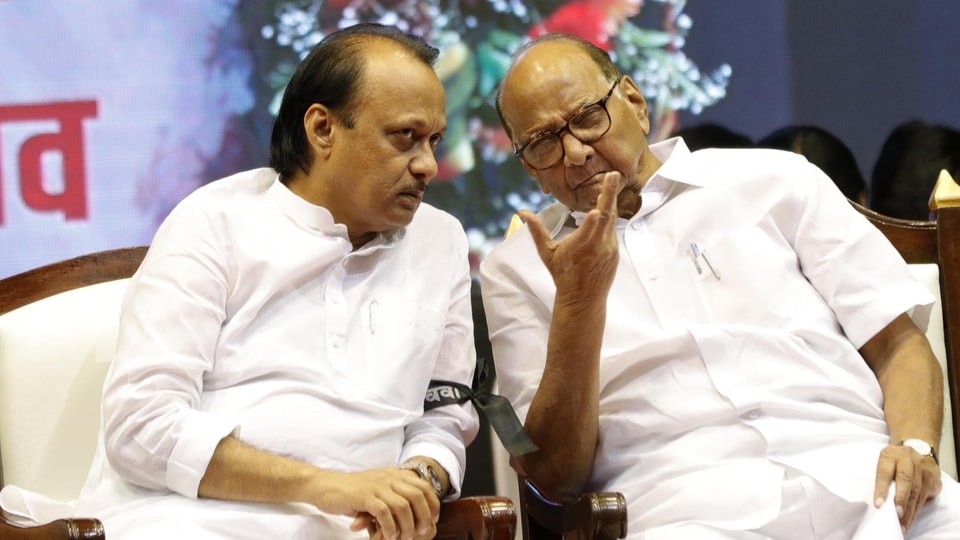
The tragedy plunges one of India’s most powerful political dynasties into mourning, and put a question mark on the future of the Nationalist Congress Party (NCP) that he led. Follow LIVE updates here
The death of the leader popularly known as ‘Dada’ ('brother') is politically poignant also because it occurred just as the two factions of the NCP — one led by Ajit and the other by his uncle and family patriarch Sharad Pawar with his daughter Supriya Sule — appeared to be walking towards a reconciliation, even a merger.
The final flight, a family in shock
The ill-fated aircraft, operated by VSR, took off from Mumbai at 8:10 am, and disappeared from radar around 8:45, while attempting a second landing in Baramati, as per flight tracking data. Superintendent of Police Sandip Singh Gill confirmed that a fire broke out following the impact.
Ajit Pawar was traveling to his family stronghold to attend four crucial public meetings and a rally ahead of the Zila Parishad and semi-urban/rural local bodies' elections scheduled for next month.
A devastated Sharad Pawar and Supriya Sule have rushed to Pune.
Ajit is survived by his wife, Sunetra Pawar, a Rajya Sabha MP, and his two sons, Parth and Jay Pawar.
Seen as the more asture political executor of the Pawar empire, despite the family feud, Ajit remained deputy CM six times, including his last stint in a BJP-led government of Devendra Fadnavis that he joined in 2023 after spilitting the party.
Impact on family's political future
The tragedy strikes at a moment of intense political realignment within the Pawar family, and by extension in Maharashtra.
During the recent municipal polls for 29 city corporations, including Mumbai's BMC, there were visible signs of a thaw between the two NCP camps. Despite the bitter split in July 2023, which saw Ajit join the BJP-Shiv Sena ‘Mahayuti’ government and claim the party's name and 'clock' symbol, the factions had recently begun working together.
In a surprising move for the January 15 corporation elections in Pune and Pimpri-Chinchwad, both sides released a unified manifesto.
They campaigned under the Ajit-held 'clock' symbol, sparking talk that ultimately the uncle and cousin will want to work with the “original” party, with Ajit as the chief. There was thus talk of getting Supriya Sule a berth in the central BJP-led government of PM Narendra Modi, but nothing was yet concretised or public.
Ajit and cousin Supriya addressed joint press conferences, with both camps acknowledging that their grassroots workers desired a formal reunion.
Ajit Pawar expressly hinted at a permanent reconciliation in an interview, saying he believed in the "politics of addition, not subtraction". He claimed, with evidence of the recent tie-up, that bitterness between the groups, if any, was all but gone.
However, the path to a seemingly imminent reunion was not without electoral obstacles. Recent results of the Pune and Pimpri-Chinchwad municipal corporations showed that the combined strength of the NCP factions failed to stop a BJP landslide.
What happens now for Pawars' patch-up that looked imminent
With Ajit Pawar gone, the immediate question is: who will lead his faction of 40+ MLAs within the Mahayuti government? While the BJP-led government remains in a comfortable position anyhow in terms of numbers, the leadership vacuum in the Ajit-led NCP is significant.
Focus has obviosuly shifted to Ajit’s immediate family.
Sunetra Pawar, his wife, holds her own political standing as an MP, but attention is also on the sons, Parth and Jay Pawar. Parth has contested a Lok Sabha election and could be positioned as a successor to his father’s local legacy, analysts say.
There is, though, another rising star of the family, Rohit Pawar, a grandnephew of Sharad Pawar who remained loyal to the patriarch during the 2023 split. Rohit also manages Baramati Agro and other parts of the sugar mill empire of the family. He has even served as the president of the Indian Sugar Mills' Association (ISMA).
Rohit's growing influence also creates a complex dynamic between the cousins: Supriya Sule is seen as the heir apparent to Sharad’s national legacy, while the party must now decide if Rohit or Ajit’s sons will be given larger roles to stabilise the Pawar empire on home turf.
Sharad Pawar, 85, recently hinted at retiring by the end of 2026. The loss of his nephew, whom he mentored for decades despite their frequent political friction, may force him to delay his exit.
There is now widespread speculation that Sharad Pawar will, at this tragic moment, call for a total unification of the party.
By bringing his grandnephews, Parth and Jay, back into the fold of the NCP (Sharadchandra Pawar), he could potentially heal the dynasty’s rift permanently. On the ground, it remains to be seen if Ajit’s supporters will agree to a merger and/or want to continue their alliance with the BJP.
How NCP split happened: A Sena redux, 2023 recall
Ajit Pawar was widely seen as the obvious heir to Sharad Pawar. Amid the emergence of his daughter Supriya Sule, Ajit shocked many when he joined a BJP government, becoming deputy to Devendra Fadnavis as CM, in 2019. Uddhav Thackeray's Shiv Sena had refused to wok with pre-poll ally BJP, and Fadnavis put the NCP support at the time.
It lasted merely 80 hours. Sharad Pawar stamped his authority as Ajit returned to the NCP and the NCP-Sena-Congress alliance, the Maha Vikas Aghadi.
Signs of a new juggle emerged in 2022, as Uddhav's Shiv Sena split, and Eknath Shinde unseated him as CM. Shinde got the original name and symbol.
A year later, Ajit Pawar split the NCP and joined the BJP-led Mahayuti government with the backing of a large group of MLAs. After the 2024 elections, he remained deputy CM, and Shinde also became one, while Fadnavis became CM again.


