
 E-Paper



Former foreign minister Natwar Singh passes away at 95
In his role as external affairs minister, Singh was involved in the negotiations that led to the India-US civil nuclear deal in July 2005

 Prefer HTon Google


New Delhi: Diplomat-turned-politician Kunwar Natwar Singh, the external affairs minister during 2004-05, passed away at the age of 95 after being hospitalised for the past fortnight.
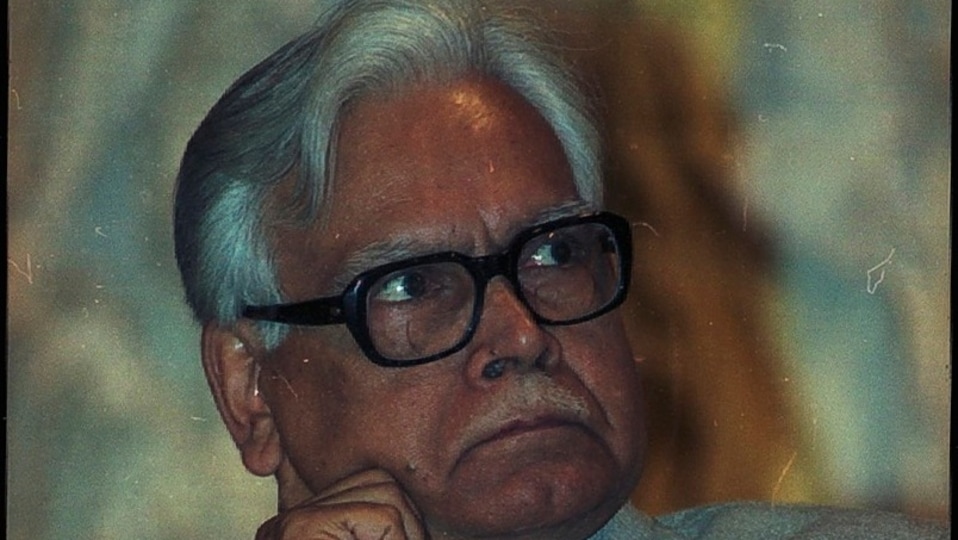
Singh, who was born in the princely state of Bharatpur and joined the Congress party after leaving the Indian Foreign Service (IFS) in 1984, died at a hospital in Gurugram late on Saturday. He was awarded the Padma Bhushan, the country’s third highest civilian award, in 1984.
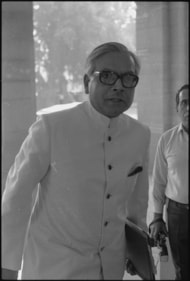
In his role as external affairs minister, Singh was involved in the negotiations that led to the India-US civil nuclear deal in July 2005. However, he had to resign after an independent inquiry set up by the United Nations to probe irregularities in Iraq’s oil-for-food programme named Singh, the Congress party, and several Indian firms as beneficiaries.
Prime Minister Narendra Modi, external affairs minister S Jaishankar, and Congress’ Jairam Ramesh were among those who paid tribute to Singh on Sunday, describing him as a distinguished diplomat and praising his contributions to foreign policy.
Modi said on X that Singh “made rich contributions to the world of diplomacy and foreign policy” and was known for his intellect and prolific writing. “My thoughts are with his family and admirers in this hour of grief,” he said.
In a post on X, Jaishankar said Singh’s “many contributions include a vital role in the July 2005 India-US nuclear deal. His writings, especially on China, provided valuable insights into our diplomacy.”
“A walking encyclopedia of the worlds of Nehru and Indira Gandhi.
A delightful conversationalist, storyteller and ready wit. A man whose correspondence with varied men and women are the stuff of history. A wonderful and generous friend with his hospitality and his ever-sharp memory and his deep archive. Natwar Singh was all this and much more. He has just passed away after leading a full and richly variegated life. He was truly someone who has left behind his ‘footprints on the sands of time,” Congress MP Ramesh wrote on X.
Singh joined the Indian Foreign Services (IFS) at the age of 22 in 1953, and one of his earliest assignments abroad was at the Beijing Embassy during 1956–58.
Besides serving under high commissioner Vijay Lakshmi Pandit in the mission in London and in India’s permanent mission to the UN in New York during 1961-66, he was deputed to the Prime Minister’s Office under then Prime Minister Indira Gandhi during 1966-71.
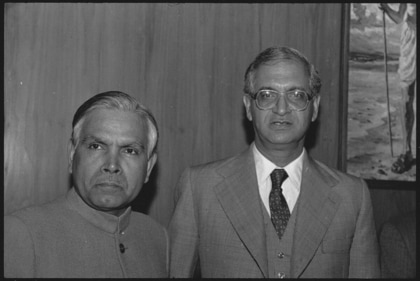
His other assignments abroad included stints as ambassador to Poland (1971-73), deputy high commissioner to the United Kingdom (1973-77), and envoy to Pakistan (1980-82).
After quitting the IFS in 1984, Singh was elected to the Lok Sabha from Bharatpur constituency in Rajasthan as a representative of the Congress party. In 1985, he became minister of state for steel, coal, and mines in the government headed by then Prime Minister Rajiv Gandhi. In 1986, he became minister of state for external affairs.
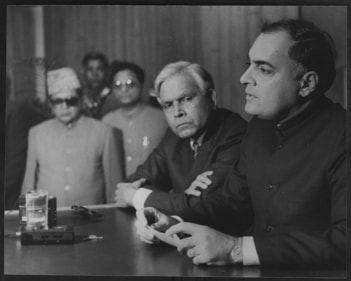
Singh’s differences with former Prime Minister PV Narasimha Rao led to his leaving the Congress party and forming the All India Indira Congress party along with fellow dissidents ND Tiwari and Arjun Singh. He returned to the Congress in 1998 and was re-elected to the Lok Sabha from Bharatpur.
When the Congress returned to power at the Centre in 2004, then Prime Minister Manmohan Singh appointed him as the external affairs minister.
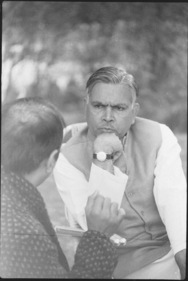
Though he resigned after being named by the Paul Volcker Committee in Iraq’s oil-for-food scandal, he always rejected the charges. He had been accused of writing letters to officials in the Saddam Hussein regime to introduce businessman Andaleeb Sehgal, a friend of his son Jagat Singh, and recommending Sehgal for contracts under the UN-sponsored oil-for-food programme.
Singh was a prolific author and loved reading, and his autobiography “One Life is Not Enough,” published in 2014, was critical of Manmohan Singh’s role in sealing the India-US nuclear deal. He also angered the Congress with his criticism of the party’s leadership in his autobiography.
Singh is survived by his wife Heminder Kumari Singh and son Jagat Singh.


