E-Paper



Global debt, AI risks among 5 financial stability threats, says RBI Governor Malhotra
RBI Governor Sanjay Malhotra flagged global debt, stressed asset valuations, high leverage, private credit and AI-driven cyber risks as key vulnerabilities.

 Prefer HTon Google


Reserve Bank of India (RBI) governor Sanjay Malhotra on Saturday flagged five major vulnerabilities to global financial stability, including elevated debt, stretched asset valuations, high leverage, private credit risks and cyber threats amplified by artificial intelligence (AI).
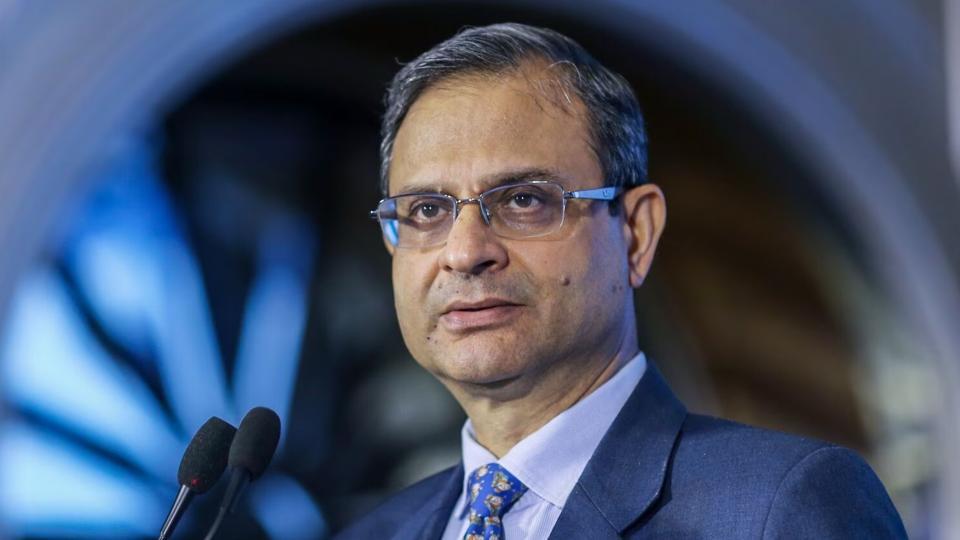
“Each of these five risks individually, as I mentioned, may not be a matter of concern as of now, but simultaneous occurrence of these shocks can put significant pressure on the global financial architecture,” he said on Saturday.
Speaking on major emerging global financial stability risks at the 5th Kautilya Economic Conclave (KEC) in New Delhi on Saturday, he said the financial system has absorbed the supply shock due to the West Asia conflict quite well. “However, the global economic environment continues to remain challenging,” he added.
“Conflict has exacerbated not only inflationary pressures, but it has also elevated financial system vulnerabilities,” he said, highlighting five key risks. “One of them has elevated global debt levels… they have risen, maturity periods have shortened, bond yields have hardened…,” he said. These will have implications for sovereigns in terms of high borrowing costs that can narrow fiscal space and worsen the debt dynamics for corporates, he added.
Elaborating on the second risk of stressed asset valuations, particularly related to artificial intelligence (AI), he said the AI investment cycle has been a major support for global financial markets as one has witnessed across the world, especially in advanced economies, with strong earnings driving significant gains in AI-related equity valuations.
However, as the investment cycle matures, any slowdown in AI investment or earnings could trigger a sharp repricing of financial assets, especially in the AI value chain. High risk appetite has spurred an increase in leverage, which, along with declining cash flow among major AI firms, could further amplify market corrections and financial market volatility, he added.
On the risk of high leverage, he said, “In pursuit of higher returns, and this is particularly true of advanced economies, hedge funds, option sellers, exchange traded funds, and other non-bank financial intermediaries, they have expanded leverage both in equity and bond markets.” This is of concern, especially when equity valuations are stressed and bank and NBFI interconnectedness has deepened, both on the liability as well as on the asset side, he said. Any tightening of financial conditions, therefore, can spill over to banks and other markets, he added.
Also Read | G20 Warned Of Growing Threat to Financial Stability Posed By New AI Models
Elaborating the risks concerning private credit, he said: “This is more prominent in advanced countries.” It’s a source of vulnerability as was witnessed by the default of some of the very high-profile cases in the sector, suggesting weak and loose standards of lending.
On cyber risks compounded by AI, Malhotra said: “The emergence of AI has heightened cyber risks, model risks, third-party dependence, and erosion of human oversight and accountability.” “To my mind, with the development of sophisticated AI tools, which have tremendous autonomy and problem-solving capabilities, the most immediate concern is regarding cyber risks,” he said. This is especially so for the highly interconnected financial systems, which do not have national borders, he added.
“What implications do these risks, global risks, have for India? India, as you are aware, is a large open economy and, hypothetically, it should have implications for our domestic financial systems. As I mentioned, India remains exposed to the effects of the West-Asia conflict, to higher commodity prices and external sector pressures. Nevertheless, our economy is navigating this phase from a position of strength,” he said, pointing at relatively low inflation and the strongest growth among major global economies.
Also Read | Borrowing to survive, as wages fail to rise; India's working class walks a financial tightrope
Strong macroeconomic fundamentals and a resilient global financial system provide confidence in our ability to withstand these lingering shocks. At the same time, we are taking further measures to enhance our resilience to such shocks, he said. Some of these measures include diversification of import sources, enhanced sufficiency in energy and other critical resources, building strategic petroleum reserves, accelerating energy transition, enhancing the competitiveness of domestic manufacturing, deeper integration into the global value chain, expanding market access through a number of free trade agreements (FTAs) and promoting trade settlement in local currencies.