
 E-Paper



Govt to regularise services of civic workers: Bommai
While Bengaluru has been spending crores of rupees on the mechanisation of sweepers and other equipment to keep the streets clean, the large army of pourakarmikas do the bulk of the work and are seen sweeping and collecting garbage from the streets and other places manually.

 Prefer HTon Google


A day after the pourakarmikas (civic workers) launched an indefinite strike for regularisation of their services, Karnataka chief minister Basavaraj Bommai on Saturday said that the state government will regularise services of those working on direct payment.
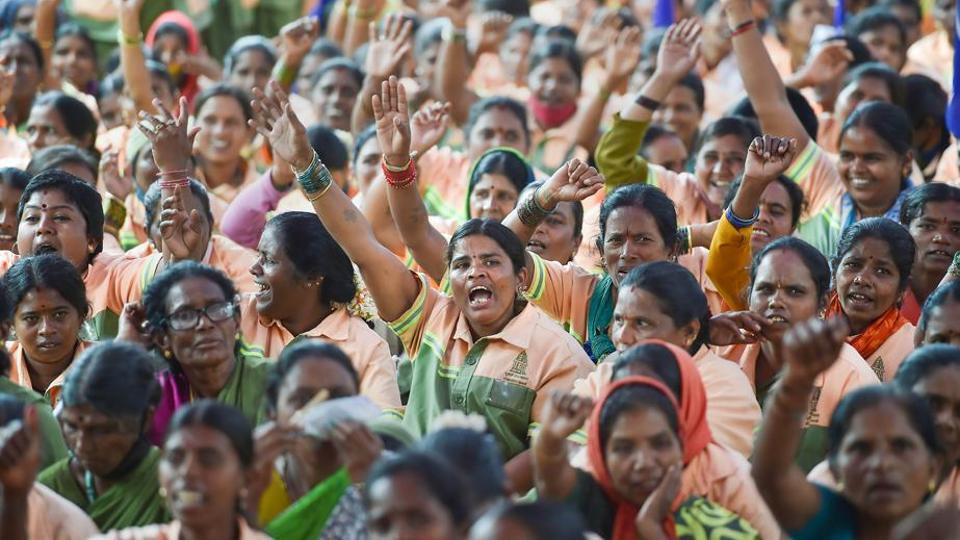
“The state government will regularise services of pourakarmikas working on direct payment. We have agreed to extend social security, medical service, and assistance for the education of children of pourakarmikas. Necessary rules will be formulated during the next assembly session,” Bommai told reporters.
On Friday, at least 15,000 pourakarmikas of Bruhat Bengaluru Mahanagara Palike (BBMP) began an indefinite strike at Freedom Park, demanding their jobs be made permanent and better salary to take care of their families. The civic workers are the backbone of every city corporation in Karnataka and especially Bengaluru, which houses over 12 million of the estimated 70 population of the state.
“We have been doing this work for the past 20 years but are still not being made permanent. The salaries they pay are not enough for house rent, to pay our children’s school fees or to survive. We will continue our strike till our jobs are made permanent,” said a pourakarmika, who did not share her name.
While Bengaluru has been spending crores of rupees on the mechanisation of sweepers and other equipment to keep the streets clean, the large army of pourakarmikas do the bulk of the work and are seen sweeping and collecting garbage from the streets and other places manually.
Bengaluru generates around 5,000 tonnes of waste every day and only a small portion of this actually goes to recycling, according to experts. The waste collection, in large localities, is done with a small auto, which transfers it to bigger trucks, which then make their way into segregation units or sometimes, landfills.
The strike comes at a time when Karnataka, particularly Bengaluru, has seen a sharp uptick in Covid-19 infections, adding even more significance to civic workers who keep the city clean.
The garbage crisis, where waste was not collected for days in Bengaluru in 2012, had made global headlines, denting the city’s reputation as a global IT hub.
The pourakarmikas, waste collectors, and the entire manual labour ecosystem to keep Bengaluru clean have commenced their strike at Bengaluru’s freedom park, demanding dignified working conditions, including the provision of safety equipment, post-retirement benefits, and permanency of jobs, along with other welfare measures.
The protest is being organised by the Powrakarmikara Sanghatanegala Janti Horata Samiti, of which BBMP Powrakarmikara Sangha is a co-organiser.
On Saturday, Aam Aadmi Party (AAP) joined the protest.
“AAP in Delhi and Punjab has encouraged pourakarmikas to participate in the elections and win them. This has given political strength to the sentiments of pourakarmikas. However, in Karnataka, BJP has turned blind to the problems and pains of pourakarmikas. The BJP government is stubborn by not responding to repeated protests of pourakarmika,” Karnataka AAP president Prithvi Reddy said.
AAP state vice-president Bhaskar Rao demanded that the jobs of pourakarmikas must be made permanent.
“If pourakarmikas refuse to work even for a single day, the waste disposal problem will worsen, and people will have to close their noses. Sanitation workers, including cleaners and sweepers, are paid a meagre salary. They are unable to meet their basic needs with this salary. So, their jobs must be made permanent,” said Rao.
The pourakarmikas are yet to announce a decision on the future of their protest following the chief minister’s announcement.


