
 E-Paper



GPR used at Uttarakhand tunnel site after auger machine's glitch. What is it?
GPR can detect structural changes and material differences that might go unnoticed by the human eye with “non-intrusive and non-destructive technique”.

 Prefer HTon Google


As the rescue operation at the Uttarakhand tunnel collapse site halted for the second time in two days on Friday night, the rescue team dispatched geophysicists to assess the type of obstacle faced by the auger machine used for drilling. The team utilised Ground Penetration Radar (GPR) to identify the materials causing the obstruction.
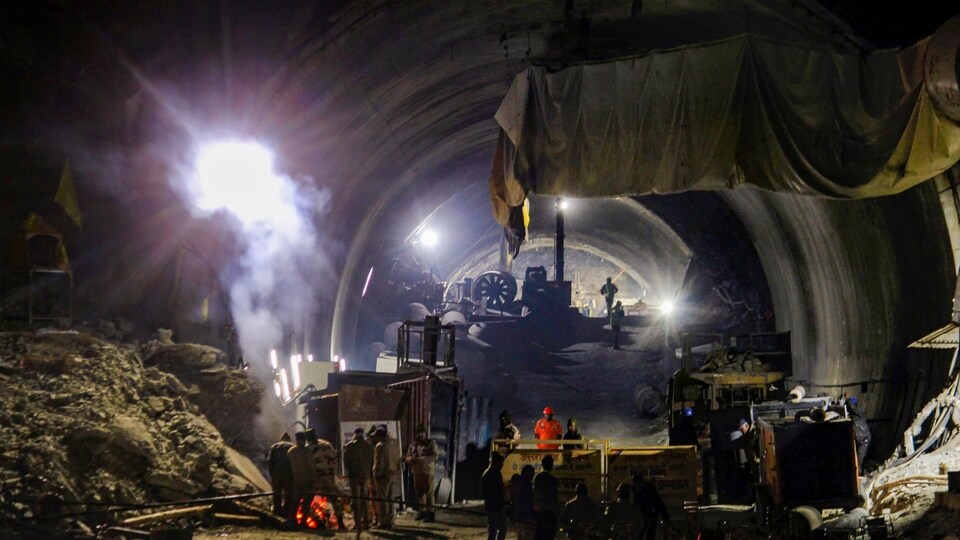
According to ANI, the National Disaster Management Authority (NDMA) said that within Uttarkashi's Silkyara tunnel, where 41 workers are trapped, it has been detected that there are no obstacles in the upcoming 5 metres.
During a press briefing in New Delhi, NDMA member Syed Ata Hasnain said, “Using ground penetrating radar, it has been detected that there is no obstacle in the next 5 metres on our path. We continue to use this to detect obstacles, if any. There is hope that the movement of the augor is done and will be smooth until 5 metres and again, this ground-penetrating radar will be used.”
Ground Penetrating Radar
-The Ground Penetrating Radar (GPR) uses electromagnetic waves to create subsurface images, according to a ScienceDirect journal. GPR utilises radio waves to capture below-surface images in a minimally invasive manner, enabling the identification of underground utilities without ground disturbance.
-It is a “non-intrusive and non-destructive technique” for subsurface surveys, making it valuable for exploring various materials. GPR can detect structural changes and material differences that might go unnoticed by the human eye. These changes could be boundaries between different materials or the presence of objects under the surface, such as separations or damages.
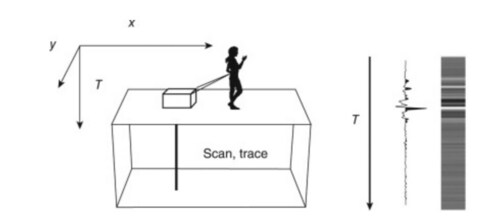
-GPR data is collected by moving antennas across the ground or walls, recording transmissions and receptions at different spots. These recordings are merged to form an image called a “radargram”.
-GPR equipment comprises components like a waveform generator, a transducer with emitting and receiving antennas, a signal processor, and a data storage or display unit.
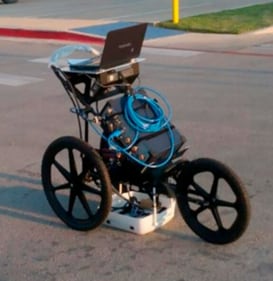
-Its waveforms can identify empty spaces within concrete. Compared to other non-destructive methods, GPR has better depth penetration, allowing the detection of concrete defects or decay at greater depths than techniques like infrared thermography, ultrasonic, or microwave methods.
Geophysict explains how he went inside tunnel to check GPR data | Watch
What's the update on tunnel rescue op?
The ongoing rescue operation at the Silkyara tunnel in Uttarkashi, where 41 workers have been trapped for over a week, faced another pause due to a technical issue encountered by the rescue team on Friday evening.
Officials reported a hindrance with the auger drilling machine shortly after it resumed drilling on Friday, following a day-long halt due to a previous technical problem. Although the initial issue was resolved earlier in the day, allowing the 25-tonne machine to restart, the operation had to be halted once more due to a second setback within two days.


