
 E-Paper



Petition in Supreme Court says scrap new UPI merchant fees; may burden consumers
The petition said the new charge was imposed within the merchant-payment ecosystem, but businesses could seek to recover the additional cost from customers

 Prefer HTon Google


A petition was filed in the Supreme Court on Wednesday, challenging the Centre’s newly notified framework allowing Merchant Discount Rate (MDR) on specified high-value commercial UPI transactions, contending that the additional cost could ultimately be passed on to consumers.
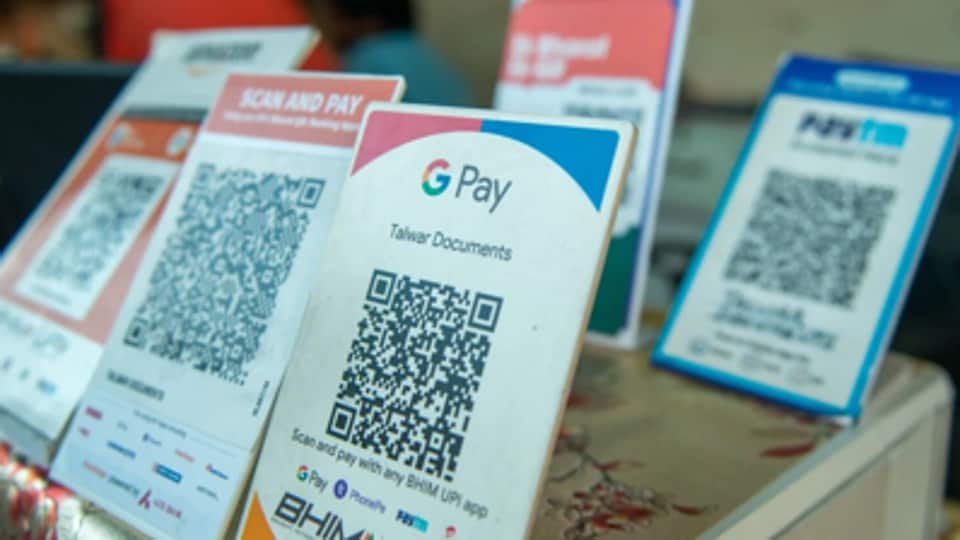
The petition, filed by advocate Anjan Datta, seeks the quashing of the notifications issued by the Union finance ministry on September 14 and 15. The Union government, Reserve Bank of India (RBI), National Payments Corporation of India (NPCI) and the UPI & Services Steering Committee are respondents in the petition.
Also read: New UPI rules: What to know about person-to-person payments, monthly quota
The plea argued that although the new charge was imposed within the merchant-payment ecosystem, businesses could seek to recover the additional cost from customers, thereby defeating the stated objective of keeping UPI transactions free for ordinary users.
Deep Dive

The challenge comes a day after the government and NPCI announced the new MDR framework, under which a 0.4% charge will apply from October 15 to specified person-to-merchant (P2M) UPI transactions above ₹2,000.
Also read: Petrol pump dealers threaten cash-only payments over ₹5 UPI charge above ₹2,000
The September 14 notification, issued under Section 10A of the Payment and Settlement Systems Act, 2007, provides that banks and system providers cannot impose direct or indirect charges on persons making or receiving payments through specified electronic modes, including UPI transactions up to ₹2,000. It does not, by itself, impose a 0.4% charge on all UPI payments above that amount.
The subsequent framework notified by NPCI sets out the MDR structure for transactions falling outside the protected ₹2,000 threshold. The government has simultaneously clarified that all person-to-person (P2P) UPI transactions will remain completely free, irrespective of the amount transferred. Payments to merchants up to ₹2,000 will also remain free.
Under the standard framework, a merchant receiving a UPI payment above ₹2,000 will incur an MDR of 0.4%. Thus, a ₹10,000 eligible merchant transaction would attract an MDR of ₹40, subject to the applicable category and cap. For transactions of ₹75,000 and above, the maximum MDR is capped at ₹300.
The framework makes separate provisions for essential and thin-margin sectors. UPI transactions above ₹2,000 involving railways, telecommunications, insurance, fuel and agricultural inputs will attract a flat MDR of ₹5. Capital-market transactions, including payments relating to mutual funds, securities, stockbrokers and dealers, will attract an MDR of 0.02%, capped at ₹300.
The government has specifically advised banks to ensure that merchants do not pass the MDR to customers. UPI application providers have also been barred from imposing platform fees or hidden charges on users, placing MDR liability on merchants rather than the individual making the UPI payment.
Small merchants have been kept outside the new charge. Those receiving up to ₹1 lakh a month through UPI QR codes under the person-to-person-to-merchant (P2PM) category will continue to enjoy zero MDR.
According to the finance ministry, the new framework will leave about 96% of P2M transactions unaffected because they either fall below the ₹2,000 threshold or are covered by the zero-MDR framework for small merchants. MDR is expected to apply to about 4% of merchant transactions.


