
 E-Paper



Fee behind every card swipe now comes to UPI: From 1950s dinner bills to QR codes, how the charge began, how it works
From October 15, merchants pay 0.4% on UPI payments above ₹2,000, capped at ₹300. Customers are not charged. Here is how the fee works and where it came from.

 Prefer HTon Google


Shops and businesses in India will pay a fee of 0.4% of the payment, capped at ₹300, on UPI payments above ₹2,000 from October 15. The change ends more than six years in which the country's most widely used payment system cost merchants nothing.
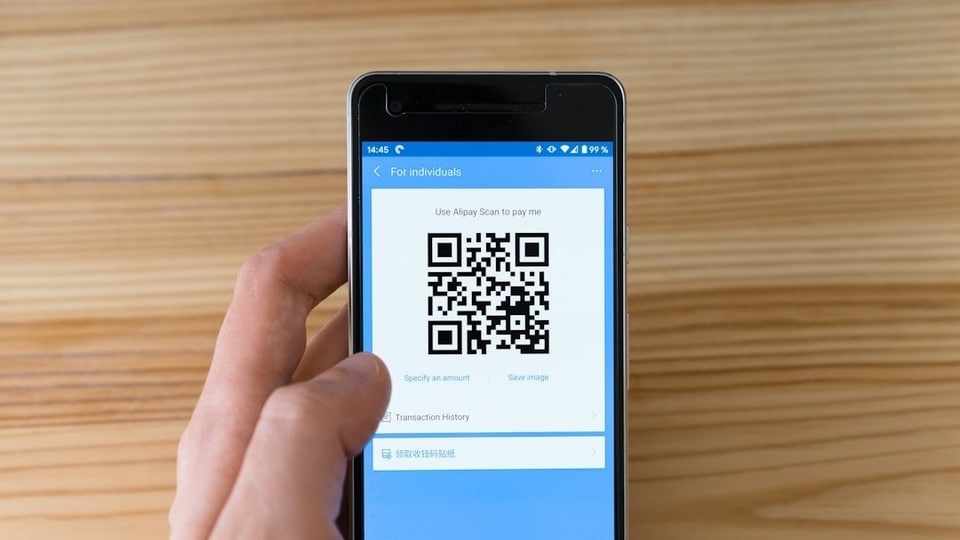
Customers are not meant to pay this fee, the finance ministry said in a statement on September 15, although in practice, that would depend on whether the merchant decides to pass on the additional cost or absorb it. Transfers between individuals stay free whatever the amount. The ministry said such direct transfers — peer-to-peer — make up 37% of UPI transactions by number and 70% by value.
Several other categories are also exempt, including for small shops and recurring auto-payments. Payments above ₹2,000 to railways, telecom companies, insurers, fuel stations, utilities, educational institutions and sellers of farm inputs will carry a flat fee of ₹5. Payments to mutual funds and stockbrokers will carry 0.02%, capped at ₹300.
The charge, and how it works
The charge is known as the merchant discount rate, or MDR. It is the share of each sale that a merchant gives up in return for accepting a digital payment. Such charges have existed for other methods, such as credit and debit cards. The logic behind the charge is that a payment system is made up of many stakeholders – both sender and receiver banks, the underlying network (National Payments Corporation of India for UPI; Visa, Mastercard and Rupay for card payments), app makers.
Each carry out a function and have resources that cost money – the MDR fee is meant to meet those costs.
All MDR work in the same way. The merchant pays the fee to its own bank, NPCI said in answers to frequently asked questions released on Tuesday. The Reserve Bank of India (RBI) described the fee in a 2022 discussion paper as a discount on the transaction amount, usually recovered when the payment is settled. In practice, that means the merchant's bank typically deducts the fee from the payment and credits the shop with the rest.
From October 15, that means a ₹10,000 UPI payment a merchant receives will reach as ₹9,960 in their account. On a ₹1 lakh payment, 0.4% would come to ₹400, but the ₹300 applies, according to the National Payments Corporation of India (NPCI).
The finance ministry has said neither the government nor NPCI will keep any part of the UPI fee. Banks and payment apps will share it. The UPI and Services Steering Committee, which NPCI heads, will decide how the money is divided. NPCI said the money would pay for a more resilient system, new features, cybersecurity and customer service.
Origins of fee on transactions
Banks were taking a cut for moving money long before payment cards existed.
In the US, for instance, some banks charged a fee to settle cheques sent to them by mail and paid out less than the cheque’s face value, according to the Federal Reserve's official history. The practice was known as non-par banking. The Federal Reserve Bank of Minneapolis gives an example of a $25 cheque credited as $24.90 after a 10-cent charge.
Carter Glass, the American congressman who co-sponsored the Federal Reserve Act, called such charges “tollgates upon the highways of commerce”. The Minneapolis Fed says the practice troubled the US central bank from 1913 until the early 1970s.
One of the earliest card fees came from Diners Club, a US charge card founded in 1950. At the end of each month, the company billed its members, paid the restaurants and kept a processing fee of 5% to 7%, according to the Smithsonian's National Museum of American History.
In 1958, Bank of America launched BankAmericard in California. The card business was spun off in 1970 and renamed Visa in 1976, according to the Fed's history. In card networks of this kind, part of the shop’s fee goes to the bank that issued the customer's card, the RBI explained in its 2022 paper.
Also read: UPI AutoPay: Will you now pay extra for OTT, SIP and bill payments? What new MDR rules say
How India got here
Until June 2012, Indian merchants paid the same fee on debit and credit card transactions. That month, the RBI capped debit-card fees for the first time: 0.75% on payments up to ₹2,000 and 1% on larger ones.
In December 2017, the Indian central bank tied the cap to a merchant’s size, with effect from January 2018. Merchants with annual turnover above ₹20 lakh could be charged up to 0.9% on card-machine and online payments, subject to a maximum of ₹1,000. Smaller merchants could be charged up to 0.4%, subject to a maximum of ₹200.
Also that month, the Union Cabinet decided the government would pay the fee on debit-card, BHIM UPI and Aadhaar-enabled payments of up to ₹2,000 for two years. The payments went to banks as reimbursement, at an estimated cost of ₹2,512 crore over the two years.
Union finance minister Nirmala Sitharaman, in her July 2019 Budget speech, proposed that businesses with annual turnover above ₹50 crore offer low-cost digital payments, with no fee charged to customers or merchants. She said the RBI and banks would absorb the cost "from the savings that will accrue to them on account of handling less cash".
From January 2020, RuPay debit card and UPI payments became free for shops, after amendments to the Payment and Settlement Systems Act, 2007, and the Income-tax Act, 1961. A government release, citing NPCI, puts the standard fee on UPI merchant payments at up to 0.3%, a charge waived since January 2020.
From 2021-22, the government compensated banks and payment companies through an annual incentive scheme.
NPCI, citing industry estimates, said running UPI costs about ₹20,000 crore a year and that government support was meant as short-term bridge funding.
The question of charging for UPI resurfaced publicly in August 2022, when the RBI sought views on payment charges. The finance ministry responded on social media that there was "no consideration in Govt to levy any charges for UPI services" and that service providers would have to recover costs by other means. In June 2025, the ministry dismissed reports of a planned fee on large UPI payments as false and baseless.
Also read: 'End of day consumer pays': Ashneer Grover questions UPI merchant fee, says 'call it tax'
Biting the bullet
Parliament, during this year's monsoon session, amended Section 10A of the Payment and Settlement Systems Act, so the government can decide, by notification, which digital payments stay protected from charges. Sitharaman told the Rajya Sabha last month that the amendment was an enabling measure that “does not impose any tax or transaction charge on UPI users". The government issued a notification on September 14.
The Opposition Congress accused the government of giving in to US pressure. Rahul Gandhi, Leader of Opposition in the Lok Sabha, said in a post in Hindi on X on Tuesday that American payment companies had long opposed India's zero-fee policy, and that the government had now opened the way to changing it in their favour. “Just like with the US Trade Deal, Compromised PM Modi is once again surrendering to American pressure," Gandhi said, in a tweet written in Hindi.
Gandhi also alleged that the fee charged to shopkeepers would be added to the cost of goods or services and come "straight out of the customer's pocket".
Why a credit card costs more
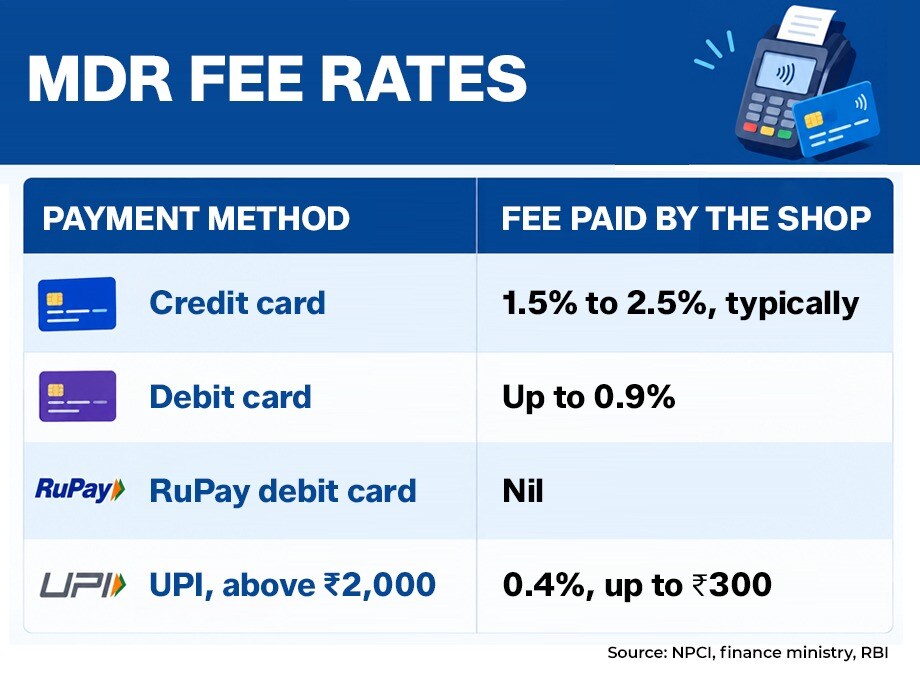
What a shopkeeper pays depends on how the customer pays. According to NPCI, credit-card fees usually range from 1.5% to 2.5% of a sale, and debit-card fees are capped at 0.9%. RuPay debit card payments remain free for shops under the government's latest notification.
The RBI said in its 2022 paper that it has not capped credit-card fees because the product involves lending. The bank that issues the card gives the customer interest-free credit until the bill is due, and recovers that cost from merchants/shopkeepers through a higher fee. The RBI also observed that these fees often rose with interest rates, but cuts did not appear to be passed on.
A standard UPI payment moves money directly from the customer's bank account to the shop's, with no loan involved. NPCI said in its FAQ document that UPI “remains the most affordable digital payment acceptance tool for commercial enterprises”.
Who runs UPI
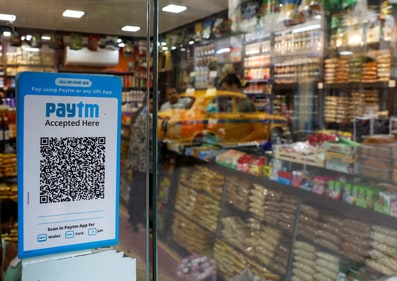
NPCI was set up in 2008 as an initiative of the RBI and the Indian Banks' Association, under the Payment and Settlement Systems Act, to run India's retail payment systems. It launched UPI in 2016 and also runs the RuPay card network.
A UPI payment passes through four stages: the customer's payment app; the customer's bank; NPCI's system; the merchant's bank
The government decides which payments may carry a fee, and NPCI's steering committee sets the rates and decides how the money is shared.
The system operates at a large scale. In August, according to NPCI, 24.51 billion transactions worth ₹29.9 lakh crore were recorded. UPI had more than 550 million users that month, NPCI data shows. In 2025-2026, UPI processed 241.6 billion transactions worth ₹314.2 lakh crore, up 30% by number from a year earlier.
How other countries do it
The European Union and the US regulate card fees by law.
Since December 2015, the EU has capped the portion of a card fee that goes to the customer's bank at 0.2% of a sale for consumer debit cards and 0.3% for credit cards.
The US Federal Reserve has capped that portion for debit cards issued by large banks since 2011, at 21 cents plus 0.05% of the sale, plus a cent for fraud prevention. The rule is being challenged in a US appeals court. US credit-card fees are not capped by law.
Brazil's central bank launched Pix, an instant payment system similar to UPI, in November 2020. Personal transfers are free. According to the country's central bank, banks may charge businesses for sending and receiving Pix payments.
Sitharaman cited Australia, Brazil and China during the Rajya Sabha debate as examples of fast payment systems where merchant charges apply. NPCI said most payment systems worldwide, including those built as public infrastructure, have economic models that pay for their upkeep and innovation.
Who gains
Banks and payment companies gain a new source of revenue.
Before the merchant charges on UPI were announced on Tuesday, brokerage Jefferies estimated that a fee of 0.15% to 0.3% on UPI payments above ₹2,000 could generate revenue of ₹5,000 crore to ₹10,000 crore a year by 2027-28. It said such payments made up 4% of UPI merchant transactions by number but about 67% by value in 2025-26.
Another brokerage, Bernstein, estimated in July that a fee of 0.3% to 0.4% could create a profit pool of nearly ₹3,000 crore.
The fee announced this week is 0.4%, but the exemptions, flat fees and caps will likely reduce what is earned.
Also read: Fuel pump transactions, bill and insurance payments, and more: UPI FAQs as MDR kicks in
What happens next
NPCI said merchants generally absorb small processing costs and argued that the low rate gives shopkeepers no reason to raise prices.
Under the framework announced on Tuesday, 5% of the fees collected will go into a fund to expand digital payments among small merchants. The fund will focus on smaller towns and rural areas, and will also cover notified central government schemes such as PM SVANidhi, a loan programme for street vendors. The fund's detailed rules will be finalised with the RBI within three months, NPCI said.
That hasn't placated the Opposition, which continued its attack on the government on Wednesday, with Congress president Mallikarjun Kharge calling the decision a surrender in a post on X.
The government has repeatedly maintained that the fee applies only to merchants, not to customers, and would help banks and fintech companies invest more in infrastructure, innovation and security.


