
 E-Paper



Gujarat election results: How BJP cut into Congress gains to retain its hold on state
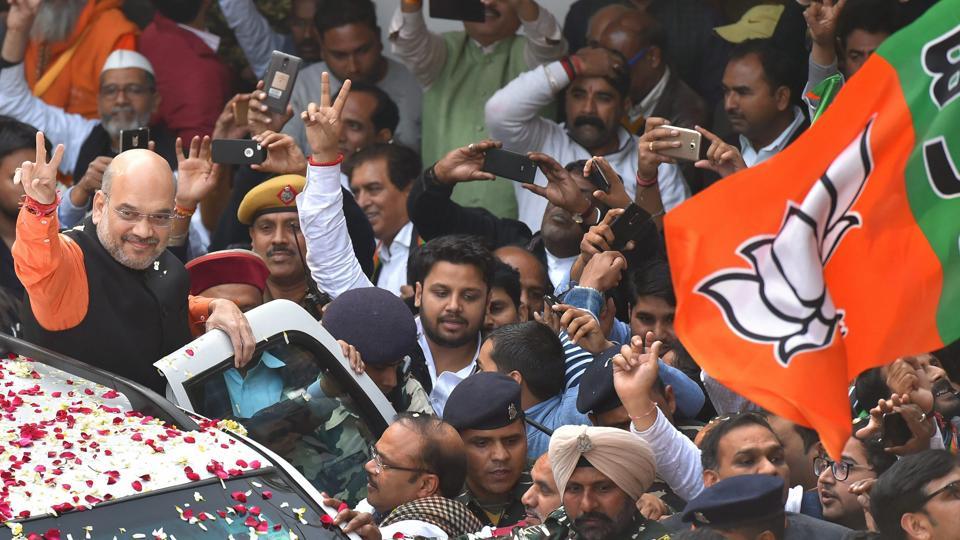
The saffron party bagged 99 seats in the 182-member assembly in Gujarat and retained its hold over the state where BJP has been in power for over two decades.

 Prefer HTon Google


Prime Minister Narendra Modi’s popularity might be credited with orchestrating the BJP’s win in Gujarat, but the backdoor strategies formed to weaken the Congress and push the party’s narrative also played a key role in beating nearly two decades of anti-incumbency.
Countering Congress
Apart from engineering defections in the Congress camp, which led to Ahmed Patel barely scrapping to a win in August’s Rajya Sabha elections, the BJP also sought to clean up its own stable by denying tickets to about one-third sitting legislators who were perceived to be unpopular.
As the Congress successfully tapped into the Patidar quota agitation, the BJP responded by giving 49 out of 182 tickets to the community’s members. The saffron party simultaneously made an aggressive pitch to woo the OBCs, giving 57 tickets to its members .
With growing signs of disenchantment creeping in the industrial clusters over Goods and Services Tax (GST) roll-out, the ruling party went into an overdrive to mollify traders by reducing GST rates on certain items and publicising the long-term benefits of the indirect tax regime.
Reshaping narrative
Just when the Opposition appeared to be cornering the BJP with its focus on the ‘lack of development’, Congress leader Mani Shankar Aiyar’s “neech aadmi” remark on Modi provided the right-wing party an opportunity to change the narrative.
The BJP, which has mastered the strategy of making political gains out of verbal slip ups, launched a campaign to project Aiyar’s remark as an insult to backward classes. The Prime Minister was quick to link the comment with Gujarat’s ‘asmita’ (pride), resulting in the debate over Aiyar’s jibe overshadowing the one on development before the first phase of polling.
There were also intermittent attempts to polarise the debate over then Congress vice-president Rahul Gandhi’s visits to temples— especially on him allegedly registering as a non-Hindu before entering the Somnath temple— to ensure than the Congress does gain dividends from it’s ‘soft Hindutva’ approach.
Patriotism plank
While building up on the ‘Gujarati asmita’ plank, the BJP also sought to indirectly question the Congress’ patriotism by indirectly suggesting that the grand old party had conspired with Pakistan in order to ensure its victory in the state polls.
To implement these eleventh-hour strategy changes, the BJP needed a well-oiled organisational machinery down to the grassroots, something which it has been able to form largely under the supervision of party president Amit Shah.


