
 E-Paper



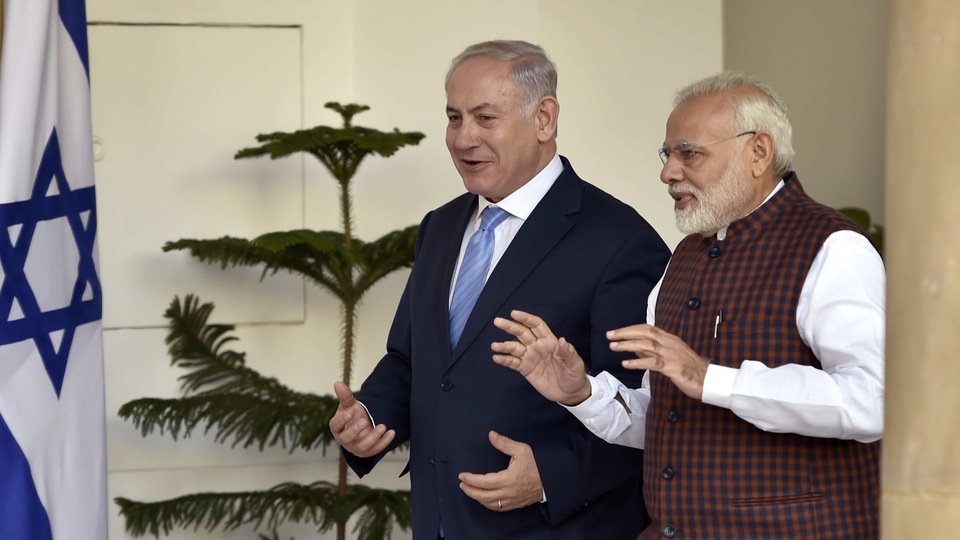
After NSA Doval’s phone call, PM Netanyahu sends a message to PM Modi
The “very low intensity” explosion was reported in the national capital’s high-security zone at 5.05 pm.

 Prefer HTon Google


Israel’s Prime Minister Benjamin Netanyahu on Friday expressed ‘full confidence’ in the Indian authorities’ investigation into the bomb blast near Israel’s embassy in New Delhi earlier in the evening, a spokesman for Israel's prime minister tweeted.
The “very low intensity” explosion was reported in the national capital’s high-security zone at 5.05 pm, around the same time that President Ramnath Kovind and Prime Minister Narendra Modi were attending the Beating Retreat ceremony less than 2 km away.
The government promptly went into overdrive to reassure Israel that it would take all steps to protect the embassy and its diplomats as well as track down the perpetrators.
An Israeli diplomat on her way to pick her children from school was grievously injured in a bomb blast back in 2012. India was able to identify four Iranian nationals as the prime suspects and sent a team to Tehran to trace them. But they could not be arrested. An Indian journalist was arrested for helping the bombers.
Foreign minister S Jaishankar phoned his Israeli counterpart, Gabi Ashkenazi, with a bunch of assurances, pledging that New Delhi would spare no effort to trace the culprits. “We take this very seriously,” Jaishankar said.
Similar assurances were extended at different levels. Foreign secretary Harsh Shringla spoke with his counterpart Alon Ushpitz, secretary Sanjay Bhattacharyya, who oversees relations with West Asia, spoke to Israeli ambassador Ron Malka and National Security Adviser Ajit Doval dialled his counterpart Meir Ben-Shabbat.
Also Read: Will spare no effort, India promises Israel after blast near embassy
PM Netanyahu’s office said NSA Doval updated Meir Ben-Shabbat and through him, PM Netanyahu on the efforts made by India to investigate the explosion.
“PM Netanyahu asked to inform India's PM @narendramodi that Israel has full confidence in the Indian authorities' investigation and in their ability to ensure the safety of Israelis and Jews in India,” Ofir Gendelman, the prime minister’s spokesperson to the Arab media, tweeted. He said it was agreed that contacts will continue on all channels and that there will be full cooperation between the two countries.
The Delhi Police had initially suggested that the explosion could be “a mischievous attempt to create a sensation”. But later, officials acknowledged that the explosion was being treated as a “terrorist attack”.
Investigations revealed that the bomb had been thrown near the embassy from a moving car. Investigators, who wished not to be named, said the explosive recovered from the spot was suspected to be ammonium nitrate mixed with fuel oil, with small ball bearings as shrapnels.
An envelope was also found near the blast site in which the attackers are suspected to have left a message for the embassy.
In a video message released later, the Israeli ambassador Ron Malka referred to the multiple levels at which the two sides have been in touch.
“We get full cooperation and support from the local police, from the Indian authorities, the ministry of external affairs, the secretary of external affairs, the NSA – they all called their counterparts in Israel, offered their support,” Malka said, underlining that the explosion had taken place “when we mark 29 years [of] the establishment of full diplomatic relations between Israel and India”.


