
 E-Paper



Home to decrepit temples and mosques, Ayodhya not just a signpost of dispute
Legend has it that Ayodhya has existed for millions of years.


Until 1989, when the temple movement started gaining momentum, Ayodhya was known as ‘Ram Nagri’ (the city of Hindu god Ram).
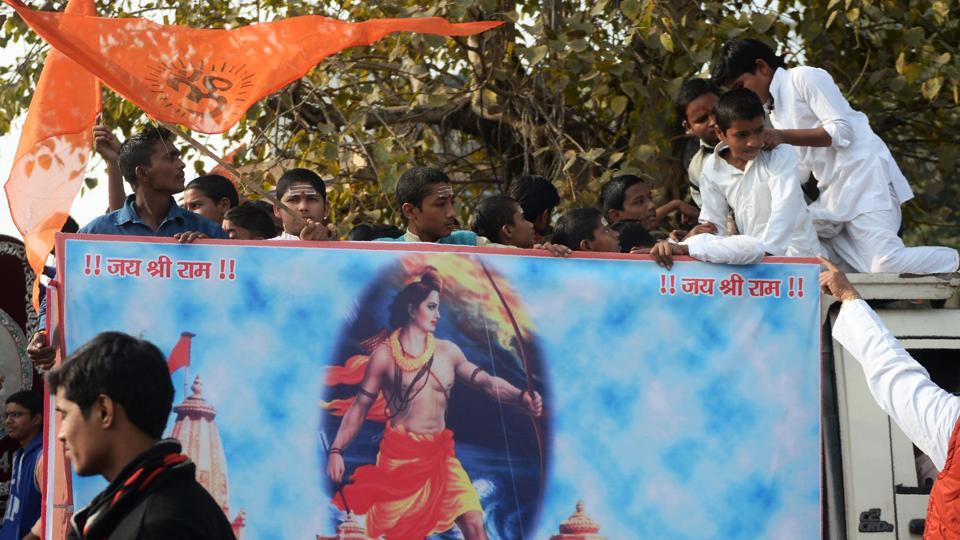
Today, there is little to the identity of the UP town beyond the Ram Janmabhoomi-Babri Masjid dispute.
The town, spread over 79 square kilometres, is home to several crumbling temples, palaces, and mosques; the Saryu river runs through it.
Read | A timeline of key events in the Babri Masjid, Ram temple controversy
Legend has it that Ayodhya has existed for millions of years.
“Obviously, nothing from that old an age could have lived to this day. All the buildings that you see — be it Dashrath Mahal or Sita Ki Rasoi — have been built and rebuilt. Only one thing is the same: the Saryu,” said Arun Kumar Mishra, in charge of the Ram Janmabhoomi Seva Trust.
The town is filled with references to the Hindu god.
There’s Dashrath Mahal, known as the palace of Ram’s father, Kanak Bhavan — the golden palace that legend says Ram’s stepmother Kaeikei gave as a wedding present to Sita — and Lav-Kush Bhawan (the palace, myth says, of Ram-Sita’s twins Lav and Kush).
There is also Hanuman Garhi, the fort in which, legend says, Ram asked Hanuman to take care of Ayodhya before leaving for his heavenly abode from Guptar Ghat.
The fort also houses the city’s most popular temple.
Despite being a place of religious significance, Guptar Ghat is more a ruin than anything else; filth and garbage are what you see; an odious smell hangs in the air. There are few pilgrims.
The town also has the mausoleum of Bahu Begum (Begum Unmatuzzohra Bano, the wife of Nawab Shuja-ud-Daulah). The nawab built it in 1816 in memory of the begum. The tomb is made of white marble.
Politically, the BJP dominates Ayodhya. Its mayor, MLA, and MP (Faizabad seat) are all from the saffron party. The town’s newly elected mayor, Rishikesh Upadhyay, is from the BJP as well.


