
 E-Paper



How Centre is using smart cities project to monitor Covid-19 hot spots
States have converted the smart cities’ ICCCs into war rooms for real-time data monitoring using the central data dashboard to provide information about the status of Covid-19 positive cases in various administrative zones of these cities, the officials aware of the development said.


The Centre has begun using integrated command-and-control centres (ICCCs) designed for Prime Minister Narendra Modi’s ambitious National Smart Cities Mission, an urban renewal and retrofitting programme, for real-time surveillance and monitoring of coronavirus disease (Covid-19)-affected districts across the country.
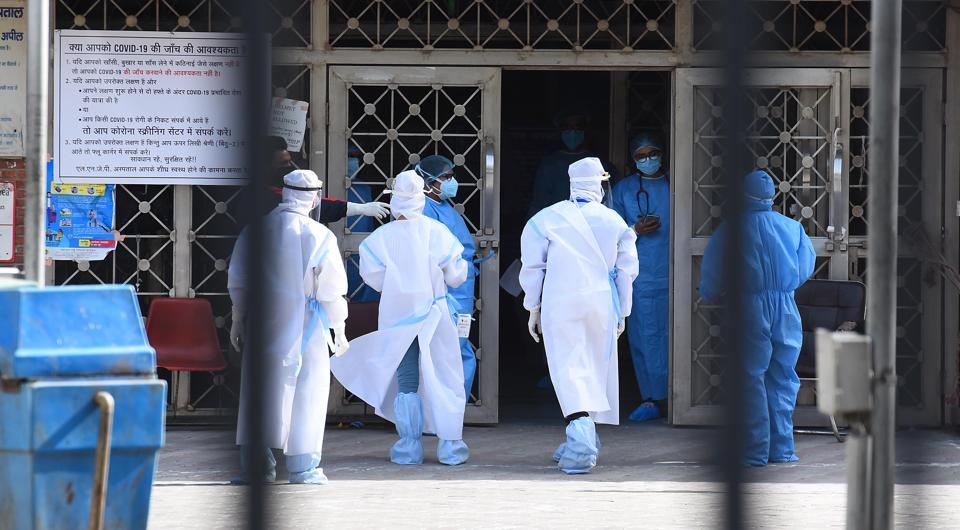
States have converted the smart cities’ ICCCs into war rooms for real-time data monitoring using the central data dashboard to provide information about the status of Covid-19 positive cases in various administrative zones of these cities, the officials aware of the development said. The war rooms are also being used for tracking people under quarantine and suspected Covid-19 cases.
Maharashtra, Tamil Nadu, Delhi, Kerala, Uttar Pradesh, Madhya Pradesh are among the states that are using the command centres for closed-circuit television (CCTV) surveillance of public places, geographic information system (GIS) mapping of Covid-19 positive cases and global positioning system (GPS) of healthcare workers.
“The Centre is coordinating with the states through our central command centre at Nirman Bhawan in New Delhi. States are also using it for predictive analytics (heat maps) for virus containment across different zones of their respective cities. We’re also doing real-time tracking of ambulances and disinfection services,” a senior government official said.
The Centre is collaborating with district administration, police and civic authorities to monitor suspected Covid-19 cases. The government aims to use the infrastructure for developing predictive analytics using heat maps and taking action in monitoring the movements such as geo-fencing and running periodic health checks on those who are suspected to be suffering from Covid-19.
“States are also using it for providing virtual training to doctors and healthcare professionals, providing medical services through video conferencing, tele-counselling and tele-medicines. The Smart Cities Mission technology is leveraging the technology to collaborate with doctors across these designated cities to provide online medical consultation facilities to the people. The guidelines, issued by the Union Ministry of Health and Family Welfare (MoHFW) in collaboration with NITI Aayog and the Indian Medical Council, allow doctors to write prescriptions based on telephonic, textual or video conversations — chat, images, messaging or e-mails. The risk of the spread of Covid-19 is vastly reduced, as many doctors, who aren’t in the frontline of combating the viral outbreak, don’t need to step out of their homes,” the official said.
“All the operators are given daily tasks such as monitoring quarantined citizens and passengers who came from abroad recently and also answering frequently asked questions regarding Covid-19,” he added.
The initiative comes at a time when the Centre is considering to resume movement and commercial activity in districts, where no Covid-19 cases have been reported to date after the ongoing 21-day nationwide lockdown enforced since March 25 to contain the Covid-19 is lifted. In an interaction with chief ministers on Friday, PM Modi told the states to formulate a “common exit strategy” to ensure “staggered re-emergence of the population” after the lockdown is done away with.
The empowered group on Covid-19, led by Niti Aayog, is also seeking support from international bodies such as the World Health Organisation (WHO) and the United Nations (UN) for providing technical support in monitoring and surveillance mechanisms. A meeting of the empowered group with the UN is scheduled to be held on Tuesday, according to the officials aware of the development.
How states are monitoring
In Maharashtra, which has reported 891 Covid-19 positive cases and 52 deaths to date, local administrations such as the Pune Smart City Development Corporation Limited (PSCDCL) has collaborated with Pune Municipal Corporation (PMC) to develop an integrated data dashboard. “Each case of the city has been mapped using geo-spatial information systems and the authorities are monitoring the areas and creating buffer zones where patients were tested Covid-19 positive,” an official said.
The city administration is developing a containment plan by using heat-mapping technologies and predictive analytics, as the earmarked zones are constantly getting updated on the dashboard. For instance, Naidu Infectious Disease Hospital’s activities are being tracked through this mechanism. The dashboard also monitors the quarantine facilities and tracks the health of suspected patients and their contacts placed under home quarantine.
Tamil Nadu, which has reported 621 Covid-19 positive cases to date, has deployed a team of 25 doctors at an ICCC and each of them has been tasked to keep a watch on 250 quarantined people.
“In Chennai, 25 doctors are engaged in the ICCC. Each of them has been asked to monitor 250 quarantined people and give them moral and psychological support. They will also prescribe medicines, if required. In Vellore, 118 Covid-19 suspects are mapped with individual health experts for advice. Their contact details and medical history have also been shared. Besides, they’re being counselled regularly,” the official said.
Similarly, in Uttar Pradesh, the ICCCs are being used for tracking health services across the state. UP has reported 308 Covid-19 positive cases so far.
“The ICCCs keeping a tab on health services in Kanpur, Aligarh, Varanasi etc. Tele-medicine is offered via video-conferencing facility. In Aligarh, doctors are deployed at the ICCC between 11 am and 8 pm to enable telemedicine and video-conferencing facility using a dedicated WhatsApp number,” the official said.
Similarly, Madhya Pradesh (MP) has deployed a team of doctors at the ICCCs for counselling and monitoring.
The state has reported 256 Covid-19 positive cases so far.
In Bhopal, the ICCC is being used as a helpline and tele-counselling centre for local residents. Medical officers are working there in shifts to attend to people’s healthcare needs.
“In Ujjain, two doctors are stationed at the ICCC 24x7, who are talking to people over the phone or video-conferencing facility and giving them health tips real-time based on their symptoms. The authorities have operationalised 40 Medical Mobile Units (MMU) to distribute prescribed medicines to people. In Jabalpur, dedicated Rapid Response Team (RRT) and Mobile Action Unit (MAU) are present on the ground across civic wards to coordinate with ICCC officials regarding screening, ambulance, quarantine etc.” the official said.
Medical teams are stationed at ICCCs to provide any immediate medical attention via the helpline. “Trained professionals resolve the queries raised by the public at an initial stage and then these calls are connected to a designated doctor. The counselling helps to reduce panic among the callers. The doubtful cases are being encouraged to consult a doctor,” he said.
In Gujarat’s Gandhinagar, the contact details of grocery stores for all the sectors have been provided to local residents. While the Surat Municipal Corporation has published an online dashboard that provides a consolidated count of those people who have tested Covid-19 positive and deaths along with those who are either suspected or recovered from the viral outbreak. The dashboard provides the trends and patterns of the spread of Covid-19 across Surat. The civic authorities also tabulate the latest available data such as the distribution of cases on the basis of age, gender and zones.
The first lot of the National Democratic Alliance (NDA) government’s Smart Cities Mission aims to develop 100 citizen-friendly and self-sustainable urban settlements, which will be measurable only by the next year when the first 20 of them are completed. Under the mission, the setting up ICCCs for each city is a vital step. The ICCCs are designed to enable authorities to monitor the status of various civic amenities in real-time. Initially, it was aimed to control and monitor online water and power supply, sanitation, traffic movement, integrated building management, city connectivity and also internet infrastructure.


