
 E-Paper



HT Exclusive: After opening missile manufacturing to private sector, Modi govt targets 1,500km strike range
By allowing the private sector into the missile sector, the government has dramatically scaled up the production numbers.

 Prefer HTon Google


A day after Defence Minister Rajnath Singh allowed the entry of Indian private sector into conventional missile sector using DRDO technologies, the Modi government is identifying private players for production of 1000-1500 km range Land Attack Cruise Missile (LRLACRM) and 150-500 km range Pralay quasi-ballistic tactical missile.
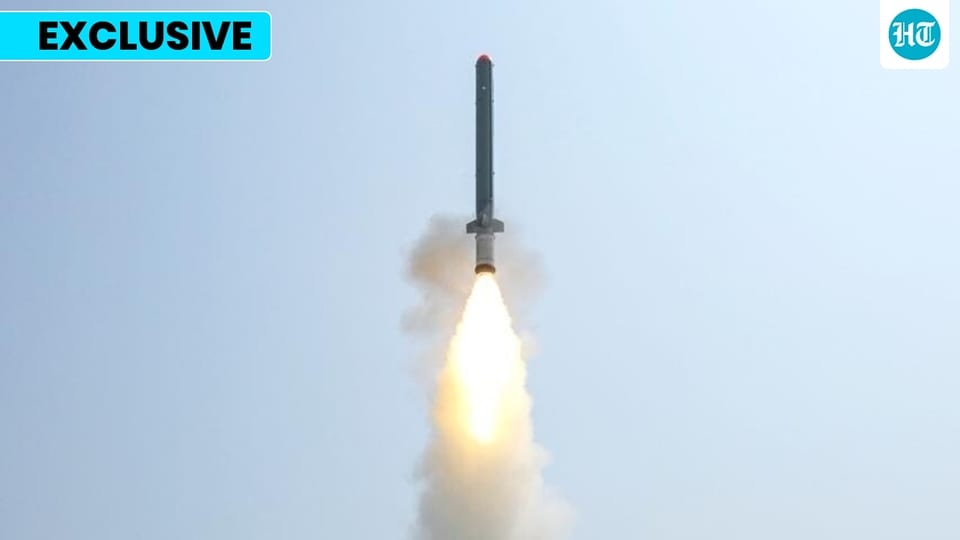
Long Range Land Attack Cruise Missile will now be produced by Indian private companies using transfer of technology route from DRDO
While Request for Proposals (RFPs) have already been issued for Astra Mark I (110 km range) and Mark II (150 km range) beyond visual range air to air missiles to Indian private sector through transfer of technology route, companies like ICOMM, Hyderabad, Bharat Forge and Adani Defence Systems and Technologies Limited (ADSTL), Bharat Dynamics Limited, Bharat Electronics Limited will be involved in production of the following missiles:
· Next Generation Anti-Radiation Missile (100-300 km standoff range)
· Rudram-II, air to ground hypersonic missile with range up to 300 km.
· Unmanned Aerial Vehicle Launched Precision Guided Missile (ULPGM).
· Long Range Glide Bomb with a stand-off range of 100 km and one ton warhead.
· Smart Anti Airfield Weapon (SAAW, a precision glide bomb with a stand-off distance of 100 km and 80 kilogram warhead.
· Quick Reaction ground to air missile with a range of 25-30 km, which can engage six targets simultaneously at a height of up to 10 lkm.
· Very Short Range Air Defence System, shoulder fired, can engage targets at 8 km and at an altitude of 4.5 km. Used against tanks and helicopters.
· Naval anti-ship missile (NASM) Short Range, helicopter launched with 55 km range and a 100 kg warhead.
· Naval anti-ship missile Medium Range, land or ship launched, ramnge upto 350 km with a warhead exceeding 200 kg.
· Medium Range anti-ship missile (MRAShM) with 70 km range, supersonic, 276 kg weight, used against jets, missiles and drones.
· Long Range anti-ship missile (LRAShM) , range over 100 km, private production partner still to be identified.
It is understood that opening of the conventional missile sector to private players is the first step towards opening the strategic missile sector, as many as 50 subsystems for integration in missiles are being supplied by the private sector.
By allowing the private sector into the missile sector, the government has dramatically scaled up the production numbers while giving a major boost to private sector and their ancillary units. This will not only push ‘Aatmanirbhar Bharat’ but also expand India’s military industrial complex.


