
 E-Paper



IFCN’s chatbot on WhatsApp to help debunk Covid-19 related fake news
A release from WhatsApp said that through the chatbot, people can check whether a piece of content about Covid-19 has already been rated as false by professional fact-checkers.


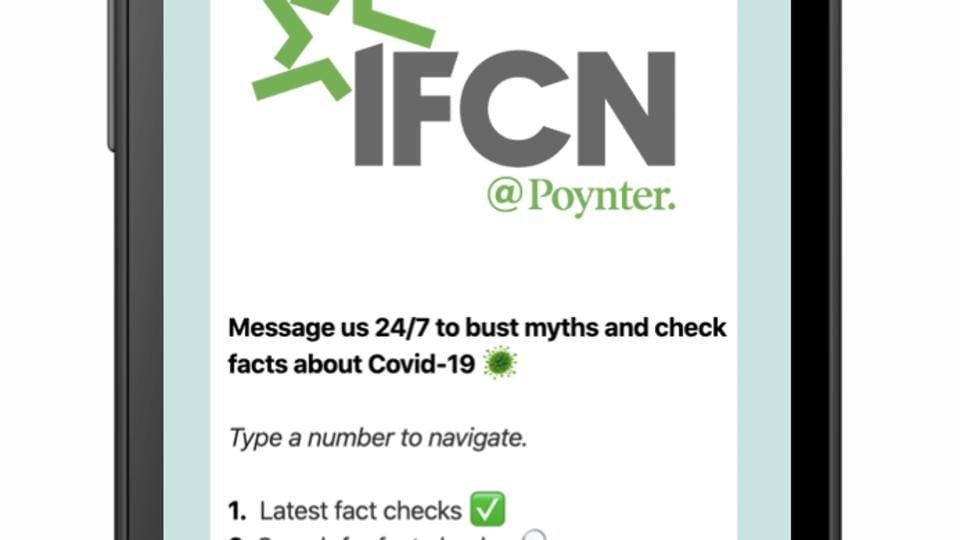
Poynter Institute’s International Fact-Checking Network has released a chatbot on WhatsApp where people can message and check on fake news claims. Replies from IFCN’s database of debunked fake news will be available to people at +1 (727) 2912606.
Baybars Örsek, Director at the International Fact-Checking Network (IFCN) at the Poynter Institute, said that the chatbot which is available in English alone will be released in Hindi soon. “The service is launching in English but will be available in other languages including Hindi, Portuguese and Spanish in due course. We are working to include other languages,” Örsek said.
A release from WhatsApp said that through the chatbot, people can check whether a piece of content about Covid-19 has already been rated as false by professional fact-checkers.
“Since January, more than 80 fact-checking organizations from 74 countries have identified more than 4,000 hoaxes related to the novel coronavirus. All this information now forms the CoronaVirusFacts database and is updated daily by the IFCN so chatbot users can navigate and easily access its content,” the release said.
Örsek said that users can search for these debunked news through the chatbot. “The IFCN bot is primarily a way to distribute fact-checks to WhatsApp users and to provide access to a searchable database of Coronavirus debunked hoaxes. It allows users to review IFCN’s database of 4000 debunked myths, to search for fact checks by word or phrase, access to tips to protect themselves from falsehoods, and also to find out how to contact local fact-checkers in their country,” he said.
Through the chatbot, an user can access a global directory of fact-checking organisations, and the user’s country is detected from the mobile country code to provide contacts of fact-checking organisations which are closest. “The person can then submit a piece of information for review directly to its local fact-checker or visit it,” WhatsApp said in a release.
With the spread of the coronavirus pandemic, there is a spike in the volume of fake news, and WhatsApp has been grappling to deal with it, especially in India where it has over 450 million users. As the pandemic spread, the private messaging platform brought in product changes, including reducing the number forwards of a ‘highly forwarded message’ to just one chat.
The company says this has brought down virality of messages which has already reduced the number of highly forwarded messages shared on the service by 70%.
Örsek said that some of these fake news items were about symptoms of the disease. “The first couple of weeks after the first case was detected outside China, we have seen so many pieces of misinformation on the spread of the virus and false symptoms. It had been the case especially in Europe, where the virus spread from Italy to Spain and then eventually to the different parts of the world where we saw a big volume of misinformation on the spread of the virus,” he said.


