
 E-Paper



In Chhattisgarh, a school run by police for former Maoists
More than 300 erstwhile Maoists, many victims of cross-fire between the underground rebels and security forces, and 150 children are getting education in the school.


High atop a hill covered by 6000 kilometers of thick forest and straddling Maharashtra and Chhattisgarh, more than 300 erstwhile Maoists, many victims of the cross-fire between the underground rebels and security forces and 150 children are getting the education they missed out on.
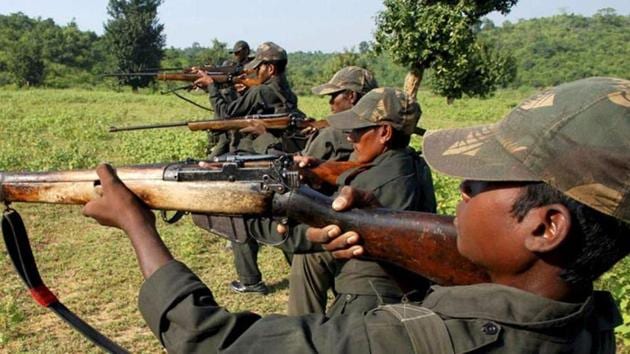
In a school that is run by police to rehabilitate the residents of an area that has not been surveyed since the British era. Abujhmad in Narayanpur district is so isolated that it has been dubbed the ‘unknown hill’ and has, for long, been the epicentre of Maoist activities where the camps of many senior cadres are located.
When the Narayanpur administration tried to conduct a survey of the dense jungles in 2017, an IED blast aborted the plan. And yet, the local police went ahead with their plan to rehabilitate members of the armed group who surrendered, in order to better integrate and rehabilitate them back in mainstream society.
“There are no schools in Abujhmad and Maoists don’t want people to study. So our aim is to educate all those who could either not study or had to abandon their education. It will enhance their knowledge, lend them self-confidence and enable them to improve their lives and those of their kids and families,” said SP Narayanpur, Mohit Garg at the school located in the Narayanpur Police Lines, where the local police double up as teachers. Students can learn the basics of computing and use the school library too.
“I joined the Maoists in my teens and never went to school,” says Kasura Gote, a former rebel who surrendered in 2013 and is now enrolled in the police school. “In my village in Abujhmad, there is still no school. But I can now read some letters and even write them. I believe that kids here really need education to connect to the world.”
There seems no shortage of those willing to teach either.
“Many police personnel volunteer to teach these tribals and former rebels now. We have classes in the morning and evening and most of the time, there is full attendance at all of them,” said Deepak Rao, a reserve inspector ( RI) and a teacher at the Narayanpur school.
-kW0H-U20214218012MgB-250x250%40HT-Web.jpg)


