
 E-Paper



In Hizbul’s Kashmir terror team, ‘military adviser’ is most brutal: Cop
Syed Salahuddin’s five sons live in Kashmir and have not picked up the gun, a sharp contrast to the hundreds of Kashmiris who have been radicalised to join his terror group over three decades

 Prefer HTon Google


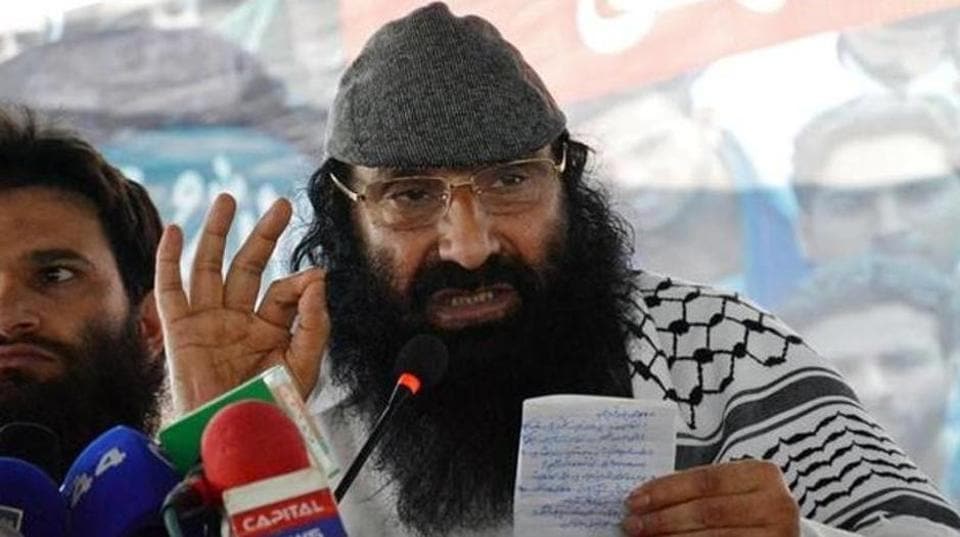
Hizbul Mujahideen boss Syed Salahuddin’s move to name three terrorists from across the Line of Control to lead the terror group in Kashmir has prompted security agencies to reset the search for the outfit’s new leadership in the valley.
Riyaz Naikoo, Salahuddin’s prime point person in Kashmir till last week, was killed in a joint operation of Kashmir police and Rashtriya Rifles that traced the 32-year-old to a secret bunker in a Pulwama village, not far from the house where he lived before picking up the gun.
Salahuddin picked Ghazi Haider aka Saifullah Mir as the Hizbul’s so-called chief commander in Kashmir.
Zafarul Islam, believed to be the nom de guerre for 55-year-old Ashraf Maulvi would be Ghazi Haider’s deputy and Abu Tariq Bhai, his so-called chief military adviser.
Of the three, a top official in Jammu and Kashmir said, Abu Tariq Bhai has been the most brutal in the choice of his killings and its execution.
“We believe Abu Tariq Bhai is a Hizbul terrorist we have known as Zubair Wani from Anantnag,” a senior police officer said.
All three, like most of the Hizbul leadership, have been active in south Kashmir districts of Anantnag, Pulwama and Shopian.
Police officers in Kashmir said they had started a fresh search for these terrorists but stressed that they expected the fresh recruitments to slow down for some time due to Naikoo’s elimination. “It was a huge setback for the Hizbul,” one senior officer said.
In a widely-circulated video that emerged after Naikoo’s death, Salahuddin described Naikoo’s death as a “shock for all of us” but noted that these sacrifices had been going on in Kashmir for long. Since January this year, he said 80 fighters, or terrorists, had given up their lives for the cause of Kashmir.
The burly, bearded Salahuddin, once an Islamic preacher who wanted to join politics, had crossed over into Pakistan-occupied Kashmir more than three decades ago after the 1987 rigged elections. It is here that he founded the Hizbul Mujahideen, the terror group funded by Pakistan’s deep state. Unlike other terror groups such as the Lashkar-e-Taiba, the Hizbul has mostly been powered by local recruits. Fueling discontentment has been a key part of the strategy.
Salahuddin’s family insulated from terror
But he has insulated his family from terror activities.
“How he has been able to do this is really remarkable... Unless his family knows him better,” a senior police officer said.
Three of his five sons hold jobs in the state government or its bodies. The fourth son is a doctor who practises in Srinagar and the youngest has an engineering degree and runs a skill development institute in Kashmir.
Of the other three, one is a medical assistant at the Sher-i-Kashmir Institute of Medical Sciences, the second is a computer operator in the Budgam education office and the third, Syed Yousuf, worked at the agriculture department.
Syed Yousuf did get into trouble after the National Investigation Agency revived a 2011 case against him in 2017 for receiving tainted money from his father through hawala channels.


