
 E-Paper



IN NDA regime, MGNREGS focus on individual beneficiaries
MGNREGS, the Centre’s flagship programme to address poverty by providing guaranteed jobs, covers all of India’s 691 districts and involves 116.5 million active workers across states.


Two out of three works under the Mahatma Gandhi National Rural Employment Guarantee Act (MGNREGS), the government’s flagship job guarantee scheme, under the National Democratic Alliance is for individual beneficiaries, according to data from the rural development ministry.
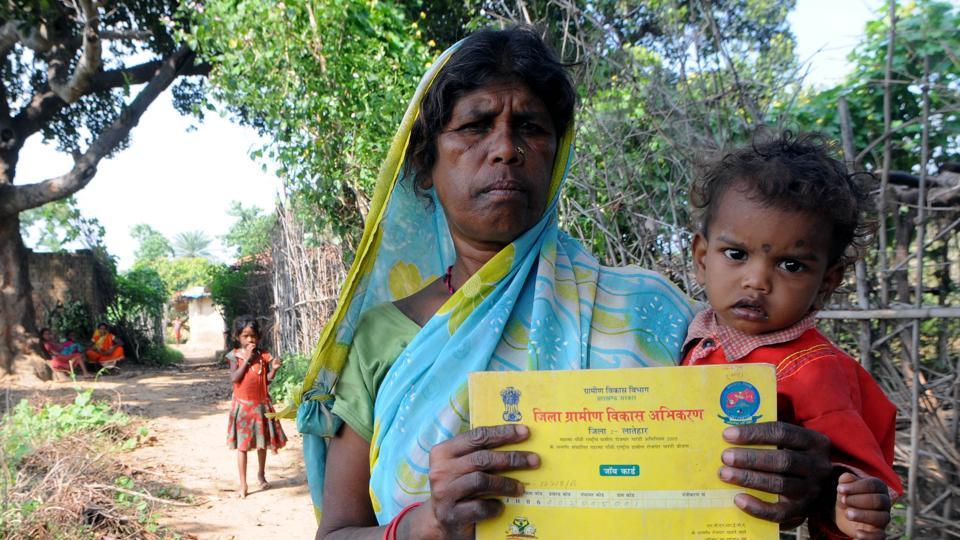
Experts say that this statistic highlights the Bharatiya Janata Party (BJP)-led NDA’s effort to focus on individual beneficiaries, and also link the job guarantee scheme with other welfare programmes – such as the one to build homes for the homeless.
MGNREGS, the Centre’s flagship programme to address poverty by providing guaranteed jobs, covers all of India’s 691 districts and involves 116.5 million active workers across states.
In 2014-15, schemes that benefited individuals constituted 21.4% of the total MGNREGS work.
Now, it has reached 66.7%, with the lion’s share of MGNREGS funds going towards labour payments for building houses for the homeless. Under the NDA, at least 13.3 million homes have been built under the Pradhan Mantri Awas Yojna for the rural poor.
The latest data from the rural development ministry comes even as the government is trying to reach out to beneficiaries of its myriad welfare programmes. As a part of the 2019 election strategy, BJP president Amit Shah has asked party functionaries and workers to reach out to all of the estimated 220 million beneficiaries of programmes run by the Narendra Modi government.
BJP functionaries have revealed that the party will try to track down beneficiaries at the booth-level for better outreach. In many states, senior party leaders have started holding meetings with these people in their respective areas. A few months ago, the BJP had even called a special meeting where the party’s chief ministers were told to furnish data on beneficiaries. In 2014, the BJP received 171.6 million votes across the country and 31% of the vote share, translating into 282 seats in the Lok Sabha.
Prime Minister Narendra Modi, too, has held meetings with beneficiaries of different programmes in the past few months, emphasising the urgency of connecting to them.
Apart from construction of houses, creation or restoration of water bodies has seen large-scale demand. Since 2015-16, 1.6 million ponds, 1.73 lakh dug wells, 3.34 million check dams and 1.53 lakh embankments have been built under MGNREGS
“Over the last four years, the ministry of rural development has completed major reforms in MGNREGS to transform it into a resource for sustainable livelihood for the poor. This began with identifying the areas which needed urgent interventions,” said rural development minister Narendra Singh Tomar.
He added that the NDA government has removed the lack of transparency and accountability from the scheme that he says were rampant in the United Progressive Alliance (UPA) era. “We have ensured full transparency in wage payments, asset creation, and payment for materials. We have started 100% geo-tagging of assets, Aadhaar linking of bank accounts, and direct benefit transfers for all wages,” said Tomar.
Economist Sudipta Mondal, however, disapproved the government’s obsession with asset creation with MGNREGS funds. “MGNREGS derives its origin from an old British famine laws that provided for alternative work to affected people. The idea is to provide jobs. Remember John Maynard Keynes had once said that the government should pay people to dig holes in the ground and then fill them up.”
He also pointed out that the focus on private assets is also because of the lack of scope in public work. “Frankly, if the government uses public money to eradicate poverty it is fine, even if it means creation of private assets. But this business of focus on asset creation is distortion and fundamental misconception of the goal of the programme.”
Rural development secretary Amarjeet Sinha defended the government’s stand on asset creation and said: “The issue of creation of durable assets was very important. The 60:40 ratio was mandated at the gram panchayat level often leading to non-productive assets being created simply because 60% had to be spent on unskilled wage labour in that gram panchayat.”
His reference is to a 2016 change in MGNREGS norms that said the wage-material ratio need to be maintained at 60:40 at the district level and not the panchayat level. It was criticised by activists then, but the government’s view was that while it was necessary in some panchayats to focus on providing more employment, in others, creating good quality assets through MGNREGS mattered more.


