E-Paper



India asks Bangladesh to hold ‘inclusive, free, fair’ elections
The protests in Bangladesh have raised concerns about growing discontent with the interim government led by Muhammad Yunus and political uncertainty.

 Prefer HTon Google


India on Thursday called on Bangladesh’s caretaker administration to hold “inclusive, fair and free elections at an early date” against the backdrop of demands by political parties for holding elections by December and widespread protests by government employees.
The protests in Bangladesh have raised concerns about growing discontent with the interim government led by Nobel laureate Muhammad Yunus and political uncertainty. The Bangladesh Army and the Bangladesh Nationalist Party (BNP) led by former premier Khaleda Zia have pushed for polls by December, while Yunus has indicated elections could be held by June 2026 after implementing reforms.
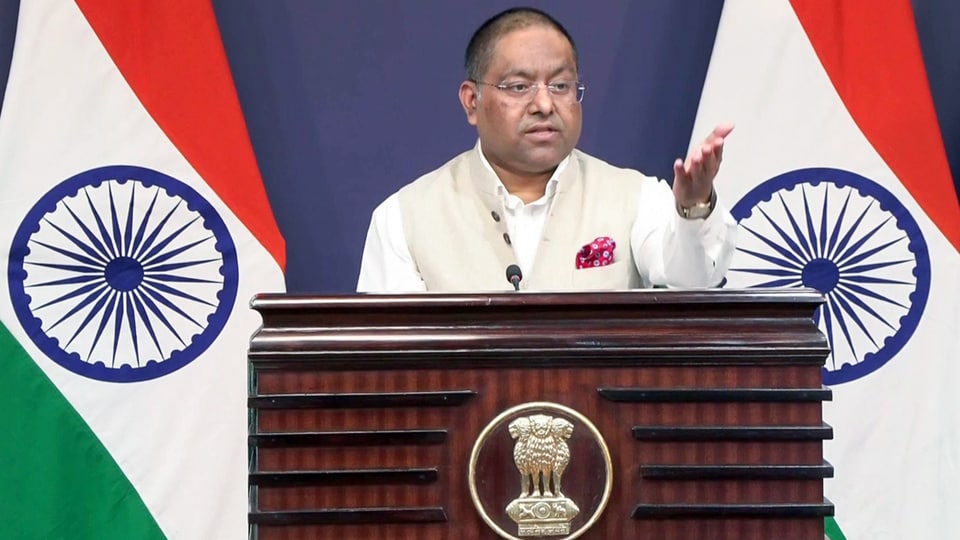
“On Bangladesh, we have articulated our position very clearly as far as elections [are] concerned and we have done so consistently. Bangladesh needs to ascertain the will and mandate of the people by holding an inclusive, fair and free elections at an early date,” external affairs ministry spokesperson Randhir Jaiswal told a weekly media briefing.
Responding to questions on the situation in Bangladesh, Jaiswal said India wants a “positive and constructive relationship” with the neighbouring country that is “anchored in meeting the aspirations and the interests of people of both sides”.
Media reports have cited Yunus as contending that the biggest crisis faced by Bangladesh is “Indian hegemony”, but Jaiswal said it is the responsibility of the interim government in Dhaka to deal with matters related to governance.
Also Read: ‘Shoot me, bury me here’: What happened the night before Sheikh Hasina's ouster
“So, as far as the government [in Bangladesh] is concerned, it is their personal responsibility to handle any governmental or governance-related issues or problems there,” he said.
“When statements of this sort are made, it seems like you want to deflect in another direction from your own challenges related to governance there. And to blame others and extraneous issues for problems is not a solution to the issue.”
Government employees in Bangladesh have been protesting since the caretaker administration issued an ordinance on Sunday allowing the public administration ministry to dismiss public servants for misconduct without lengthy procedures. The employees have demanded the withdrawal of the ordinance.
Thousands of teachers in government primary schools are on indefinite leave to demand a hike in wages, while the interim government was forced to withdraw an order to dissolve the National Board of Revenue after employees of the tax body launched protests.
There has been a sharp downturn in India-Bangladesh ties since deposed prime minister Sheikh Hasina fled Dhaka and took shelter in India last August in the face of massive protests. Relations nosedived after India accused the interim government of failing to prevent the repression of minorities, especially Hindus, a charge that has been described by Yunus as “exaggerated”.